Echeveria nodulosa
Echeveria nodulosa (Painted Echeveria) Care Guide
 Featured photoecheveria-nodulosa.jpg
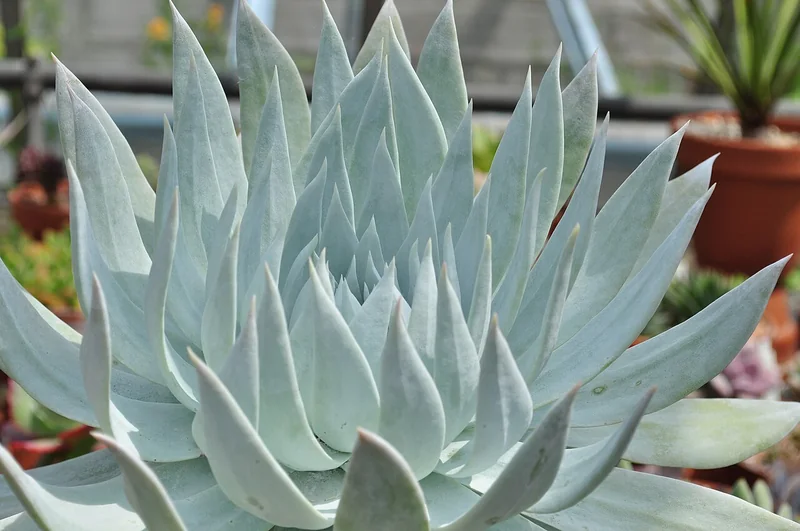
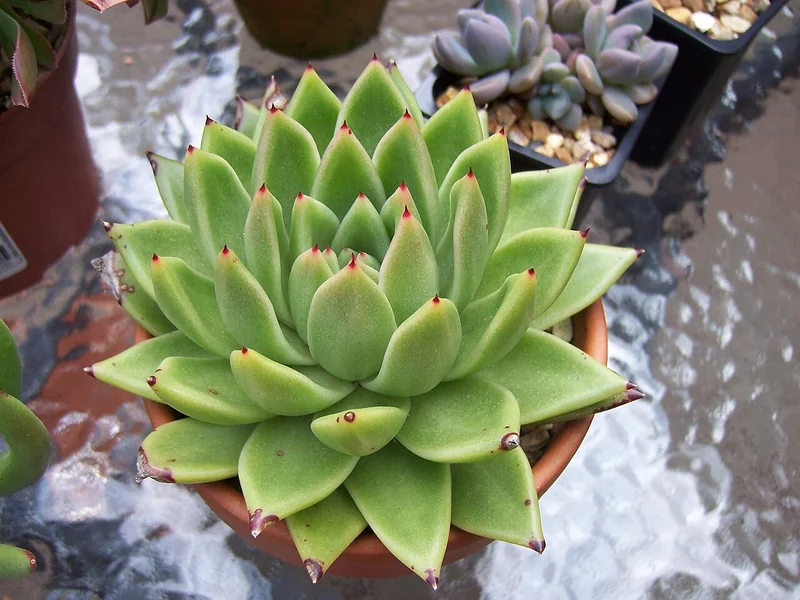
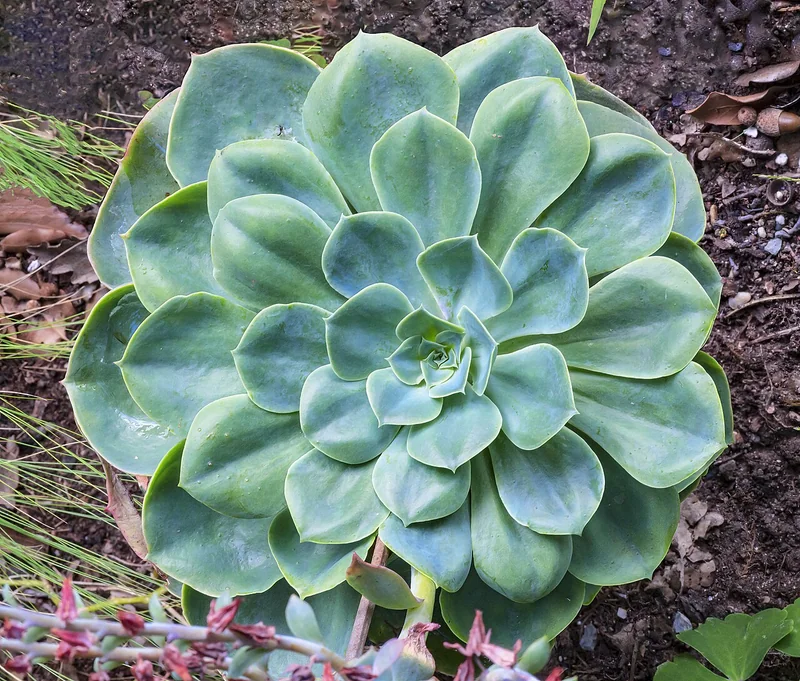
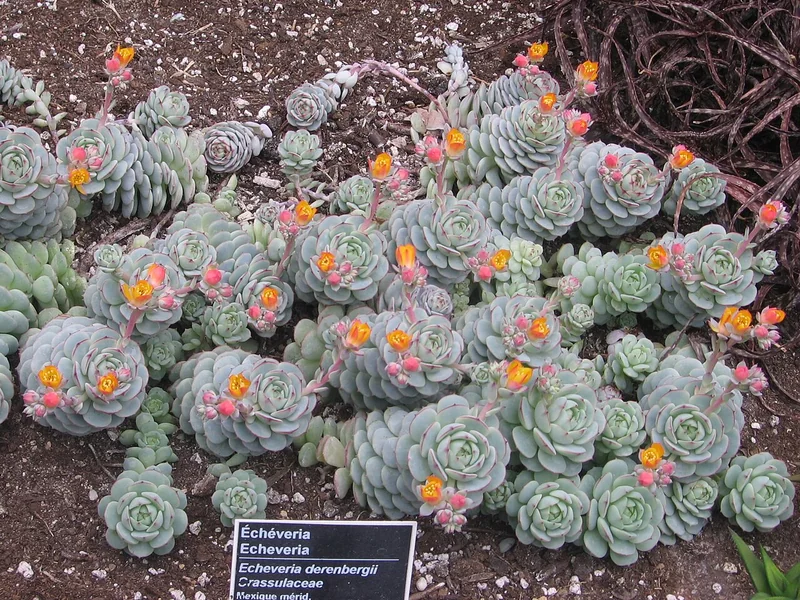
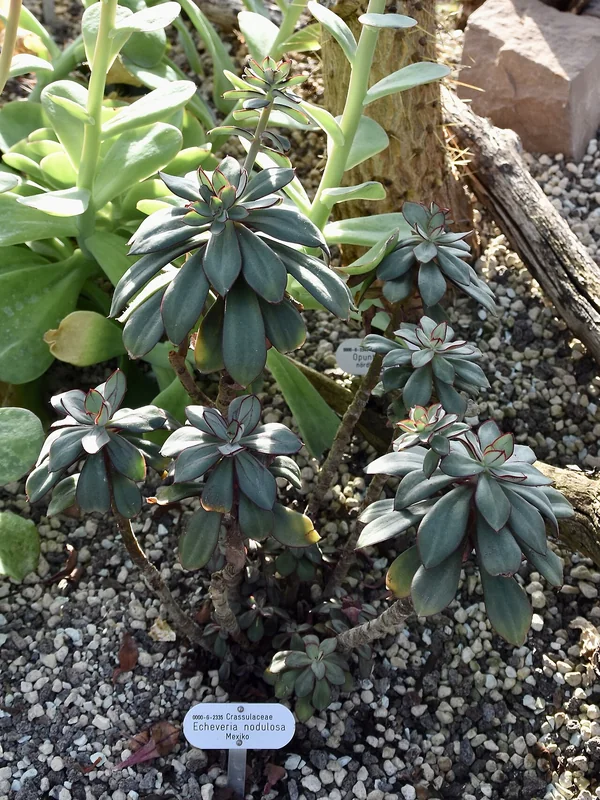
Echeveria nodulosa, sold as Painted Echeveria, is a stemless or short-stemmed Echeveria native to the semi-arid highlands of Mexico. A Oaxacan species with olive-green leaves marked in deep red along the leaf edge, midrib, and tip — the 'painted' streaks intensify in bright light. Forms loose rosettes on short stems. Like most Echeveria it stays compact in bright light, tolerates long dry spells thanks to its thick water-storing leaves, and pushes new offsets around the base of the rosette as it matures.
Care facts at a glance
- Light
- Full sun
- Water
- Water deeply when the mix is fully dry, typically every 2 to 3 weeks in summer.
- Humidity
- 20–50 %
- Temperature
- 10–27 °C
- Soil
- Free-draining cactus or succulent mix with extra perlite or pumice.
- Origin
- Semi-arid highlands of Mexico and Central America.
- Mature size
- 10 to 30 cm tall and wide depending on species.
Overview
Echeveria nodulosa belongs to Echeveria, a Mexican-centred genus of about 150 stemless rosette succulents. A Oaxacan species with olive-green leaves marked in deep red along the leaf edge, midrib, and tip — the 'painted' streaks intensify in bright light. Forms loose rosettes on short stems. The leaves are typically coated in a fine waxy bloom (epicuticular wax) that gives the rosette its characteristic powdery finish — disturb the bloom and it does not regrow on the same leaf.
Care Priorities
- Full sun or very bright filtered light keeps the rosette compact.
- Water deeply, then let the mix dry fully.
- Free-draining mix; rot is the leading killer.
- Detach offsets to keep colonies tidy and propagate.
Common Problems
Stretched, pale rosettes are too little light. Mushy base is overwatering. Brown leaf tips are usually old age and harmless. Water marks on the bloom are permanent — water at the soil only.
Sources & further reading (2)
- encyclopedia — accessed 2026-04-29
- botanical-garden — accessed 2026-04-29
Frequently asked questions
Are the red markings permanent?
The red striations on E. nodulosa are pigmented along the leaf margins and midrib and intensify with bright light. In dim conditions the contrast fades but does not disappear; the next round of leaves redraws under stronger light.
Why is my Echeveria stretching upward?
Stretched, pale rosettes are a clear sign of insufficient light. Move to direct morning sun and the new growth tightens back into a compact rosette over a few weeks.
Can I propagate from a single leaf?
Yes — Echeveria are among the easiest succulents to propagate from leaves. Twist a healthy leaf cleanly off the stem, let the wound callus for two or three days, then lay it on dry succulent mix. A miniature rosette typically appears at the base within a few weeks.