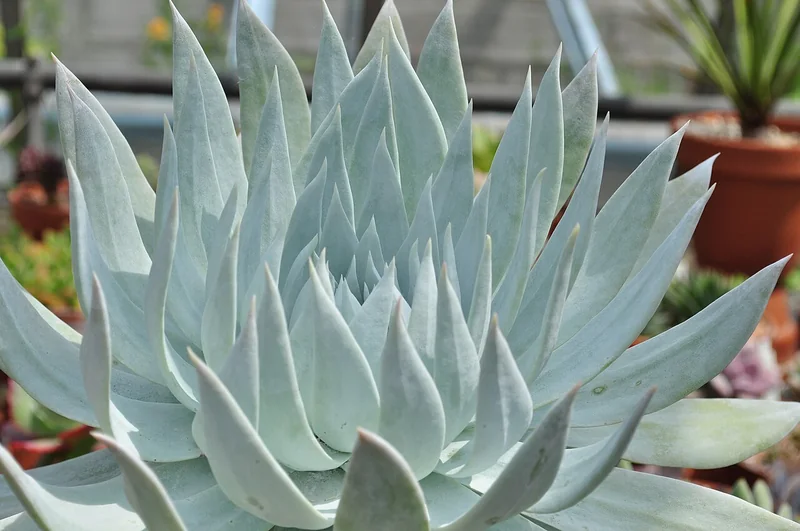
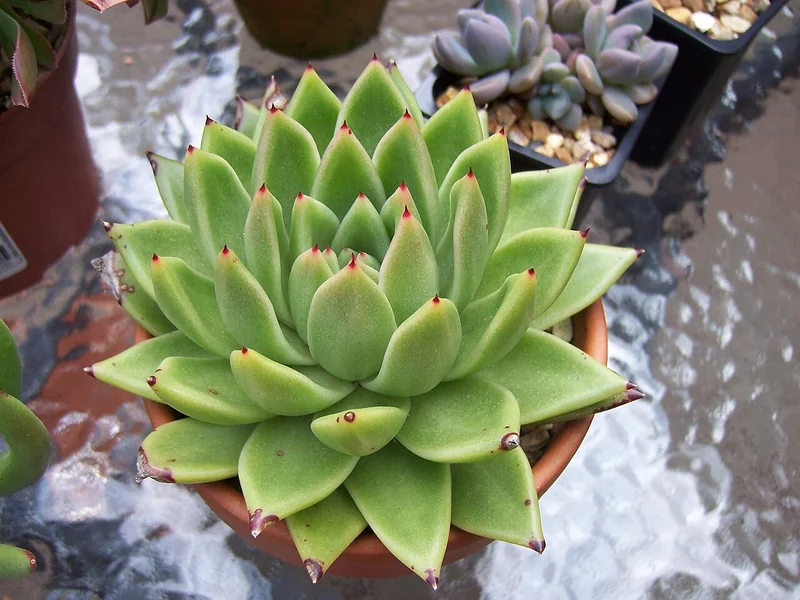
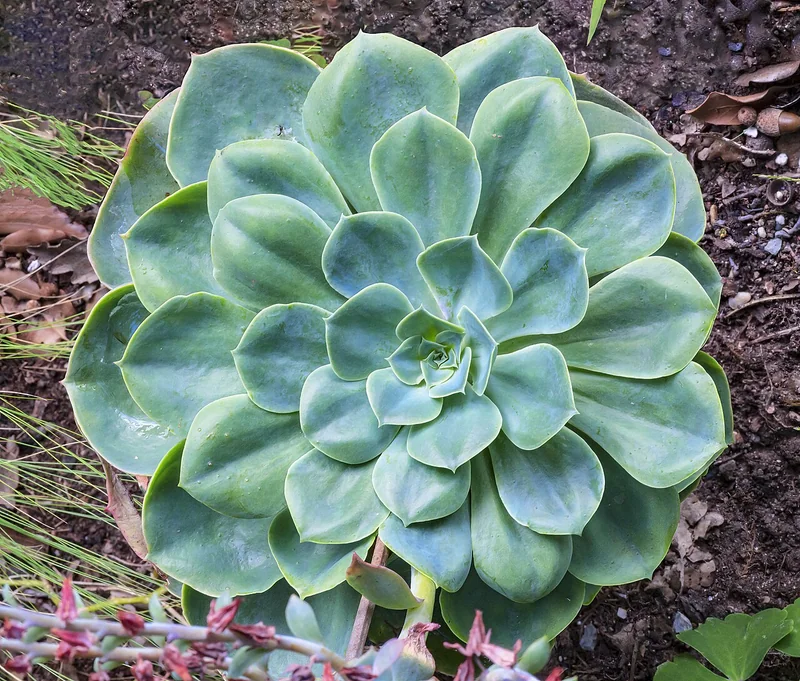
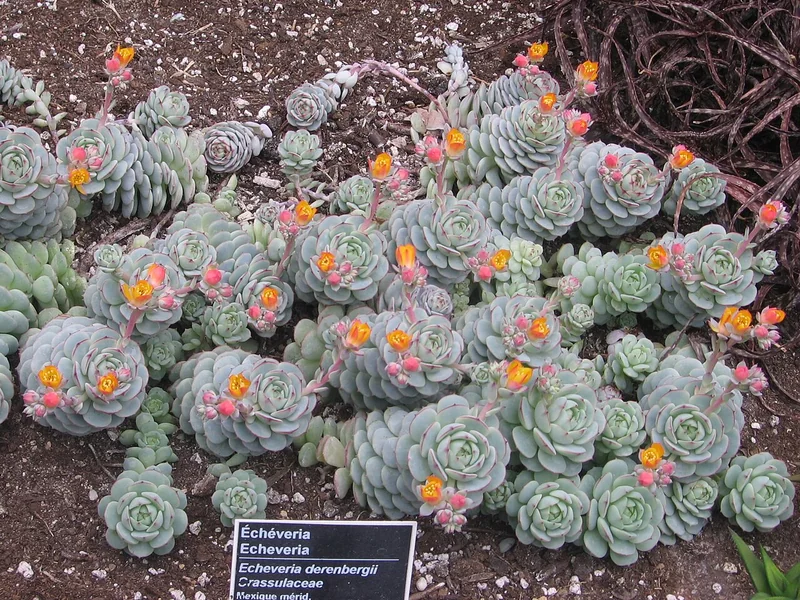
Echeveria elegans
Echeveria elegans (Mexican Snowball) Care Guide
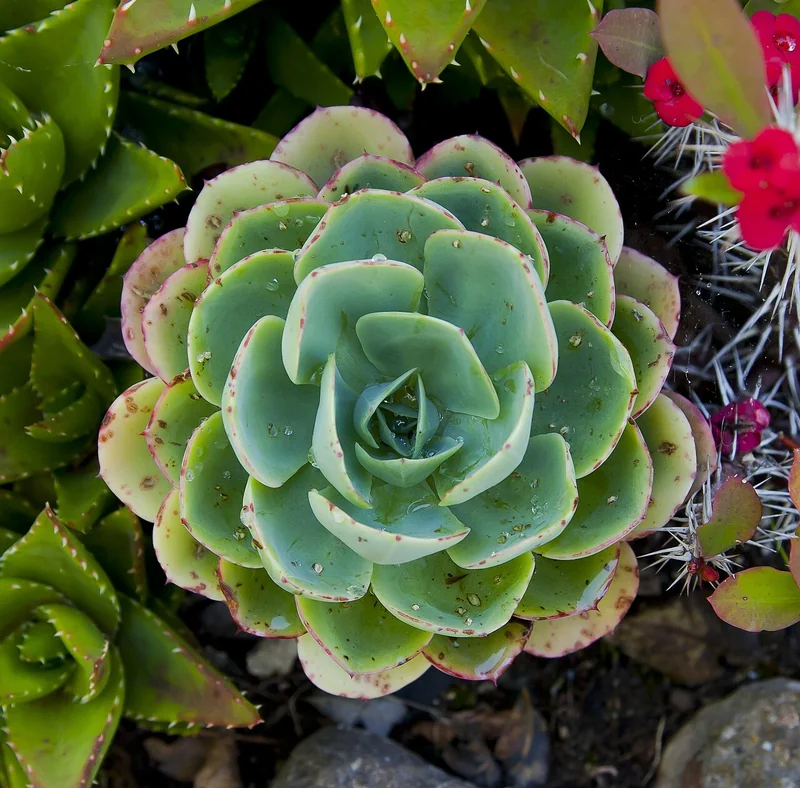 Featured photoecheveria-elegans.jpg
Echeveria elegans is the Mexican snowball, a Mexican rosette succulent with chubby pale blue-green leaves arranged in tight perfect rosettes. It produces pink-and-yellow bell flowers on long arching stalks. It is one of the most popular echeverias and one of the easier rosette succulents for beginners, tolerating minor neglect and propagating readily from offsets.
Care facts at a glance
- Light
- Full sun
- Water
- Water when the mix is fully dry.
- Humidity
- 30–50 %
- Temperature
- 15–27 °C
- Soil
- Free-draining cactus or succulent mix.
- Origin
- Hidalgo state, central Mexico.
- Mature size
- 10 to 20 cm tall and wide.
Overview
Echeveria elegans has been in cultivation since the late 1800s and is one of the parent species behind countless modern echeveria hybrids. The pale blue-green colour is the species standard.
Care Priorities
- Full sun or very bright filtered light.
- Pour water at the soil only; rosette centres rot fast.
- Free-draining mix is non-negotiable.
- Detach offsets and pot up to keep colonies tidy.
Common Problems
Stretched rosette with widely spaced leaves is low light. Mushy centre is rot from water in the rosette. Pink-purple stress colour is normal in strong sun and cool weather.
Sources & further reading (2)
- encyclopedia — accessed 2026-04-28
- botanical-garden — accessed 2026-04-28
Frequently asked questions
Why is my echeveria stretching?
Stretching (etiolation) is the textbook sign of low light. Move to full sun and new growth comes in tighter.
How often should I water in winter?
Once a month or less. Winter overwatering is the leading cause of echeveria failure.
Can I propagate from a single leaf?
Yes — gently twist a leaf off, lay it on moist mix, and tiny plantlets emerge from the cut end within weeks.