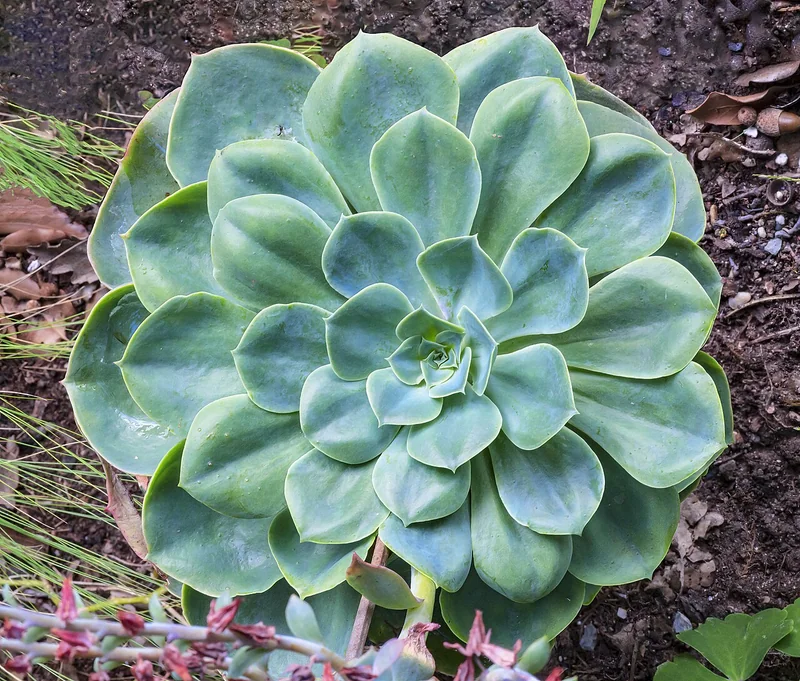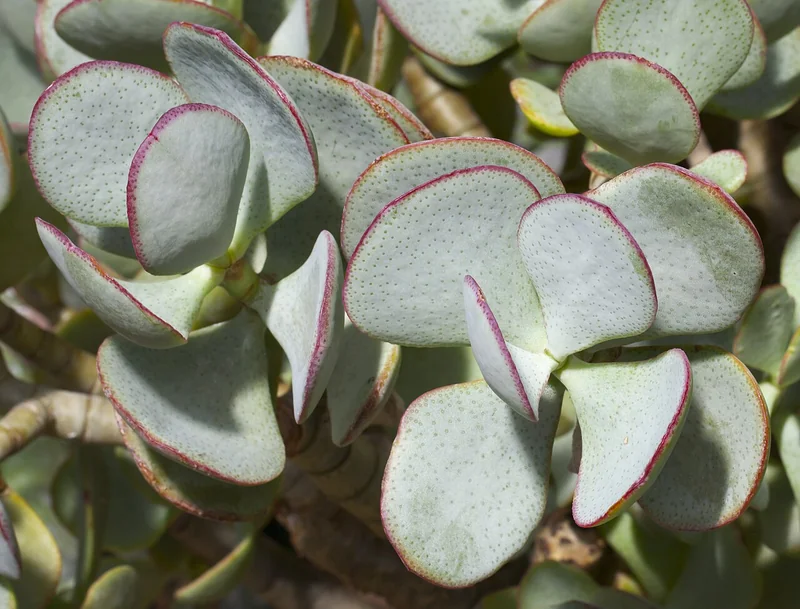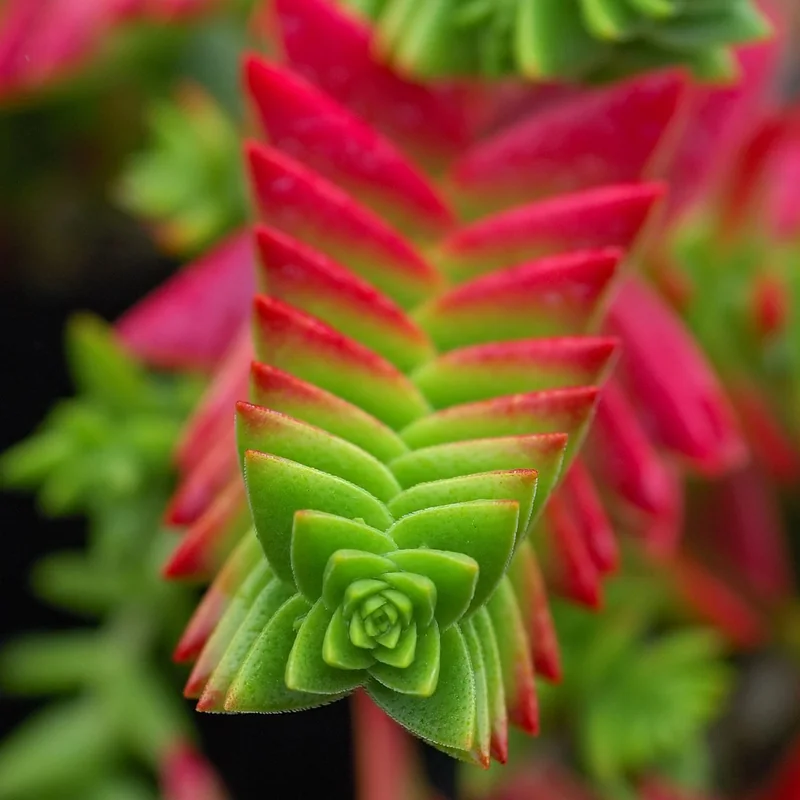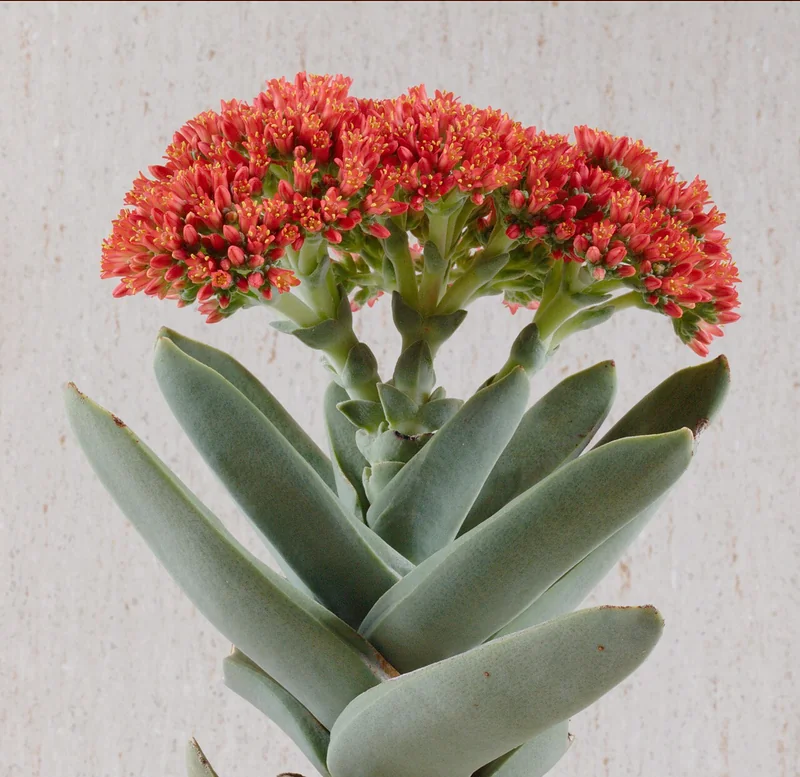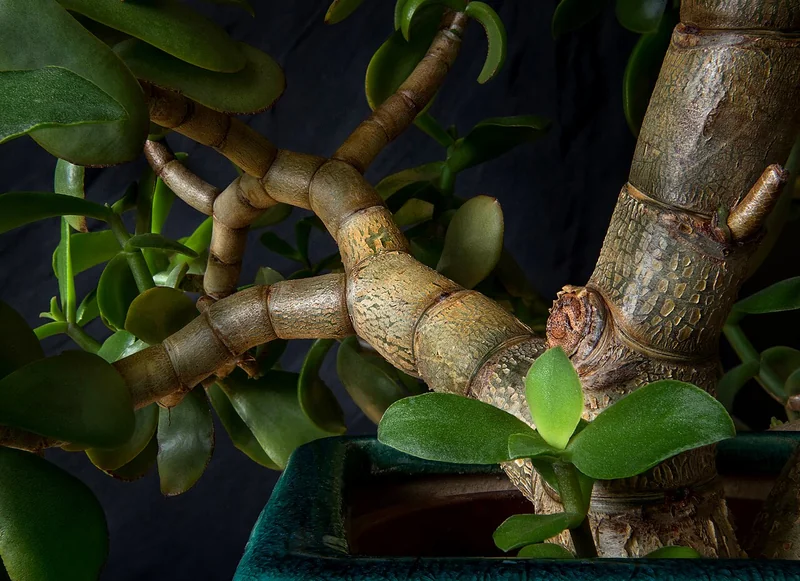
Crassula ovata is the jade plant, a South African succulent shrub with thick, oval, glossy leaves on woody stems. It is one of the most popular indoor succulents and one of the longest-lived — well-tended specimens last decades and develop tree-like trunks. It tolerates direct sun, drought, and minor neglect, but rots quickly in soggy mix.
Care facts at a glance
- Light
- Full sun
- Water
- Water deeply only when the mix is fully dry; typically every 2 to 3 weeks in summer.
- Humidity
- 30–50 %
- Temperature
- 15–27 °C
- Soil
- Free-draining cactus or succulent mix with extra perlite or pumice.
- Origin
- Eastern Cape and KwaZulu-Natal provinces, South Africa.
- Mature size
- 60 to 120 cm tall indoors over many years.
Overview
Crassula ovata has been in European cultivation since the 1700s. Many cultivars exist, including the variegated Tricolor and the smaller Hobbit and Gollum forms with tubular leaves.
Care Priorities
- Full sun or very bright filtered light.
- Water rarely — jade plants store enough water for weeks of drought.
- Free-draining cactus mix is non-negotiable.
- Avoid winter overwatering; rot at low temperatures is the leading killer.
Common Problems
Mushy leaves and stems is overwatering. Wrinkled leaves are extreme drought (rare). Black leaf tips are usually winter frost damage.
Sources & further reading (2)
- encyclopedia — accessed 2026-04-28
- botanical-garden — accessed 2026-04-28
Frequently asked questions
Why is my jade plant dropping leaves?
Sudden leaf drop is usually a stress reaction to a watering swing or temperature change. Jade plants prefer steady conditions.
How big can it get?
Outdoor specimens in mild climates can reach 2 metres. Indoor plants stay 60 to 120 cm tall over decades.
Hobbit and Gollum cultivars — same care?
Same care as the typical jade. The tubular leaves are a genetic mutation, not different needs.