Begonia subvillosa
Begonia subvillosa Care Guide
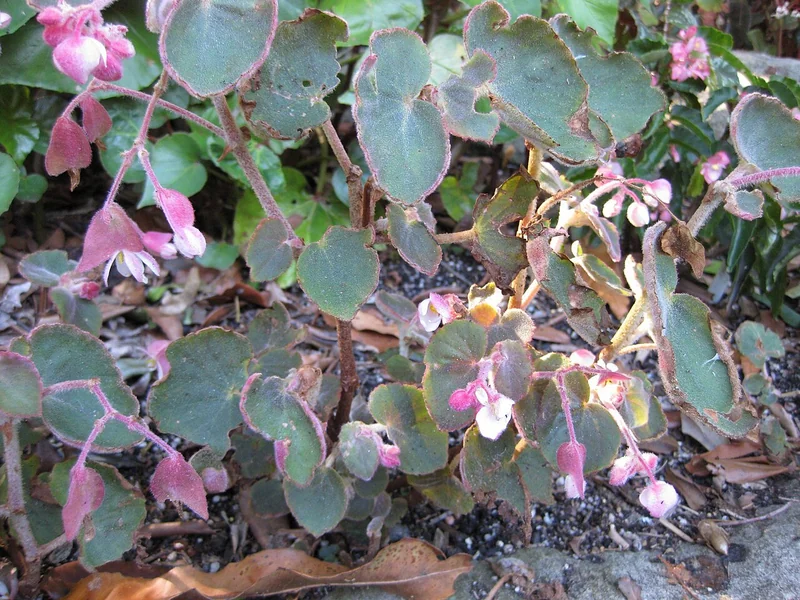 Featured photobegonia-subvillosa.jpg
Begonia subvillosa is a fibrous-rooted Brazilian begonia distinguished by its softly hairy, velvety-textured leaves in bronze-green with slightly toothed margins — a tactile quality that sets it apart from the many glossy-leaved begonias in cultivation. It produces loose sprays of white flowers on long stems seasonally. While less flamboyant than many ornamental begonias, its elegant foliage texture and compact growth make it a refined collector's plant, and it is more tolerant of lower humidity than the more demanding velvet-leaved species.
Care facts at a glance
- Light
- Bright indirect
- Water
- Water when the top 2 cm of medium dries; approximately every 7 to 10 days.
- Humidity
- 50–70 %
- Temperature
- 16–28 °C
- Soil
- Free-draining potting mix with added perlite; pH 5.5–6.5.
- Origin
- Humid forests of eastern Brazil.
- Mature size
- Compact upright habit; 30–50 cm tall.
Overview
Begonia subvillosa Klotzsch was described in 1855 from Brazilian collections. It belongs to the fibrous-rooted section of Begonia. The soft hair covering (trichomes) on the leaf surface serves multiple functions in its natural habitat: reducing water loss from the leaf surface, protecting against insect browsing, and channelling dew and light rain down toward the stem and roots. The bronze-green colouration reflects a combination of green chlorophyll and red-brown anthocyanin pigmentation, which gives the leaf its warm metallic hue.
Care Priorities
- Water at the soil line only — never mist or wet the hairy leaves; moisture trapped in the trichomes creates ideal conditions for Botrytis.
- Good airflow around the plant reduces fungal risk without requiring the leaf surface to dry from overhead watering.
- Bright, indirect light maintains the best bronze-green colour intensity; in deep shade the leaves become paler and duller.
- Pinch leggy stems back to 15 cm in spring to promote bushy regrowth.
Common Problems
Botrytis (grey mould) developing on the leaf surface is almost always caused by overhead watering or misting; switch to base watering immediately and remove affected leaves. Powdery mildew in cool, humid, stagnant air is the other main fungal issue; improve ventilation. Thrips damage is visible as pale silvery streaks on the leaf surface where they have rasped the cells; treat with systemic insecticide applied to the soil as a drench. Loss of the hairy texture due to physical damage (leaf rubbing against supports or other plants) is permanent on individual leaves but new growth replaces damaged foliage.
Sources & further reading (2)
- botanical-garden — accessed 2026-05-27
- encyclopedia — accessed 2026-05-27
Frequently asked questions
Can I touch the hairy leaves?
Yes — the hairs are soft and non-irritating, giving the leaves a pleasant velvety feel. Unlike the stiff, irritating hairs on some succulents or the glandular hairs of sundews, B. subvillosa trichomes are soft and silky. However, frequent touching deposits oils and dust on the leaf surface; clean by very gently wiping with a soft dry brush rather than a damp cloth.
Why does the leaf colour vary?
The bronze-green colour depends on the balance of green chlorophyll and red-brown anthocyanin in the leaves. In brighter light more anthocyanin is produced, deepening the bronze tone. In lower light the leaves become greener as chlorophyll becomes dominant. Both colour forms are healthy.
Is it related to B. bowerae?
Both are fibrous-rooted begonias but they are from different regions and sections. B. bowerae (eyelash begonia) is Mexican with distinctive white-lashed leaf margins; B. subvillosa is Brazilian with overall hairy texture. They require similar care conditions but are taxonomically distinct.