Anthurium papillilaminum
Anthurium papillilaminum Care Guide
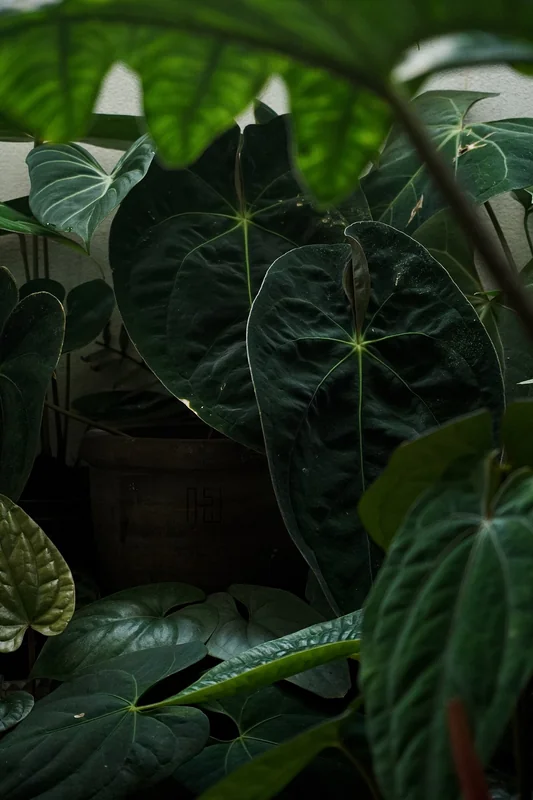 Featured photoanthurium-papillilaminum.jpg
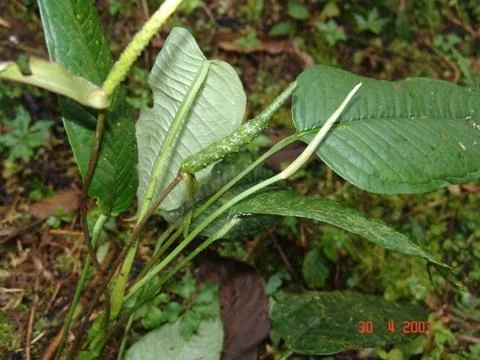
Anthurium papillilaminum is a rare, velvet-leaf aroid from Panama prized for its large, deeply ribbed, and papillose leaf surface — the microscopic bumps on the blade give it a matte, almost suede-like texture that sets it apart from smoother velvet anthuriums. Leaves can reach 40 cm long and are held on long, graceful petioles. It demands consistent high humidity and warmth to perform well indoors, and is considered one of the more challenging but rewarding velvet anthuriums for collectors.
Care facts at a glance
- Light
- Bright indirect
- Water
- Water when the top 2 to 3 cm of mix has dried but the root zone remains barely moist.
- Humidity
- 70–90 %
- Temperature
- 18–28 °C
- Soil
- Ultra-open aroid mix: coarse bark, perlite, sphagnum moss in roughly equal parts.
- Origin
- Cloud forests and humid lowlands of Panama.
- Mature size
- 50 to 80 cm tall; leaves to 40 cm long.
Overview
Anthurium papillilaminum was formally described by Thomas Croat and is named for the papillae (tiny bumps) covering its leaf surface. It is often grouped with other velvet-leaf anthuriums like A. crystallinum and A. magnificum but is distinguished by its more pronounced surface texture and the deep, narrow sinus at the base of the leaf. It is rarer in cultivation than its velvet-leaf relatives.
Care Priorities
- Humidity above 70 percent is essential; consider a grow tent or cabinet setup for consistent results.
- Avoid direct sun — bright, filtered light is optimal.
- Chunky, fast-draining mixes prevent the root rot to which this species is particularly susceptible.
- New leaves emerge bronze and turn dark green; protect unfurling growth from dry air.
Common Problems
New leaves that arrive stunted, pale, or with damaged margins almost always indicate humidity failure or thrip damage during the unfurling phase. Older leaves yellowing rapidly suggests overwatering or fertiliser salt burn; flush the substrate with clean water and check root health. The papillose leaf surface can trap dust and mites — inspect regularly with a loupe.
Sources & further reading (2)
- botanical-garden — accessed 2026-05-08
- encyclopedia — accessed 2026-05-08
Frequently asked questions
How does A. papillilaminum differ from A. crystallinum?
Papillilaminum has a distinctly bumpy (papillose) surface texture and a narrower leaf sinus, while crystallinum has a smoother, more velvety blade and rounder heart-shaped lobes at the base.
Does it need a terrarium?
Not necessarily, but high humidity is non-negotiable. In dry climates a grow cabinet or tent with a humidifier produces better results than open-room cultivation.
How often does it produce new leaves?
Slowly — one new leaf every 6 to 10 weeks is typical. Patience and stable conditions are more productive than frequent changes to its environment.