Anthurium besseae
Anthurium besseae Care Guide
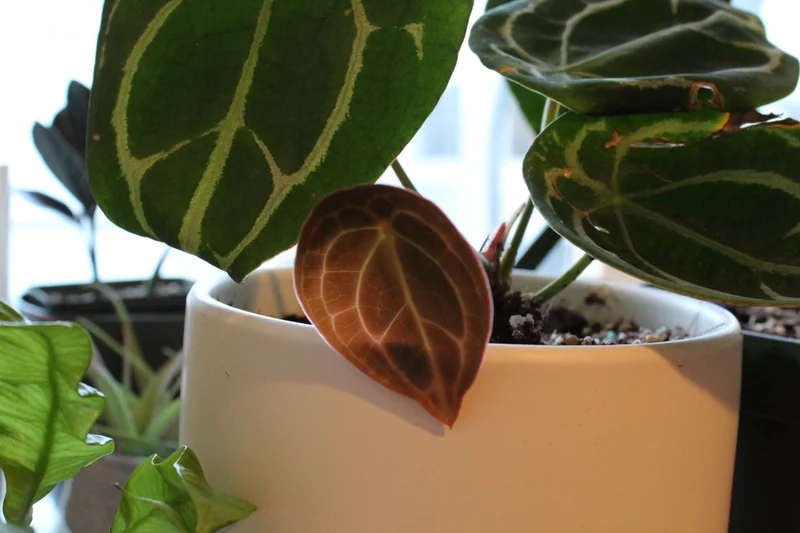 Featured photoanthurium-besseae.jpg
Anthurium besseae is a compact Peruvian velvet-leaf species that produces deep-green, matte leaves with pronounced venation. It is prized among aroid collectors for its manageable size — leaves rarely exceed 25 cm — and its tolerance for slightly lower humidity compared with larger velvet anthuriums. The petioles often display an attractive reddish or orange flush, and new leaves emerge with a bronzed hue before maturing to glossy dark green.
Care facts at a glance
- Light
- Bright indirect
- Water
- Water when the top 2 to 3 cm of substrate has dried.
- Humidity
- 60–85 %
- Temperature
- 17–27 °C
- Soil
- Well-draining aroid mix with bark, perlite, and sphagnum moss.
- Origin
- Humid montane forests of Peru.
- Mature size
- 30 to 50 cm tall; leaves 15 to 25 cm long.
Overview
Anthurium besseae was described by Thomas Croat and is named in honour of the Besse family. Its compact stature makes it more suitable for window sills and small grow spaces than larger velvet anthuriums. The species is sometimes available in a dwarf or aff. form that is even more compact.
Care Priorities
- Maintain humidity between 60 and 85 percent for consistent leaf quality.
- Bright, filtered light produces the best colour; too much shade results in slower growth and paler venation.
- Use well-draining substrate — small pots with dense media are prone to root rot.
- Avoid salt build-up from tap water; flush the medium monthly with clean water.
Common Problems
Browning leaf tips indicate low humidity or salt stress from hard water. If new leaves arrive pale or yellowish, the plant may need more filtered light or a dose of balanced fertiliser. Thrips are particularly destructive on velvet-leaf anthuriums during leaf unfurling; inspect new growth under magnification regularly.
Sources & further reading (2)
- botanical-garden — accessed 2026-05-08
- encyclopedia — accessed 2026-05-08
Frequently asked questions
Is A. besseae harder to grow than A. crystallinum?
It is generally considered slightly easier due to its more compact size and tolerance for humidity as low as 60 percent, which is achievable in many homes.
How long until new leaves appear?
One new leaf every 6 to 10 weeks is typical under good conditions. Stable warmth and humidity above 65 percent accelerates production.
Does the petiole colour change over time?
Yes — young petioles often display a reddish or orange tint that fades to green as they mature. This is a normal pigmentation feature of the species.