Phodopus sungorus
Winter White Dwarf Hamster (Phodopus sungorus)
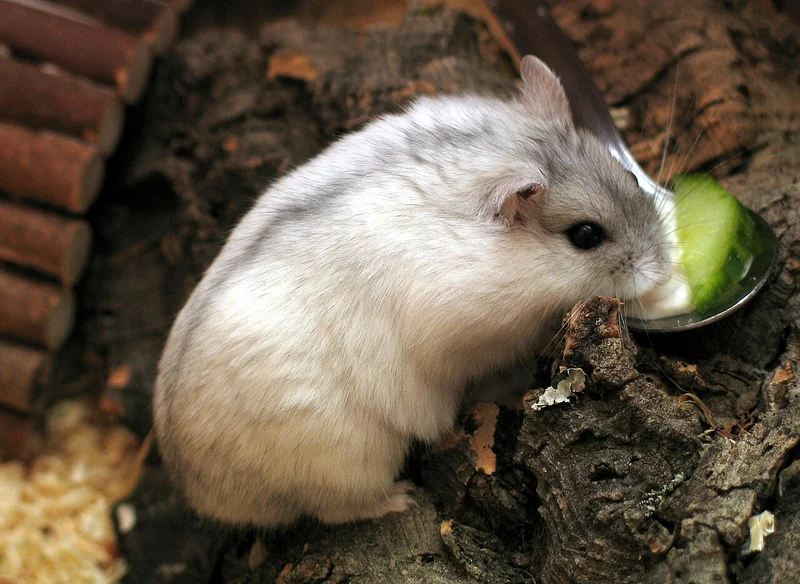 Featured photowinter-white-dwarf-hamster.jpg
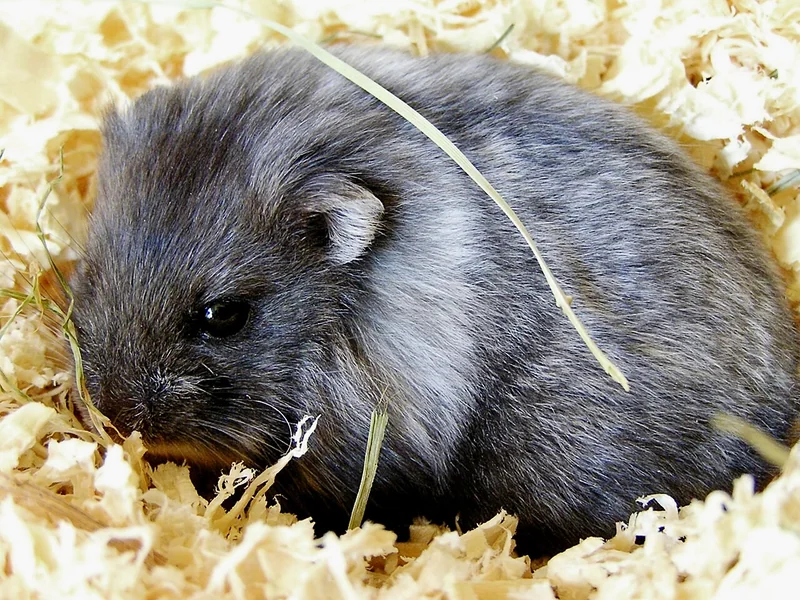
Phodopus sungorus, the Djungarian or winter-white dwarf hamster, is a small Phodopus species native to the steppes of western Siberia, eastern Kazakhstan, and northern Mongolia. The species is the only commonly known hamster with a visible photoperiod-driven coat change: under shortening daylight the dorsal fur moults from grey to off-white, with the dark dorsal stripe persisting as a thin line. Wild winters in the range fall below minus 25 degrees Celsius.
Quick facts
- Lifespan
- 1.5–2 years
Overview
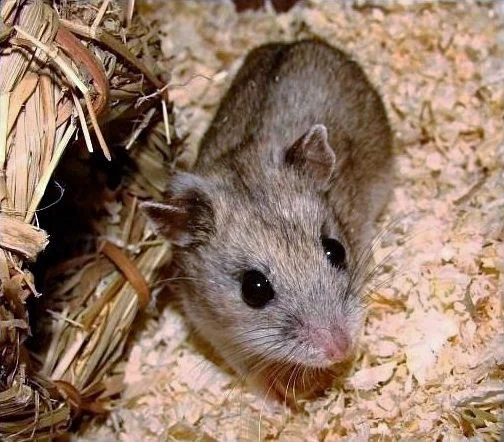
Phodopus sungorus is a small dwarf hamster eight to ten centimetres long. The summer coat is grey-brown above with a thick dark dorsal stripe and a white belly. Under shorter daylight the dorsal coat moults to off-white; the stripe remains as a darker thin line. The species is named after the Dzungaria (Junggar) basin of north-western China, near the western edge of the historical wild range.
Distribution
The wild range covers western Siberia, the Trans-Baikal region, eastern Kazakhstan, and northern Mongolia. Habitat is dry steppe and semi-desert, often co-occurring with grass species in the Stipa genus. The IUCN Red List assesses the species as Least Concern; the steppe habitat is large but agricultural conversion is a long-term pressure.
Photoperiod-driven moult
The seasonal coat change is triggered by daylight length, not temperature. Below about twelve hours of daylight per day, melanin deposition in the new dorsal hairs is suppressed and the moult produces an off-white coat. Captive animals kept under steady artificial lighting generally do not undergo the moult — the cue is environmental, not internal.
Behaviour
Crepuscular and partially nocturnal in the wild. Phodopus sungorus digs shallow burrow systems and is more solitary than Phodopus campbelli, with adult home ranges that overlap less. Activity is dampened on nights with full moonlight, a presumed anti-predator response.
Sources & further reading (2)
- iucn-red-list — accessed 2026-04-29
- encyclopedia — accessed 2026-04-29
Frequently asked questions
Why does the coat turn white?
Photoperiod, not temperature. Under fewer than about twelve hours of daylight per day the new dorsal hairs grow with reduced melanin, producing an off-white coat with the dark dorsal stripe still visible. Captive animals under steady artificial lighting often do not undergo the moult.
Where does Phodopus sungorus live in the wild?
The wild range covers western Siberia, the Trans-Baikal region of Russia, eastern Kazakhstan, and northern Mongolia. Habitat is dry steppe and semi-desert. The IUCN Red List assesses the species as Least Concern.
How is the winter white different from the Campbell's?
Phodopus sungorus undergoes the photoperiod-driven moult to a near-white winter coat; Phodopus campbelli does not, and stays grey-brown year-round. The winter white also tends to a thicker dorsal stripe and a slightly more compact build. The two are sister species and remain interfertile in captivity, but hybrid offspring show reduced fitness.