Phodopus roborovskii
Roborovski Dwarf Hamster (Phodopus roborovskii)
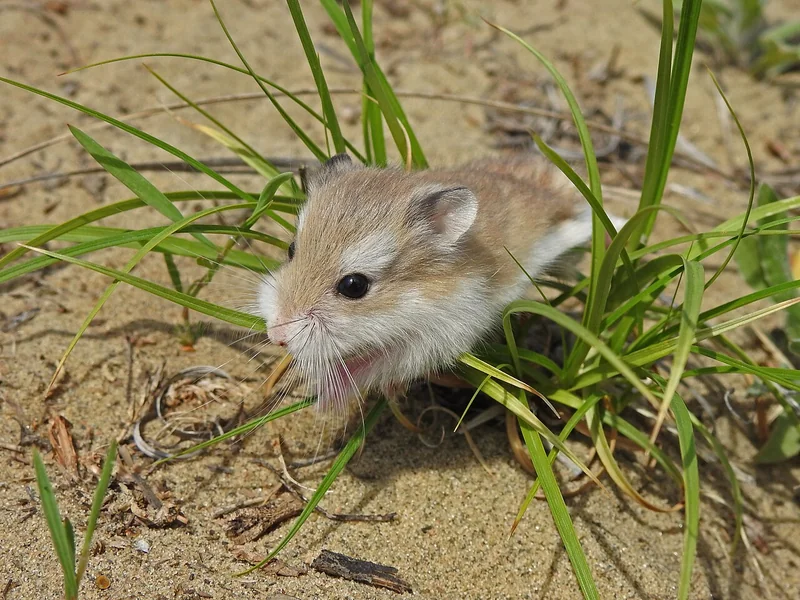 Featured photoroborovski-dwarf-hamster.jpg
Phodopus roborovskii is the smallest of the Phodopus dwarves: adults measure four to five centimetres and weigh under 25 grams. The wild range covers the Gobi Desert and the surrounding sandy steppes of Mongolia and northern China. The species is named after Lieutenant Vsevolod Roborovsky, the Russian explorer who collected the type specimen in 1894. It is the longest-lived of the commonly known hamsters.
Quick facts
- Lifespan
- 2.5–3.5 years
Overview
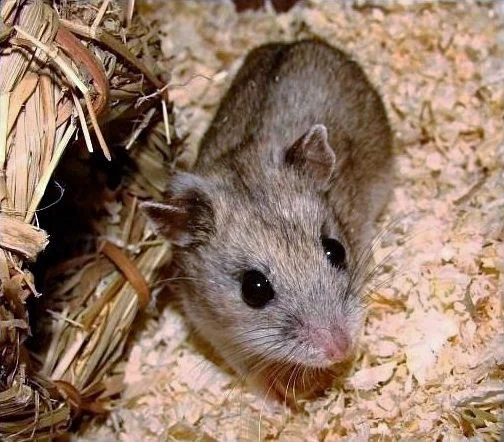
Phodopus roborovskii is the smallest commonly known hamster: adults reach four to five centimetres and rarely exceed 25 grams. The dorsal coat is sandy-buff, the underside is white, and the species lacks the dark dorsal stripe of its Phodopus relatives. Two distinct white eye-spots above the eyes are a reliable field mark.
Distribution
The wild range covers the Gobi Desert and surrounding sandy steppes of Mongolia and northern China, with disjunct records in Tuva and adjacent parts of Russia. Habitat is sandy desert and semi-desert with sparse Stipa and Artemisia vegetation. The IUCN Red List assesses the species as Least Concern.
Behaviour
Strictly nocturnal in the wild. Phodopus roborovskii digs deep burrow systems — to depths of more than 1.5 metres — that buffer the daytime surface heat of the desert range. Movement is fast and continuous: radio-tracking studies record nightly traverses of several kilometres across the home range.
Discovery
The type specimen was collected in 1894 by Lieutenant Vsevolod Roborovsky during a Russian Imperial Geographical Society expedition through Mongolia and Tibet. The species was formally described in 1903 by Konstantin Satunin, who placed it in the genus Phodopus alongside the previously described campbelli and sungorus.
Sources & further reading (2)
- iucn-red-list — accessed 2026-04-29
- encyclopedia — accessed 2026-04-29
Frequently asked questions
How small is the Roborovski hamster?
Adults are four to five centimetres long and weigh under 25 grams — the smallest commonly known hamster species. The Phodopus genus as a whole contains the smallest hamsters; Roborovski is the smallest of the three Phodopus species.
Where does the species' name come from?
Phodopus roborovskii was named after Lieutenant Vsevolod Roborovsky, the Russian explorer who collected the type specimen in 1894 during a Geographical Society expedition through Mongolia and Tibet. The species was formally described by Konstantin Satunin in 1903.
How long does the species live?
Two and a half to three and a half years is typical, with longer records in some captive lines — making Phodopus roborovskii the longest-lived of the commonly known hamsters. Wild lifespan is shorter, principally due to predation pressure from owls and small carnivores.