Canis lupus familiaris
Transylvanian Hound
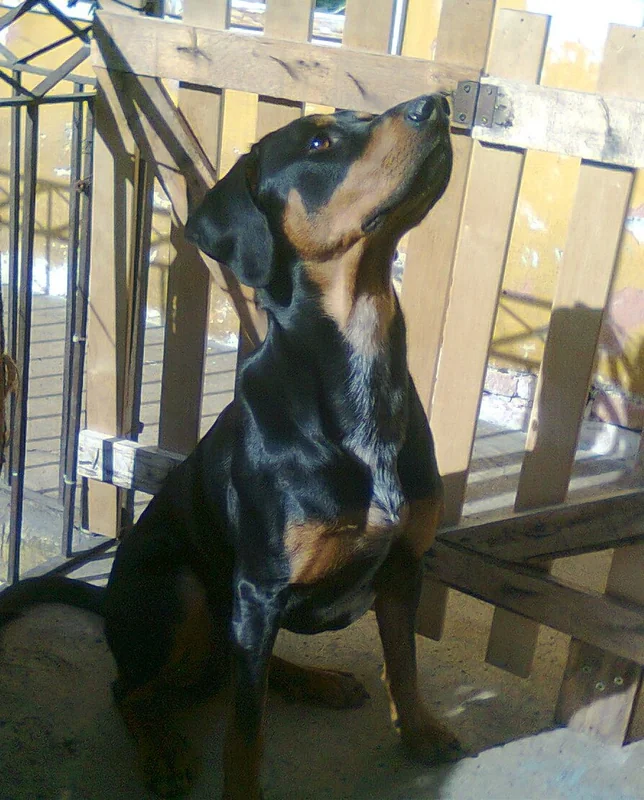 Featured phototransylvanian-hound.jpg
The Transylvanian Hound is an ancient Hungarian scent hound developed over a millennium in the Carpathian mountain region of Transylvania (modern-day Romania), once the exclusive hunting dog of the Magyar nobility and Hungarian royalty. Nearly extinguished in Romania in the 20th century, the breed was revived in Hungary. The FCI registers it as No. 241 under Hungary's patronage. Males stand 55–65 cm.
Quick facts
- AKC group
- Hound
- Origin country
- Hungary / Romania
- Origin period
- Medieval, documented from 9th century
- Coat type
- Short
- Coat colors
- Black and Tan, Black with Tan Markings and White Points
- Average lifespan
- 12-14 years
- Recognition
- FCI 1968 · Group 6 — Scenthounds and Related Breeds (Section 1.2: Medium-sized Hounds)
Origin
The Transylvanian Hound (Hungarian: 'Erdélyi Kopó', Transylvanian Hound; Romanian: 'Copoi Ardelenesc') developed in the Carpathian mountains of Transylvania — the mountainous region of the historical Kingdom of Hungary, now part of Romania. The breed's founding ancestry is traced to the Magyar hunting hounds that arrived in the Carpathian Basin in 895 AD and subsequently crossbred with local Slavic, Celtic, and possibly Turkish or Asian hound types. By the medieval period the breed was documented in royal hunting chronicles as the prized hound of Hungarian kings for hunting the large and dangerous game of the Carpathian forests.
Recognition
The breed nearly disappeared in Romania during the 20th century as hunting culture changed. Hungarian cynologists located surviving specimens in the Transylvanian region and initiated a reconstruction program. The FCI recognised the Transylvanian Hound under standard No. 241 in 1968, assigning it to Group 6, Section 1.2 (Medium-sized Hounds) with Hungary as patron country. The breed is not currently recognised by the AKC or UKC.
Standard
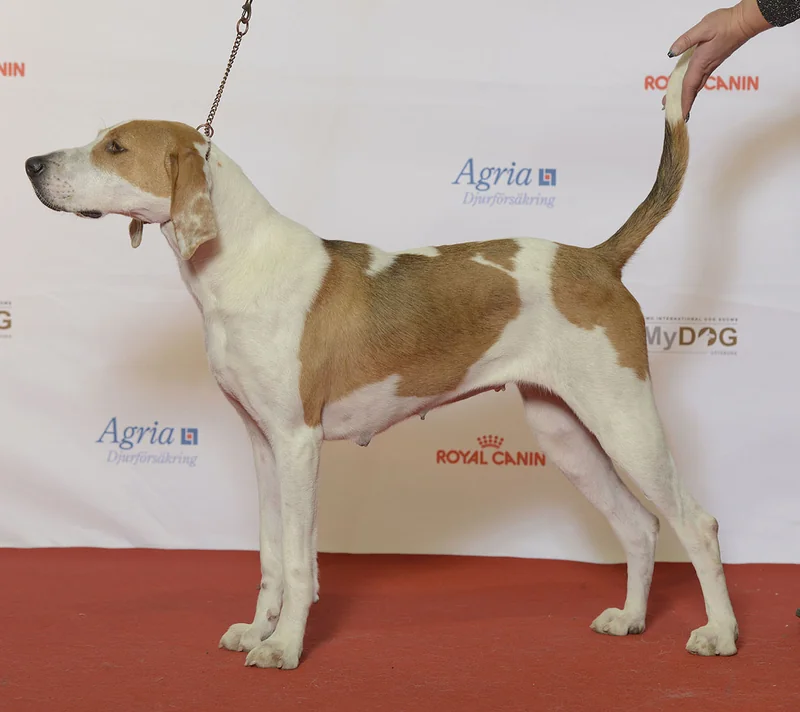
The FCI standard describes a medium-to-large, strongly built, muscular hound with a long, clean head, a slightly domed skull, and low-set, rounded, pendulous ears. The short, dense, coarse coat is always black with rich tan markings above the eyes, on the muzzle, chest, and legs, with or without white points on the muzzle, chest, or feet. Males stand 55–65 cm and weigh 25–35 kg. The small variety of the Transylvanian Hound (30–38 cm) is considered extinct.
Sources & further reading (3)
- fci-standard — accessed 2026-05-27
- encyclopedia — accessed 2026-05-27
- kennel-club-registry — accessed 2026-05-27
Frequently asked questions
Is the Transylvanian Hound the same as the Hungarian Hound?
The Transylvanian Hound (Erdélyi Kopó) is sometimes called the Hungarian Hound because it was the primary hunting dog of the historical Kingdom of Hungary and was associated with the Magyar nobility for over a millennium. Transylvania was part of the Kingdom of Hungary from the 10th century until 1918, after which it became part of Romania. The breed's patronage was claimed by Hungary in the FCI registration; it is distinct from the Hungáriai Vizsla (Hungarian Pointing Dog).
Is the Transylvanian Hound AKC recognised?
The Transylvanian Hound is not currently recognised by the AKC or UKC. The FCI has recognised the breed since 1968 under standard No. 241, with Hungary as patron country.
Are there two sizes of the Transylvanian Hound?
Historically, two sizes of the Transylvanian Hound existed: a large type (55–65 cm) used for hunting bear, lynx, boar, and stag in the Carpathian forests, and a small type (30–38 cm) used for fox and hare in lower terrain. The small variety declined in the 20th century and is now considered extinct. The FCI standard and all modern breeding programs concern the large variety only.