Canis lupus familiaris
Azawakh
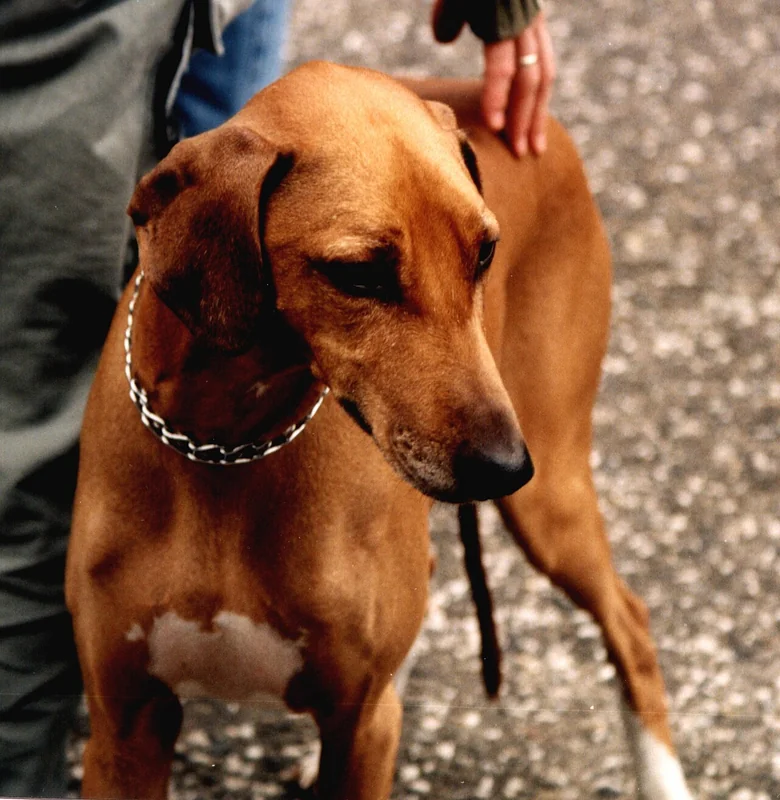 Featured photoazawakh.jpg
The Azawakh is a tall, slender sighthound originating from the Azawakh Valley of the Sahel region in West Africa, where it was bred by Tuareg, Fula, and other nomadic peoples as a guard dog and coursing hound. One of the fastest dog breeds in the world, the Azawakh can reach speeds exceeding 64 km/h and was traditionally used to course gazelle and hare across open desert terrain. Its distinctive build — extreme angularity, long legs, and short, fine coat — reflects thousands of years of natural and selective breeding in a harsh, hot climate. The AKC admitted the Azawakh in 2019.
Quick facts
- AKC group
- Hound
- Origin country
- Mali
- Origin period
- Ancient
- Coat type
- Short
- Coat colors
- Fawn, Sandy, Dark Fawn to Brindle, Black
- Average lifespan
- 12-15 years
- Recognition
- AKC 2019 · FCI 1981 · UKC 1993 · Group 10 — Sighthounds (Section 3: Short-haired Sighthounds)
Origin
The Azawakh takes its name from the Azawakh Valley, a river valley straddling the border of present-day Mali and Niger in the West African Sahel. For millennia, Tuareg, Fula, and Daza nomadic pastoralists bred this hound as a coursing dog for gazelle and desert hare and as a camp guardian. Unlike most sighthounds, the Azawakh was also expected to defend its owners' livestock and camp from predators and intruders. The first confirmed introduction to Europe was by a Yugoslav diplomat, Dr. Pecar, who brought specimens from Upper Volta (now Burkina Faso) to Yugoslavia in 1968; French breeders subsequently established the breed in Europe.
Recognition
The FCI initially grouped the Azawakh with the Sloughi; after re-evaluation, it was granted independent status and received its own FCI standard (FCI No. 307) in 1981, with Mali as the patron country. The UKC recognised the breed in 1993. The AKC admitted the Azawakh to the Miscellaneous Class in 2011 and granted full Hound Group recognition in 2019 — making it the first AKC-recognised breed originating from sub-Saharan West Africa.
Standard
The FCI and AKC standards describe an extremely tall and slender sighthound with a dry, muscular body over which all bones and muscles are clearly visible beneath the thin, fine skin. The head is long and narrow with a flat skull and a barely perceptible stop; the coat is very short, almost non-existent on the belly. Accepted colours include clear sand to dark fawn, brindle, blue-fawn, and black, with optional white markings on the extremities and chest. Males stand 64–74 cm; females 60–70 cm.
Sources & further reading (3)
- kennel-club-registry — accessed 2026-05-07
- encyclopedia — accessed 2026-05-07
- fci-standard — accessed 2026-05-07
Frequently asked questions
What AKC group does the Azawakh belong to?
The AKC places the Azawakh in the Hound Group as a sighthound — a type of hunting dog that pursues prey primarily by sight and speed rather than scent. The Azawakh was developed in the West African Sahel for coursing gazelle and desert hare across open desert terrain. It is the first AKC-recognised breed originating from sub-Saharan West Africa.
How fast can an Azawakh run?
The Azawakh is one of the fastest dog breeds in the world, capable of reaching speeds exceeding 64 km/h (40 mph). Its extreme body proportions — long legs, minimal body mass, and highly developed fast-twitch musculature — are the result of thousands of years of selective breeding by Tuareg and Fula pastoralists for coursing swift desert game such as gazelle and hare across the open Sahel.
When was the Azawakh recognised by the AKC?
The AKC granted full recognition to the Azawakh in 2019, placing it in the Hound Group. The breed had been in the AKC Miscellaneous Class since 2011. The FCI had recognised it since 1981 (FCI No. 307), and the UKC since 1993.