Canis lupus familiaris
Spanish Mastiff
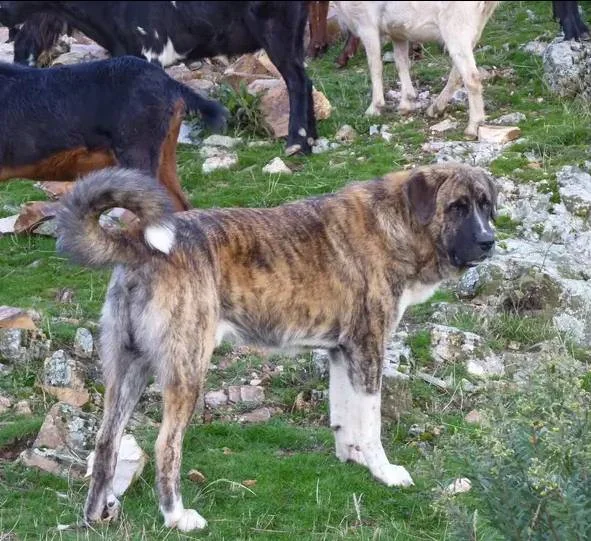 Featured photospanish-mastiff.jpg
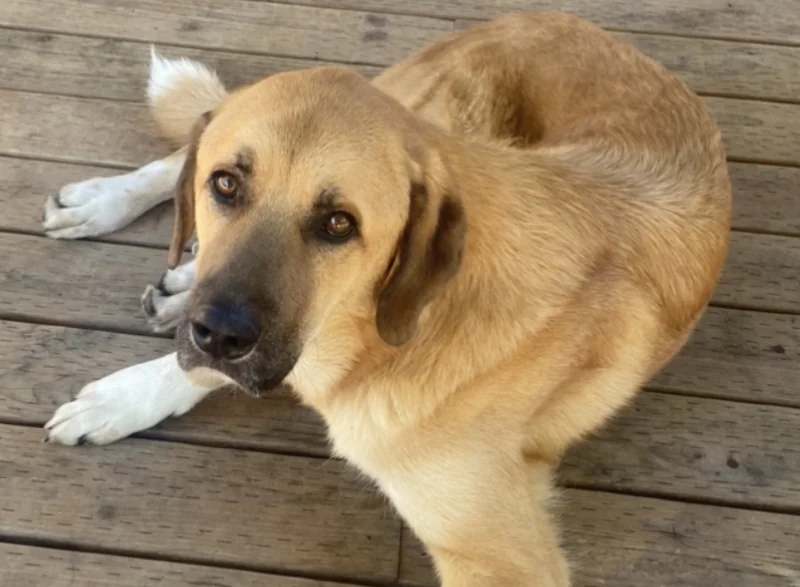
The Spanish Mastiff is a 2,000-year-old Iberian Merino-flock guardian of the Spanish trashumancia. The Spanish Mastiff is an ancient livestock-guarding mastiff of the Iberian peninsula, descended from the Roman drover-mastiffs that crossed the Pyrenees with the Roman legions.
Quick facts
- AKC group
- Working
- Origin country
- Spain
- Origin period
- Roman antiquity (formalized 1981)
- Coat type
- Medium
- Coat colors
- Any solid colour or combination — most common are red, fawn, brindle, black, with white markings
- Average lifespan
- 10-11 years
- Recognition
- FCI 1955 · UKC 2002 · Group 2 — Pinscher and Schnauzer-Molossoid breeds-Swiss Mountain and Cattle Dogs (Section 2.2: Molossoid breeds, Mountain type)
Origin
The Spanish Mastiff is an ancient livestock-guarding mastiff of the Iberian peninsula, descended from the Roman drover-mastiffs that crossed the Pyrenees with the Roman legions in the 1st century AD. The breed has been kept by Spanish shepherds for at least 2,000 years to guard the Merino sheep flocks during the seasonal trashumancia — the long-distance migration of Merino flocks between the winter pastures of southern Spain (Extremadura, Andalusia) and the summer pastures of northern Spain (León, Asturias, Cantabria) along the cañadas (drove-roads) protected by Spanish royal decree from 1273. The breed was formalized as a registered breed by the Real Sociedad Canina de España in 1981 and the FCI standard was updated in 1981. The breed has not been admitted to the AKC.
Recognition
the United Kennel Club followed in 2002, and the Federation Cynologique Internationale published the international standard (FCI No. 91) in 1955. The FCI assigns the breed to Group 2 — Pinscher and Schnauzer-Molossoid breeds-Swiss Mountain and Cattle Dogs (Section 2.2: Molossoid breeds, Mountain type).
Standard
The FCI and UKC standards describe a giant-sized, rustic, robust dog of harmonious proportions — sober, balanced, and powerful in build, with a calm and noble bearing. The medium-length, dense, smooth double coat lies close to the body. Any solid colour or combination is acceptable; the most common are red, fawn, brindle, and black, all often with white markings on the chest and toes. Males stand 77-88 cm at the withers, females 72-82 cm — the breed is among the largest of all dog breeds by absolute weight.
Sources & further reading (2)
- encyclopedia — accessed 2026-04-30
- fci-standard — accessed 2026-04-30
Frequently asked questions
What is the Spanish Mastiff's AKC group?
The American Kennel Club places the Spanish Mastiff in the Working Group. The Working Group gathers breeds developed for jobs other than herding or hunting — guarding, draft, sled work, and water rescue — including the Boxer, Rottweiler, Saint Bernard, and Newfoundland. The breed's foundation working role was as a 2,000-year-old Iberian Merino-flock guardian of the Spanish trashumancia.
When was the Spanish Mastiff officially recognized?
The United Kennel Club followed in 2002; the Federation Cynologique Internationale published the international standard (FCI No. 91) in 1955.
What is the average lifespan of a Spanish Mastiff?
Kennel-club longevity surveys place the Spanish Mastiff's average lifespan in the 10-11 years range. The figure here represents the spread reported by the major parent-club studies and the Kennel Club (UK) purebred-dog health surveys.