Canis lupus familiaris
Shetland Sheepdog
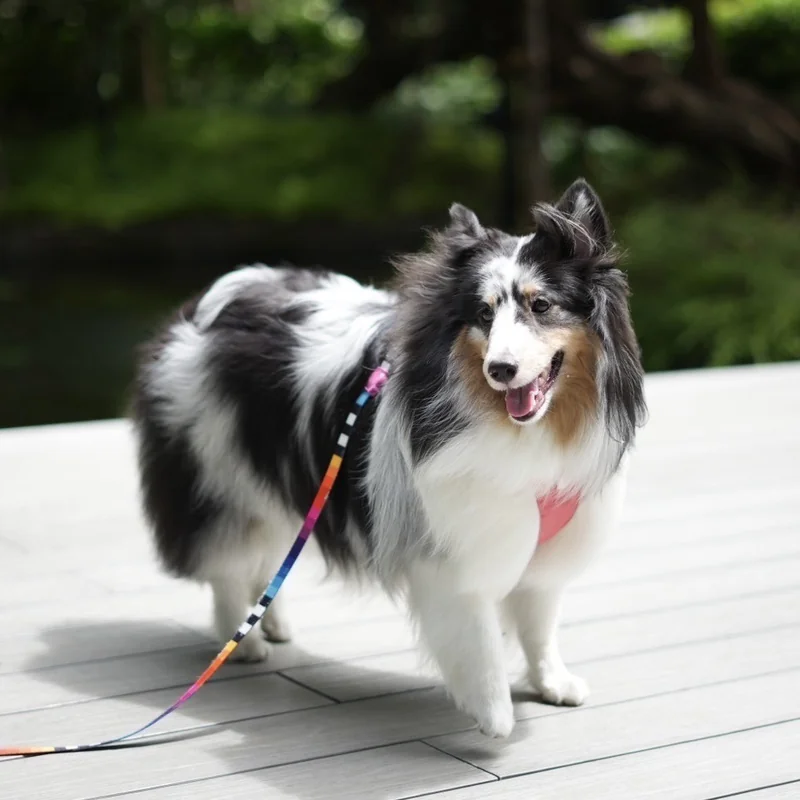 Featured photoshetland-sheepdog.jpg
The Shetland Sheepdog is a Shetland Islands small island-collie crossed with the local Spitz Toonie Dog. The Shetland Sheepdog was developed in the Shetland Islands of northern Scotland from small Scottish working collies crossed with the local Spitz-type island dogs to produce a small, hardy herding dog suited to the small Shetland sheep and the harsh North Atlantic climate.
Quick facts
- AKC group
- Herding
- Origin country
- Scotland (Shetland Islands)
- Origin period
- 19th century (formalized 1909)
- Coat type
- Long
- Coat colors
- Sable, Tricolor, Blue Merle, Black and White, Black and Tan
- Average lifespan
- 12-14 years
- Recognition
- AKC 1911 · FCI 1957 · UKC 1925 · Group 1 — Sheepdogs and Cattledogs (Section 1: Sheepdogs)
Origin
The Shetland Sheepdog was developed in the Shetland Islands of northern Scotland from small Scottish working collies crossed with the local Spitz-type island dogs (closely related to the Norwegian Buhund and the Icelandic Sheepdog), producing a small, hardy herding dog suited to the small Shetland sheep and the harsh North Atlantic climate. The Shetland landrace was originally called Toonie Dog (Shetland dialect tün, 'farm' or 'small island'). The modern type was formalized in 1909 by the Shetland Collie Club at Lerwick, but the name was changed to Shetland Sheepdog after objections from Rough Collie breeders who feared confusion. The Kennel Club registered the breed in 1909 and the AKC followed in 1911.
Recognition
The American Kennel Club admitted the breed in 1911, the United Kennel Club followed in 1925, and the Federation Cynologique Internationale published the international standard (FCI No. 88) in 1957. The FCI assigns the breed to Group 1 — Sheepdogs and Cattledogs (Section 1: Sheepdogs).
Standard
The AKC and FCI standards describe a small, alert, rough-coated, long-headed dog, intensely intelligent, strong, agile and sturdy. The defining feature is the abundant double coat: a soft, short, dense undercoat under a long, harsh, straight outer coat with a pronounced mane and frill, heavy on the rear of the legs and on the tail. Recognized colours are sable (golden through mahogany), tricolour, blue merle, black-and-white, and black-and-tan. Males stand 35-41 cm at the withers, females 33-39 cm.
Sources & further reading (3)
- kennel-club-registry — accessed 2026-05-04
- encyclopedia — accessed 2026-05-04
- fci-standard — accessed 2026-05-04
Frequently asked questions
What is the Shetland Sheepdog's AKC group?
The American Kennel Club places the Shetland Sheepdog in the Herding Group. The Herding Group, carved out of the older Working Group in 1983, gathers breeds developed to control the movement of livestock — Border Collies, Australian Shepherds, Welsh Corgis, and the German Shepherd among them. The breed's foundation working role was as a Shetland Islands small island-collie crossed with the local Spitz Toonie Dog.
When was the Shetland Sheepdog officially recognized?
The American Kennel Club admitted the breed in 1911; the United Kennel Club followed in 1925; the Federation Cynologique Internationale published the international standard (FCI No. 88) in 1957.
What is the average lifespan of a Shetland Sheepdog?
Kennel-club longevity surveys place the Shetland Sheepdog's average lifespan in the 12-14 years range. The figure here represents the spread reported by the major parent-club studies and the Kennel Club (UK) purebred-dog health surveys.