Canis lupus familiaris
Border Collie
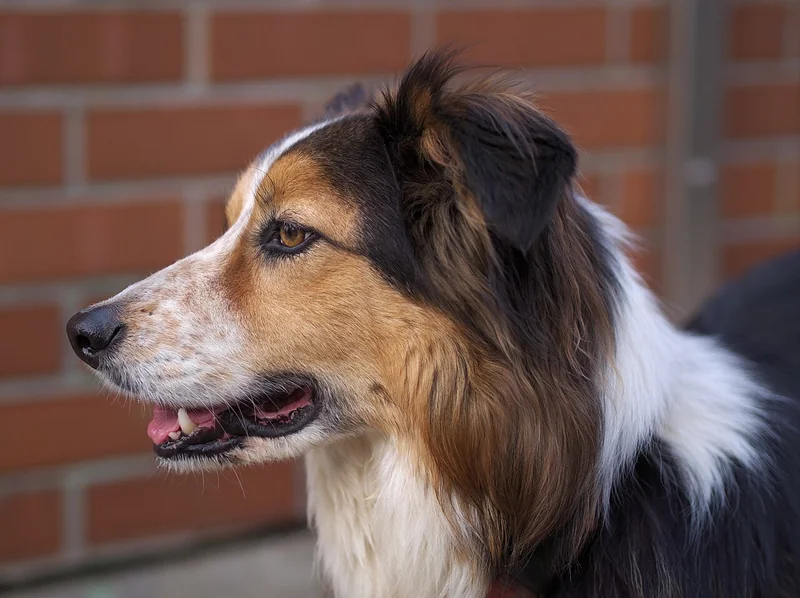 Featured photoborder-collie.jpg
The Border Collie is a Anglo-Scottish border sheepdog descended from 1893 Old Hemp's silent show-eye line. The modern Border Collie traces to a single tricolour sheepdog named Old Hemp, born in Northumberland in 1893 and bred by farmer Adam Telfer.
Quick facts
- AKC group
- Herding
- Origin country
- United Kingdom (Anglo-Scottish border)
- Origin period
- Late 19th century (1893 foundation)
- Coat type
- Medium
- Coat colors
- Black and White, Tricolor, Red and White, Blue Merle, Sable, with various pattern combinations
- Average lifespan
- 12-15 years
- Recognition
- AKC 1995 · FCI 1976 · UKC 1961 · Group 1 — Sheepdogs and Cattledogs (Section 1: Sheepdogs)
Origin
Working sheepdogs of the rough-coated 'collie' type are documented across the British Isles from at least the 16th century. The modern Border Collie traces specifically to Old Hemp, a tricolour sheepdog born in Northumberland in 1893 to farmer Adam Telfer. Old Hemp's distinctive working style — silent, crouching, with an intense unbroken gaze that became known as the 'show-eye' or 'strong eye' — proved so effective at moving sheep that Hemp sired more than 200 pups before his 1901 death and is the foundation sire of essentially every modern Border Collie. The International Sheep Dog Society was founded in 1906 and maintains the working stud-book that long predates the show-registry recognitions: the Kennel Club did not admit the breed until 1976, and the AKC followed only in 1995.
Recognition
The American Kennel Club admitted the breed in 1995, the United Kennel Club followed in 1961, and the Federation Cynologique Internationale published the international standard (FCI No. 297) in 1976. The FCI assigns the breed to Group 1 — Sheepdogs and Cattledogs (Section 1: Sheepdogs).
Standard
The AKC and FCI standards describe a well-balanced, medium-sized dog of athletic appearance, with hard muscular condition, conveying the impression of effortless movement and endless endurance. Two coat varieties are recognized: rough (medium length, with mane, breeching, and tail feathering) and smooth (short and coarse on the body, fine on the head and ears). Recognized colours include black-and-white, tricolour, red-and-white, blue merle, sable, and the full range of merle patterns. Males stand 48-56 cm at the withers, females 46-53 cm.
Sources & further reading (3)
- kennel-club-registry — accessed 2026-05-04
- encyclopedia — accessed 2026-05-04
- fci-standard — accessed 2026-05-04
Frequently asked questions
What is the Border Collie's AKC group?
The American Kennel Club places the Border Collie in the Herding Group. The Herding Group, carved out of the older Working Group in 1983, gathers breeds developed to control the movement of livestock — Border Collies, Australian Shepherds, Welsh Corgis, and the German Shepherd among them. The breed's foundation working role was as a Anglo-Scottish border sheepdog descended from 1893 Old Hemp's silent show-eye line.
When was the Border Collie officially recognized?
The American Kennel Club admitted the breed in 1995; the United Kennel Club followed in 1961; the Federation Cynologique Internationale published the international standard (FCI No. 297) in 1976.
What is the average lifespan of a Border Collie?
Kennel-club longevity surveys place the Border Collie's average lifespan in the 12-15 years range. The figure here represents the spread reported by the major parent-club studies and the Kennel Club (UK) purebred-dog health surveys.