Canis lupus familiaris
Segugio Italiano
 Featured photosegugio-italiano.jpg
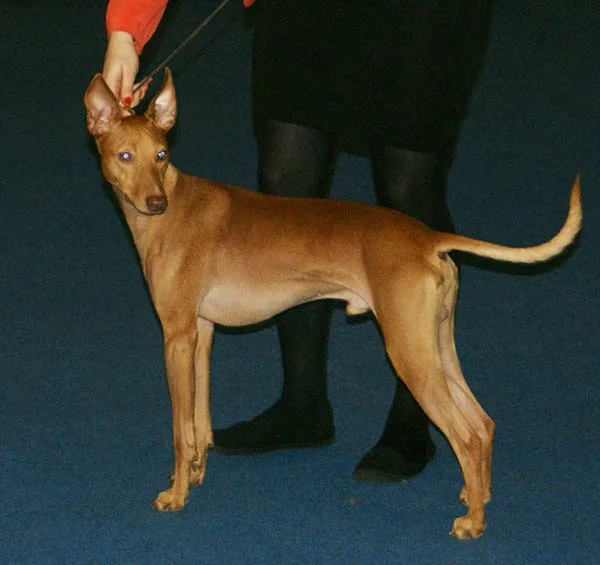
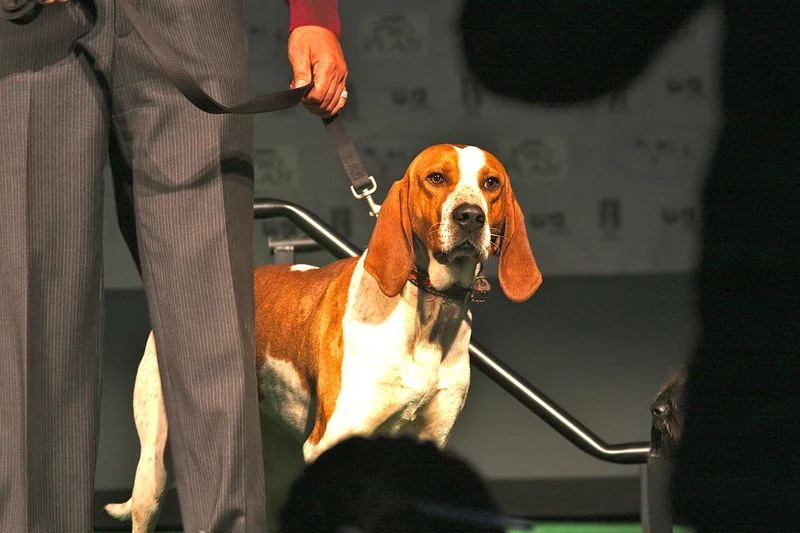
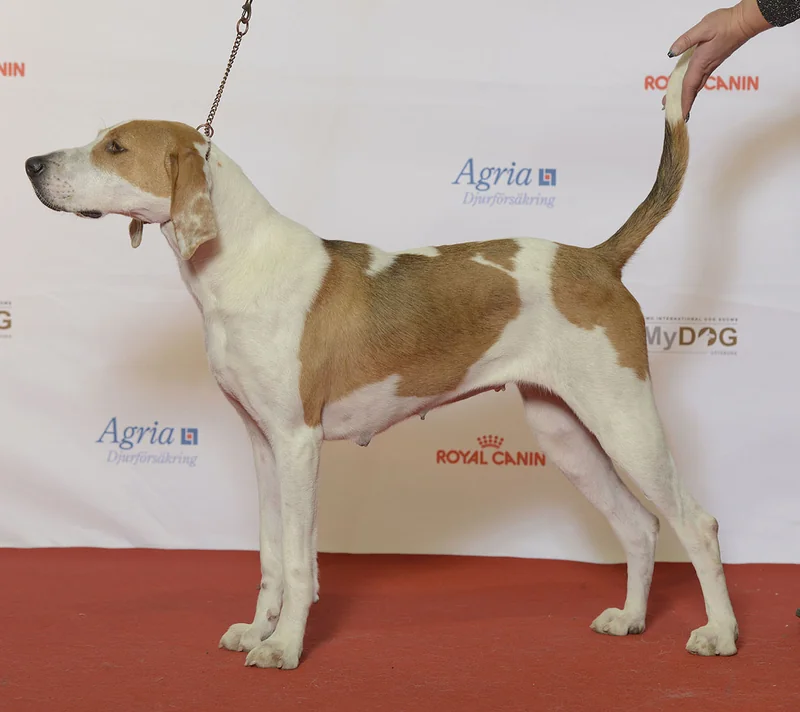
The Segugio Italiano is an ancient Italian scenthound of elegant, semi-primitive type used for hunting hare across Italy's open countryside and mountains since Roman times. The breed is depicted in Roman mosaics and described in Renaissance hunting literature. The FCI recognises two coat varieties under separate standards: the smooth-coated Segugio Italiano a pelo raso (No. 337) and the wire-coated Segugio Italiano a pelo forte (No. 198). Males stand 52–58 cm.
Quick facts
- AKC group
- Hound
- Origin country
- Italy
- Origin period
- Ancient, documented from Roman era
- Coat type
- Short
- Coat colors
- Fawn (from pale to dark red-fawn), Black and Tan
- Average lifespan
- 12-13 years
- Recognition
- FCI 1956 · Group 6 — Scenthounds and Related Breeds (Section 1.1: Large-sized Hounds)
Origin
The Segugio Italiano's ancestry is traced by Italian cynologists to the ancient Mediterranean hunting dogs depicted in Egyptian tomb paintings and Phoenician art. Roman hunting mosaics from Pompeii and various other excavated sites include dogs closely matching the lean, semi-angular profile of the modern Segugio. Sixteenth-century Italian hunting texts, including the 1548 treatise 'Dell'arte del Cacciare con Veltri et Bracchi', describe the 'bracco' and 'segugio' types in detail, noting that the latter was used for open-field hare hunting rather than pointing. The word 'segugio' derives from the Italian 'seguire' (to follow), describing the dog's function as a persistent trailing hound.
Recognition
The Società Amatori Segugio Italiano (SASI), founded in 1952, standardised both coat varieties separately. The wire-coated variety (Segugio Italiano a pelo forte) received FCI recognition in 1956 under standard No. 198; the smooth-coated variety (Segugio Italiano a pelo raso) received recognition in 1961 under standard No. 337. Both are classified in Group 6 — Scenthounds and Related Breeds (Section 1.1: Large-sized Hounds) with Italy as patron country. The breed is not currently recognised by the AKC or UKC.
Standard
The FCI standards for both coat varieties describe a lean, square-built to slightly rectangular hound with a long, narrow head, large dark eyes, and low-set pendulous ears. The coat is either very short and smooth (pelo raso) or dense, rough, and close-lying with slight feathering on the tail and backs of the legs (pelo forte). The only recognised colours are fawn (all shades from pale cream to dark red) and black and tan. Males stand 52–58 cm; females 48–56 cm. The tail is carried sickle-shaped or slightly upright during work.
Sources & further reading (3)
- fci-standard — accessed 2026-05-27
- encyclopedia — accessed 2026-05-27
- fci-standard — accessed 2026-05-27
Frequently asked questions
What are the two varieties of the Segugio Italiano?
The FCI recognises two coat varieties as separate standards. The Segugio Italiano a pelo raso (FCI No. 337) has a very short, fine, smooth coat. The Segugio Italiano a pelo forte (FCI No. 198) has a dense, rough, close-lying coat approximately 2–5 cm long with slight feathering. Both varieties are identical in size, proportions, colour, and working function; they compete separately in FCI shows.
Is the Segugio Italiano recognised by the AKC?
The Segugio Italiano is not currently recognised by the AKC or UKC. The FCI has recognised both coat varieties since the 1950s and 1960s, with Italy as patron country. The breed is the most widely used hunting hound in Italy and is well known in Switzerland, France, and several other European countries.
What does 'Segugio' mean?
The name 'Segugio' derives from the Italian verb 'seguire', meaning to follow, tracking, or trail. It describes the breed's fundamental working method: following the scent trail of game (principally hare) over open ground rather than pointing or flushing. The word 'Segugio' in Italian is equivalent in meaning to the French 'chien courant' (running hound) or the English 'scenthound'.