Canis lupus familiaris
Cirneco dell'Etna
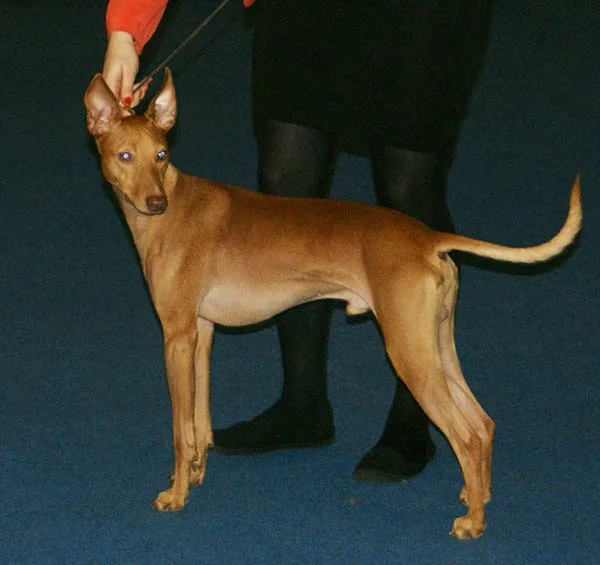 Featured photocirneco-dell-etna.jpg
The Cirneco dell'Etna is a small, elegant sighthound native to the island of Sicily, where it has hunted rabbits on the volcanic lava slopes of Mount Etna for at least 2,500 years. Coins minted in ancient Syracuse between 500 and 300 BCE depict dogs closely resembling the modern Cirneco. Remarkably resilient, it hunts using all senses — sight, scent, and hearing — for many hours without food or water on the hot, barren lava terrain. The breed is recognised by the FCI and was admitted to the AKC in 2015. It stands 42–52 cm and weighs 8–12 kg.
Quick facts
- AKC group
- Hound
- Origin country
- Italy
- Origin period
- Ancient, documented from c. 500 BCE
- Coat type
- Short
- Coat colors
- Tan, Chestnut, Sandy
- Average lifespan
- 12-14 years
- Recognition
- AKC 2015 · FCI 1954 · UKC 2006 · Group 5 — Spitz and Primitive Types (Section 7: Primitive type — Hunting Dogs)
Origin
The Cirneco's history on Sicily extends at least 2,500 years, substantiated by ancient coins from Syracuse bearing the image of a dog of this type. Phoenician traders are thought to have introduced ancestor stock from the Eastern Mediterranean to Sicily around 1000 BCE; subsequent centuries of geographic isolation on the island allowed the type to breed true. Its working environment — the barren lava fields and steep volcanic slopes of Mount Etna — shaped a dog of exceptional endurance, able to hunt without food or water for many hours in extreme heat, using sight, scent, and acute hearing to locate and catch rabbits in rock crevices.
Recognition
The modern pedigree breed traces its formal organisation to 1932, when Agata Paternò Castello published an impassioned article in the Italian hunting journal Diana, documenting the breed's decline and calling for its standardisation. She subsequently devoted decades to breeding and promotion. The Ente Nazionale della Cinofilia Italiana (ENCI) officially recognised the Cirneco dell'Etna in 1939 with Italy as patron country. The FCI followed in 1954 (FCI No. 199). The AKC admitted the breed to the Miscellaneous Class in 2012 and granted full Hound Group recognition in 2015.
Standard
The FCI and AKC standards describe a lean, lightly built, medium-small hound with a long, straight, narrow head and large, erect ears set close together. The coat is short and close, satin-smooth, without fringe or feathering. Accepted colours are solid tan or chestnut in various shades from light sandy to deep chestnut, with or without small white markings. The overall impression is of a lightly made, vigorous, and elegant hound. Males stand 46–52 cm; females 42–46 cm.
Sources & further reading (3)
- kennel-club-registry — accessed 2026-05-07
- encyclopedia — accessed 2026-05-07
- fci-standard — accessed 2026-05-07
Frequently asked questions
What AKC group does the Cirneco dell'Etna belong to?
The AKC places the Cirneco dell'Etna in the Hound Group. The FCI, however, classifies it in Group 5 (Spitz and Primitive types), Section 7 (Primitive type — Hunting Dogs), alongside the Pharaoh Hound and Ibizan Hound, reflecting its ancient, pre-modern-breed-club origins. The Cirneco is closely related to these Mediterranean primitive hounds and hunts using sight, scent, and hearing.
How old is the Cirneco dell'Etna as a breed?
The Cirneco dell'Etna is documented on coins minted in ancient Syracuse between approximately 500 and 300 BCE, indicating at least 2,500 years of existence as a distinct type on Sicily. Phoenician traders are thought to have introduced ancestor stock from the Eastern Mediterranean to the island around 1000 BCE. The breed's geographic isolation on Sicily allowed it to remain genetically consistent for millennia.
When was the Cirneco dell'Etna recognised by the AKC?
The AKC granted full recognition to the Cirneco dell'Etna in 2015, placing it in the Hound Group. The breed entered the Miscellaneous Class in 2012. The FCI had recognised it since 1954 (FCI No. 199), and the ENCI standardised the breed in 1939 following Agata Paternò Castello's landmark 1932 article.