Canis lupus familiaris
Pungsan
 Featured photopungsan.jpg
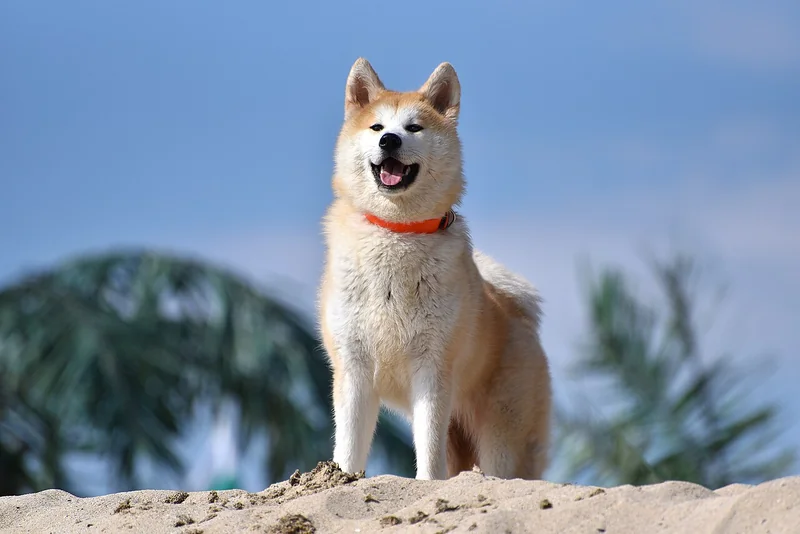
The Pungsan is a North Korean Kaema-Plateau big-game Spitz — tiger, leopard, and bear hunter. The Pungsan is a Korean Spitz-type breed native to Pungsan County (now Kim Hyong Gwon County) in the mountainous Kaema Plateau of northern North Korea, where the breed has been used for at least 200 years as a hunter of tigers, leopards, wild boar, and the Siberian brown bear.
Quick facts
- AKC group
- Working
- Origin country
- North Korea (Pungsan County)
- Origin period
- Pre-modern (formalized 1956)
- Coat type
- Double
- Coat colors
- Pure White (with permitted darker shading on the ears or tail base)
- Average lifespan
- 11-15 years
- Recognition
- —
Origin
The Pungsan is a Korean Spitz-type breed native to Pungsan County (now Kim Hyong Gwon County) in the mountainous Kaema Plateau of northern North Korea (modern Democratic People's Republic of Korea). The breed has been used for at least 200 years as a hunter of large game — tigers, leopards, wild boar, and the Siberian brown bear — in the cold, rugged terrain of the Kaema Plateau, with hunters traditionally hunting in pairs of dogs. The Pungsan was designated North Korean Natural Monument No. 128 in 1956. A small number of dogs reached South Korea via diplomatic channels: when North Korean leader Kim Jong Il gifted two Pungsans to South Korean president Kim Dae-jung at the June 2000 Inter-Korean Summit, the gift drew international attention and South Korean breeders began working from previously-imported lines to maintain a small Western population. The breed has not been recognized by the AKC, UKC, or FCI.
Recognition
The breed has not been admitted to the major Western kennel-club registries; its working line is maintained by national breed-preservation associations.
Standard
The Pungsan Dog Society of Korea standard describes a medium-sized, well-balanced, athletic Spitz-type dog with a square outline, deep chest, and well-muscled hindquarters. The defining features are the small, triangular pricked ears, the curled tail carried over the back, and the pure-white double coat — a soft, dense undercoat under a stiff, straight outer coat that stands off from the body. The skin is darkly pigmented at the lips, eye-rims, and footpads. Males stand 60-65 cm at the withers, females 55-60 cm.
Sources & further reading (2)
- encyclopedia — accessed 2026-04-30
- kennel-club-registry — accessed 2026-04-30
Frequently asked questions
What is the Pungsan's AKC group?
The American Kennel Club places the Pungsan in the Working Group. The Working Group gathers breeds developed for jobs other than herding or hunting — guarding, draft, sled work, and water rescue — including the Boxer, Rottweiler, Saint Bernard, and Newfoundland. The breed's foundation working role was as a North Korean Kaema-Plateau big-game Spitz — tiger, leopard, and bear hunter.
When was the Pungsan officially recognized?
The major kennel-club registries recognized the breed during the 20th century.
What is the average lifespan of a Pungsan?
Kennel-club longevity surveys place the Pungsan's average lifespan in the 11-15 years range. The figure here represents the spread reported by the major parent-club studies and the Kennel Club (UK) purebred-dog health surveys.