Canis lupus familiaris
Peruvian Inca Orchid
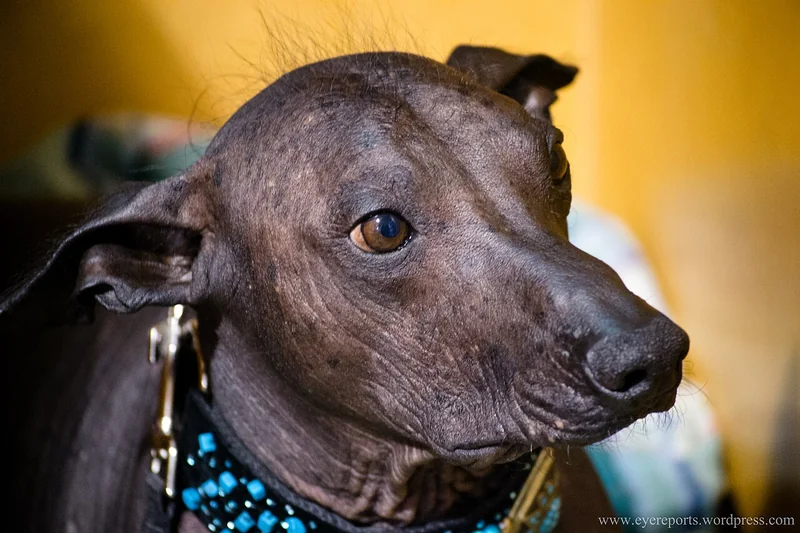 Featured photoperuvian-inca-orchid.jpg
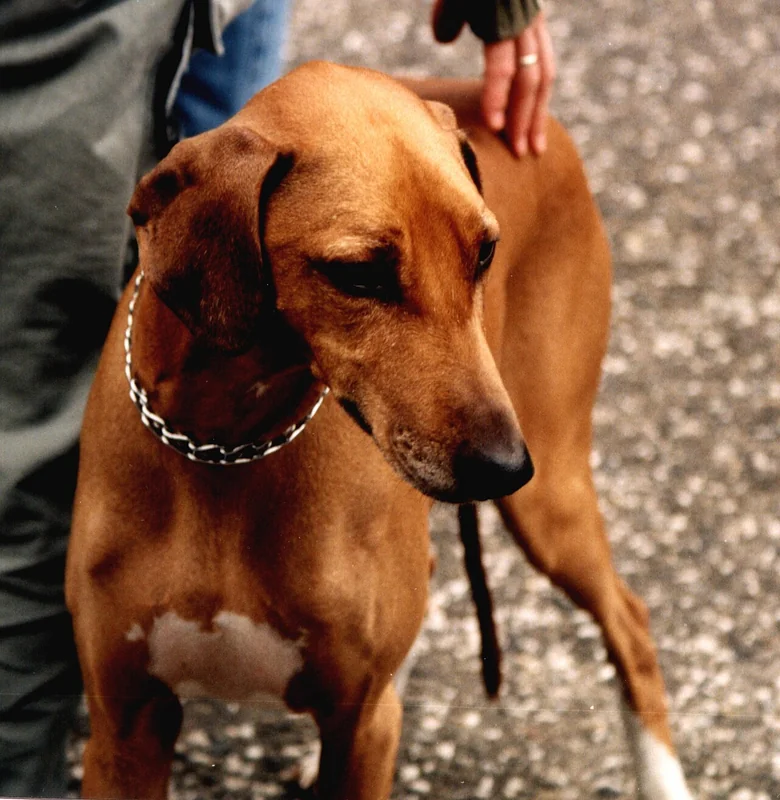
The Peruvian Inca Orchid is an ancient hairless or coated sighthound-type dog native to Peru, depicted in pre-Columbian ceramics of the Mochica, Chimu, and Inca cultures from as early as 750 AD. The breed exists in three sizes and in both hairless and coated varieties. It is a Peruvian national monument. The AKC admitted the Peruvian Inca Orchid in 2020 and places it in the Hound Group. The FCI registers it as No. 310. Males stand 40–65 cm depending on the size variety.
Quick facts
- AKC group
- Hound
- Origin country
- Peru
- Origin period
- Ancient, documented from 750 AD
- Coat type
- Short
- Coat colors
- All colours — dark grey, black, brown, white, pink, spotted; hairless variety shows skin colours
- Average lifespan
- 11-12 years
- Recognition
- AKC 2020 · FCI 1981 · UKC 1996 · Group 5 — Spitz and Primitive Types (Section 6: Primitive type)
Origin
Hairless dogs are depicted in Mochica ceramic vessels (huacos) from the northern Peruvian coast dated to approximately 750–900 AD and in Chimu ceramics of the 10th–15th centuries. Inca records describe these dogs as 'Perros Peruanos' or 'Perros del Inca'; they were kept by Inca royalty and used as foot warmers and ritual companions. The hairlessness results from a dominant point mutation in the FOXI3 gene; heterozygous dogs are hairless while homozygous individuals are lethal before birth, ensuring that coated (normal FOXI3) individuals are always born in the same litters as the hairless. The breed survived in rural Peruvian communities through the colonial and republican periods.
Recognition
The FCI granted recognition to the Peruvian Hairless Dog (Perro sin Pelo del Perú) in 1981 under standard No. 310, classifying it in Group 5 — Spitz and Primitive Types (Section 6: Primitive type) with Peru as patron country. Three size varieties — small, medium, and large — are registered under the same standard and compete in separate size classes. The breed was declared a Peruvian national monument by the Instituto Nacional de Cultura in 2001. The UKC recognised the breed in 1996. The AKC admitted the breed under the name 'Peruvian Inca Orchid' to the Hound Group in 2020.
Standard
The FCI standard describes an elegant, well-proportioned sighthound-type dog in three sizes (small 25–40 cm, medium 40–50 cm, large 50–65 cm). The defining feature is the hairless variety: entirely lacking hair on the body except for a possible thin tuft on the skull and tip of the tail; the skin is smooth, warm, and comes in a wide range of colours including black, dark grey, brown, and pink. Coated individuals (from the same litters) have a short, smooth coat. Both hairless and coated varieties are registered and exhibited.
Sources & further reading (3)
- kennel-club-registry — accessed 2026-05-27
- encyclopedia — accessed 2026-05-27
- fci-standard — accessed 2026-05-27
Frequently asked questions
Why is the Peruvian Inca Orchid called by that name?
The name 'Peruvian Inca Orchid' was coined for the American market and reflects the breed's Peruvian origin and its association with the Inca civilisation. 'Orchid' was added as a poetic evocation of the breed's delicate, hairless appearance. In Spanish, the official FCI name is 'Perro sin Pelo del Perú' (Peruvian Hairless Dog). The name 'Peruvian Inca Orchid' or 'PIO' is used primarily in North America and English-speaking countries.
When did the AKC recognise the Peruvian Inca Orchid?
The AKC granted the Peruvian Inca Orchid full Hound Group recognition in 2020. The FCI had recognised the breed as the Perro sin Pelo del Perú in 1981 under standard No. 310, and the UKC in 1996. The breed was declared a Peruvian national monument in 2001.
Can a Peruvian Inca Orchid be coated (have fur)?
Yes. The hairlessness in the Peruvian Inca Orchid is caused by a dominant point mutation in the FOXI3 gene. Dogs heterozygous for the mutation (one normal and one mutated copy) are hairless; dogs with two normal copies are fully coated. Because dogs with two mutated copies do not survive to birth, every litter from two hairless parents will produce approximately one-quarter coated puppies. The FCI standard registers both hairless and coated varieties and they compete in the same class.