Canis lupus familiaris
Mastiff
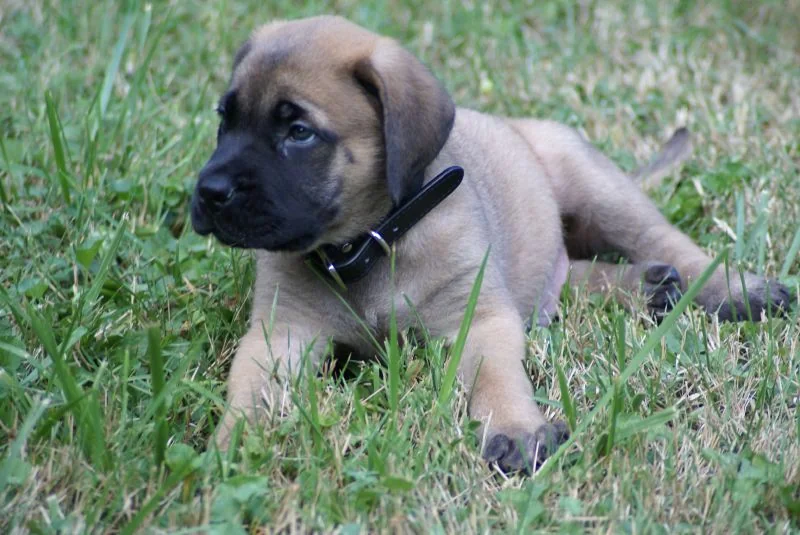 Featured photomastiff.jpg
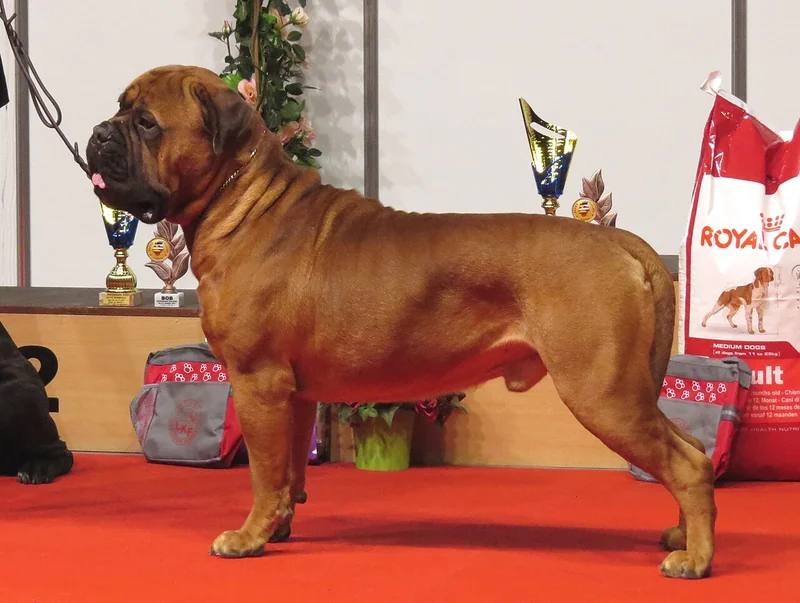
The Mastiff is a ancient English molossus-descended guard mastiff — the 600-year Lyme Hall line. The English Mastiff descends from the medieval English baiting and war dogs (the alaunt) and ultimately from the ancient Asian molossus stock that the Romans encountered in Britain in 55 BCE.
Quick facts
- AKC group
- Working
- Origin country
- England
- Origin period
- Antiquity (modern type formalized 1880s)
- Coat type
- Short
- Coat colors
- Fawn, Apricot, Brindle — all with the breed's required black mask on the muzzle, ears, and around the eyes
- Average lifespan
- 6-12 years
- Recognition
- AKC 1885 · FCI 1955 · UKC 1936 · Group 2 — Pinscher and Schnauzer-Molossoid breeds-Swiss Mountain and Cattle Dogs (Section 2.1: Molossoid breeds, Mastiff type)
Origin
The English Mastiff descends from the ancient Asian molossus stock — large guardian dogs spread across Eurasia by Indo-European migrations in antiquity. Roman writers describe encountering massive war-dogs in Britain in 55 BCE, and Pugnaces Britanniae were exported to Rome for the Colosseum games. Through the medieval period the breed survived as the alaunt (a heavy English baiting and guarding dog) and the Lyme Hall Mastiff (maintained at the Legh family seat in Cheshire from the 14th century onward, in continuous descent for more than 600 years). The breed was nearly lost at the end of the Second World War, with only fourteen documented Mastiffs surviving in 1946; the modern population was rebuilt from these fourteen plus North American imports of pre-war exports. The Old English Mastiff Club was founded in 1883.
Recognition
The American Kennel Club admitted the breed in 1885, the United Kennel Club followed in 1936, and the Federation Cynologique Internationale published the international standard (FCI No. 264) in 1955. The FCI assigns the breed to Group 2 — Pinscher and Schnauzer-Molossoid breeds-Swiss Mountain and Cattle Dogs (Section 2.1: Molossoid breeds, Mastiff type).
Standard
The AKC and FCI standards describe a massive, powerful, symmetrical, well-knit frame, of great size and depth — combining grandeur and good nature, courage and docility. The defining features are the great size, the heavy, broad, square head with a black mask, and the deeply-folded skin around the head and neck. The short, dense, glossy coat lies smooth on the body. Recognized colours are fawn (any shade), apricot, and brindle, all required to show the breed's defining black mask on the muzzle, ears, and around the eyes. Males stand 76-89 cm at the withers, females 69-79 cm.
Sources & further reading (3)
- kennel-club-registry — accessed 2026-04-30
- encyclopedia — accessed 2026-04-30
- fci-standard — accessed 2026-04-30
Frequently asked questions
What is the Mastiff's AKC group?
The American Kennel Club places the Mastiff in the Working Group. The Working Group gathers breeds developed for jobs other than herding or hunting — guarding, draft, sled work, and water rescue — including the Boxer, Rottweiler, Saint Bernard, and Newfoundland. The breed's foundation working role was as a ancient English molossus-descended guard mastiff — the 600-year Lyme Hall line.
When was the Mastiff officially recognized?
The American Kennel Club admitted the breed in 1885; the United Kennel Club followed in 1936; the Federation Cynologique Internationale published the international standard (FCI No. 264) in 1955.
What is the average lifespan of a Mastiff?
Kennel-club longevity surveys place the Mastiff's average lifespan in the 6-12 years range. The figure here represents the spread reported by the major parent-club studies and the Kennel Club (UK) purebred-dog health surveys.