Canis lupus familiaris
Bullmastiff
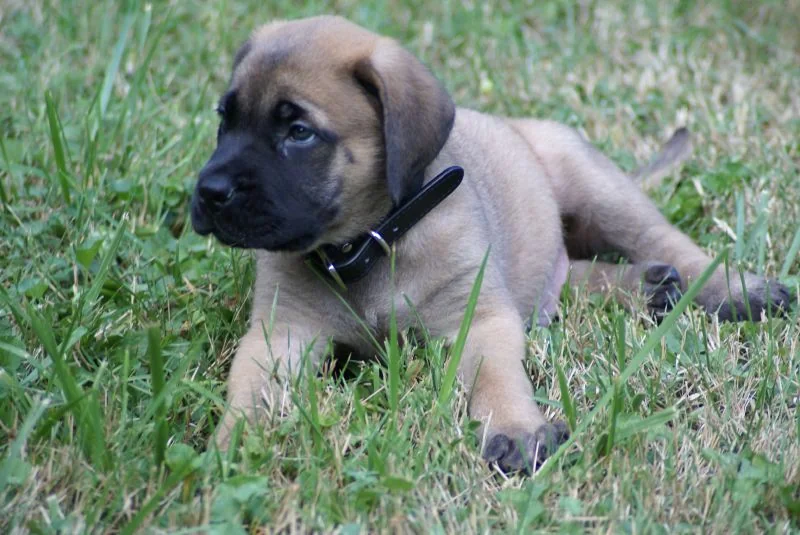
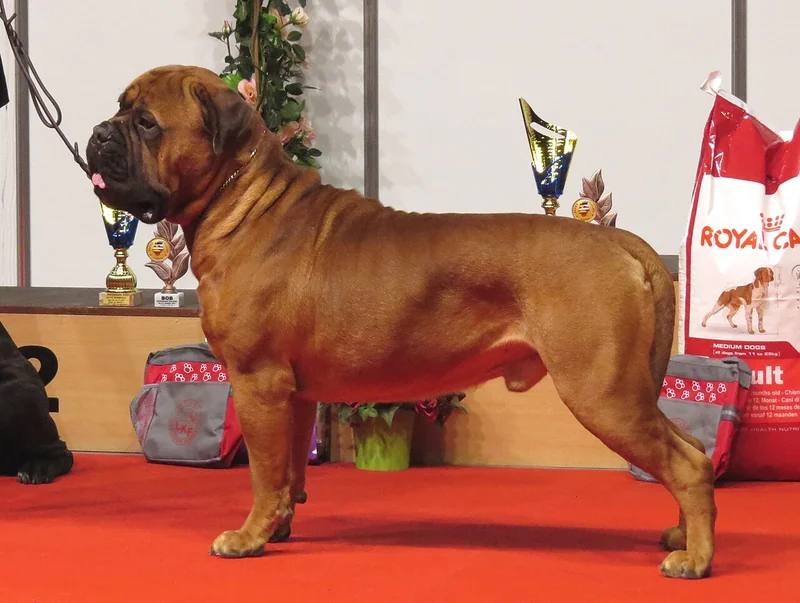 Featured photobullmastiff.jpg
The Bullmastiff is a 19th-century English Gamekeeper's Night Dog — 60% Mastiff × 40% Bulldog poacher-pinning cross. The Bullmastiff was developed in mid-19th-century England by gamekeepers on large estates as the 'Gamekeeper's Night Dog' — a 60% Mastiff, 40% Bulldog cross intended to silently track and pin (but not maul) poachers.
Quick facts
- AKC group
- Working
- Origin country
- England
- Origin period
- Mid-19th century (formalized 1924)
- Coat type
- Short
- Coat colors
- Fawn, Red, Brindle — all with the breed's required black muzzle and dark ears
- Average lifespan
- 8-10 years
- Recognition
- AKC 1934 · FCI 1955 · UKC 1948 · Group 2 — Pinscher and Schnauzer-Molossoid breeds-Swiss Mountain and Cattle Dogs (Section 2.1: Molossoid breeds, Mastiff type)
Origin
The Bullmastiff was developed in mid-19th-century England by gamekeepers on large estates — particularly on the great game preserves of the south of England — as the 'Gamekeeper's Night Dog'. Poaching had become a capital offence in 1770s England and remained a hanging offence until 1827; gamekeepers needed a dog that could silently track a poacher across the estate at night and, on encountering one, pin (but not maul or kill) the poacher until the keeper arrived. The result was a 60% Mastiff, 40% Bulldog cross — large and powerful enough to overcome a man, but agile and silent enough to track him. The modern type was fixed and the breed was recognized by the Kennel Club in 1924; the AKC followed in 1934.
Recognition
The American Kennel Club admitted the breed in 1934, the United Kennel Club followed in 1948, and the Federation Cynologique Internationale published the international standard (FCI No. 157) in 1955. The FCI assigns the breed to Group 2 — Pinscher and Schnauzer-Molossoid breeds-Swiss Mountain and Cattle Dogs (Section 2.1: Molossoid breeds, Mastiff type).
Standard
The AKC and FCI standards describe a powerful, symmetrical dog showing great strength, alertness, and activity, with a dignified expression and a substantial bone structure. The short, dense, weather-resistant coat lies close to the body. Recognized colours are fawn (any shade), red (any shade), and brindle, all with a required dark muzzle (black mask) and dark ears that fade gradually toward the eyes. Males stand 64-69 cm at the withers, females 61-66 cm.
Sources & further reading (3)
- kennel-club-registry — accessed 2026-04-30
- encyclopedia — accessed 2026-04-30
- fci-standard — accessed 2026-04-30
Frequently asked questions
What is the Bullmastiff's AKC group?
The American Kennel Club places the Bullmastiff in the Working Group. The Working Group gathers breeds developed for jobs other than herding or hunting — guarding, draft, sled work, and water rescue — including the Boxer, Rottweiler, Saint Bernard, and Newfoundland. The breed's foundation working role was as a 19th-century English Gamekeeper's Night Dog — 60% Mastiff × 40% Bulldog poacher-pinning cross.
When was the Bullmastiff officially recognized?
The American Kennel Club admitted the breed in 1934; the United Kennel Club followed in 1948; the Federation Cynologique Internationale published the international standard (FCI No. 157) in 1955.
What is the average lifespan of a Bullmastiff?
Kennel-club longevity surveys place the Bullmastiff's average lifespan in the 8-10 years range. The figure here represents the spread reported by the major parent-club studies and the Kennel Club (UK) purebred-dog health surveys.