Canis lupus familiaris
Leonberger
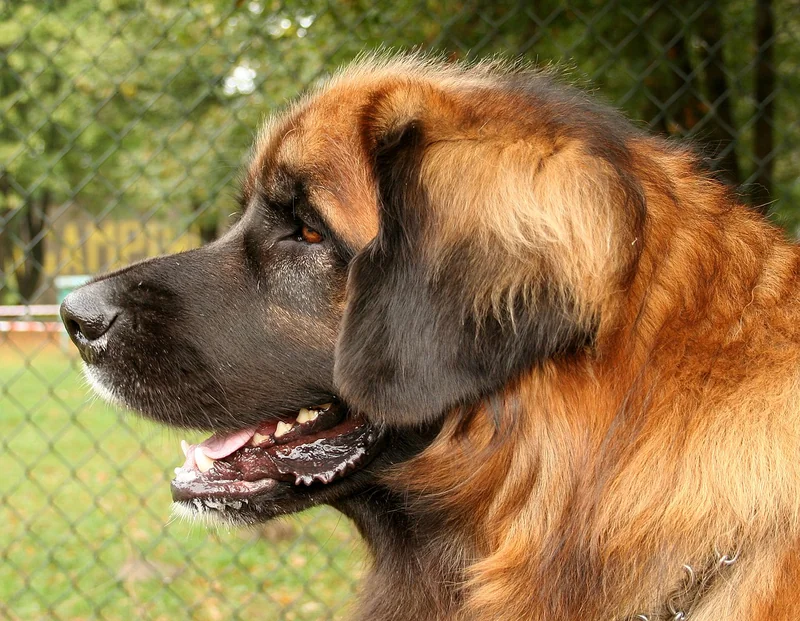 Featured photoleonberger.jpg
The Leonberger is a 1840s Newfoundland × Saint Bernard × Pyrenean cross commissioned to look leonine — Heinrich Essig's Leonberg-crest dog. The Leonberger was created in the 1840s by Heinrich Essig, the mayor of Leonberg in Baden-Württemberg, Germany, who crossed a black-and-white Newfoundland with a Saint Bernard from the Great St Bernard hospice and later added Pyrenean Mountain Dog blood.
Quick facts
- AKC group
- Working
- Origin country
- Germany (Baden-Württemberg)
- Origin period
- Mid-19th century
- Coat type
- Long
- Coat colors
- Lion-Yellow, Golden, Red, Reddish-Brown — all with the breed's required black mask
- Average lifespan
- 8-9 years
- Recognition
- AKC 2010 · FCI 1955 · UKC 2010 · Group 2 — Pinscher and Schnauzer-Molossoid breeds-Swiss Mountain and Cattle Dogs (Section 2.2: Molossoid breeds, Mountain type)
Origin
The Leonberger was created in the 1840s by Heinrich Essig (1808-1889), the mayor of the German town of Leonberg in Baden-Württemberg. Essig crossed a black-and-white Newfoundland with a Saint Bernard from the Great St Bernard hospice in 1846 and later (1848) added Pyrenean Mountain Dog blood. The breed name and the breed's lion-yellow coat with black mask were chosen to evoke the lion on the Leonberg town crest. Essig sold dogs to royalty across Europe — Napoleon III, Empress Elisabeth of Austria, the Tsarevich (later Tsar Alexander II) — and the breed became fashionable across late-19th-century Continental Europe. Both World Wars nearly extinguished the line, and the modern population descends from eight dogs that survived the Second World War.
Recognition
The American Kennel Club admitted the breed in 2010, the United Kennel Club followed in 2010, and the Federation Cynologique Internationale published the international standard (FCI No. 145) in 1955. The FCI assigns the breed to Group 2 — Pinscher and Schnauzer-Molossoid breeds-Swiss Mountain and Cattle Dogs (Section 2.2: Molossoid breeds, Mountain type).
Standard
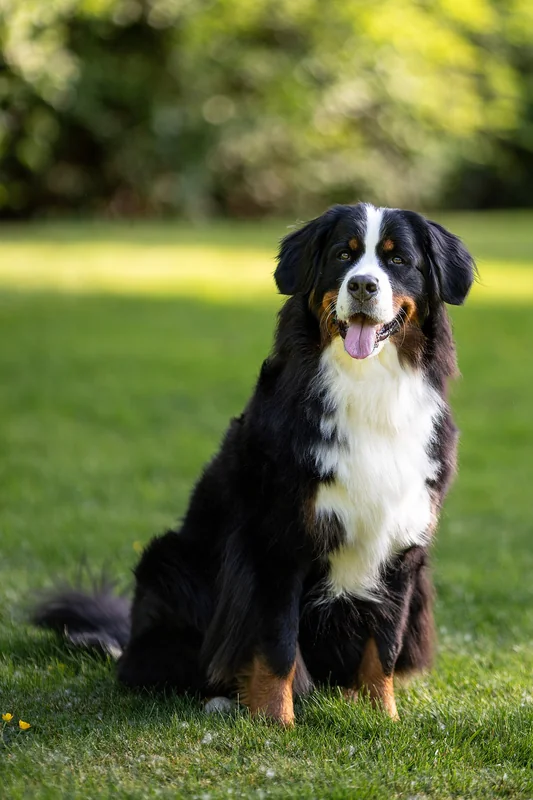
The AKC and FCI standards describe a large, muscular, elegant working dog with balanced body type, with dignity in bearing and an expression of calm confidence — combining strength, soundness, and elegance. The defining feature is the medium-soft to coarse, water-resistant double coat with abundant feathering on the chest, legs, and tail, and the leonine appearance: a clearly-defined black mask on the muzzle and around the eyes is required by the standard. Recognized colours are lion-yellow, golden, red, and reddish-brown. Males stand 72-80 cm at the withers, females 65-75 cm.
Sources & further reading (3)
- kennel-club-registry — accessed 2026-04-30
- encyclopedia — accessed 2026-04-30
- fci-standard — accessed 2026-04-30
Frequently asked questions
What is the Leonberger's AKC group?
The American Kennel Club places the Leonberger in the Working Group. The Working Group gathers breeds developed for jobs other than herding or hunting — guarding, draft, sled work, and water rescue — including the Boxer, Rottweiler, Saint Bernard, and Newfoundland. The breed's foundation working role was as a 1840s Newfoundland × Saint Bernard × Pyrenean cross commissioned to look leonine — Heinrich Essig's Leonberg-crest dog.
When was the Leonberger officially recognized?
The American Kennel Club admitted the breed in 2010; the United Kennel Club followed in 2010; the Federation Cynologique Internationale published the international standard (FCI No. 145) in 1955.
What is the average lifespan of a Leonberger?
Kennel-club longevity surveys place the Leonberger's average lifespan in the 8-9 years range. The figure here represents the spread reported by the major parent-club studies and the Kennel Club (UK) purebred-dog health surveys.