Canis lupus familiaris
Kuvasz
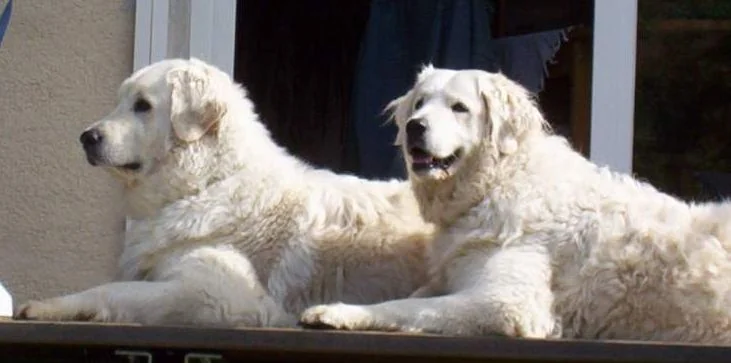 Featured photokuvasz.jpg
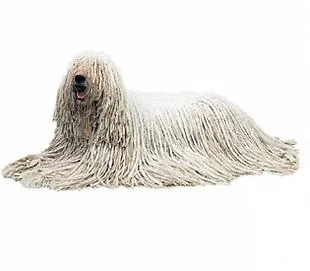
The Kuvasz is a Hungarian royal livestock-guardian and royal court guard, brought by the 9th-century Magyars. The Kuvasz is one of three native Hungarian working breeds (alongside the Komondor and the Pumi) and was brought into the Carpathian basin by the Magyars during the 9th-century Hungarian conquest.
Quick facts
- AKC group
- Working
- Origin country
- Hungary
- Origin period
- Pre-modern (Magyar migration, 9th century)
- Coat type
- Long
- Coat colors
- Pure White only — straight to slightly wavy coat
- Average lifespan
- 10-12 years
- Recognition
- AKC 1931 · FCI 1954 · UKC 1948 · Group 1 — Sheepdogs and Cattledogs (Section 1: Sheepdogs)
Origin
The Kuvasz is one of three native Hungarian working breeds (alongside the Komondor and the smaller Pumi) and was brought into the Carpathian basin by the Magyars during the 9th-century Hungarian conquest under Árpád. The breed served as both livestock guardian on the Hungarian puszta and as a royal hunting and guard dog at the Hungarian court. King Matthias Corvinus (reigned 1458-1490) was famous for breeding Kuvaszok at his court — Matthias trusted his dogs more than his retainers and slept with them at the foot of his bed — and used them as royal diplomatic gifts. The breed was nearly extinguished by the Second World War, with as few as 30 dogs surviving in 1945; the modern population was rebuilt from these survivors plus exports.
Recognition
The American Kennel Club admitted the breed in 1931, the United Kennel Club followed in 1948, and the Federation Cynologique Internationale published the international standard (FCI No. 54) in 1954. The FCI assigns the breed to Group 1 — Sheepdogs and Cattledogs (Section 1: Sheepdogs).
Standard
The AKC and FCI standards describe a working dog of larger than medium size, rugged appearance, with a strong, well-muscled, well-balanced body that suggests great endurance. The defining feature is the pure-white double coat: a fine, woolly undercoat under a medium-coarse straight or slightly-wavy outer coat that lies close to the body. Solid white is the only acceptable colour. The skin is darkly pigmented (slate-grey is preferred) — visible at the lips, eye-rims, and footpads — to protect the white-coated dog from sunburn. Males stand 71-76 cm at the withers, females 66-71 cm.
Sources & further reading (3)
- kennel-club-registry — accessed 2026-04-30
- encyclopedia — accessed 2026-04-30
- fci-standard — accessed 2026-04-30
Frequently asked questions
What is the Kuvasz's AKC group?
The American Kennel Club places the Kuvasz in the Working Group. The Working Group gathers breeds developed for jobs other than herding or hunting — guarding, draft, sled work, and water rescue — including the Boxer, Rottweiler, Saint Bernard, and Newfoundland. The breed's foundation working role was as a Hungarian royal livestock-guardian and royal court guard, brought by the 9th-century Magyars.
When was the Kuvasz officially recognized?
The American Kennel Club admitted the breed in 1931; the United Kennel Club followed in 1948; the Federation Cynologique Internationale published the international standard (FCI No. 54) in 1954.
What is the average lifespan of a Kuvasz?
Kennel-club longevity surveys place the Kuvasz's average lifespan in the 10-12 years range. The figure here represents the spread reported by the major parent-club studies and the Kennel Club (UK) purebred-dog health surveys.