Canis lupus familiaris
Kishu Ken
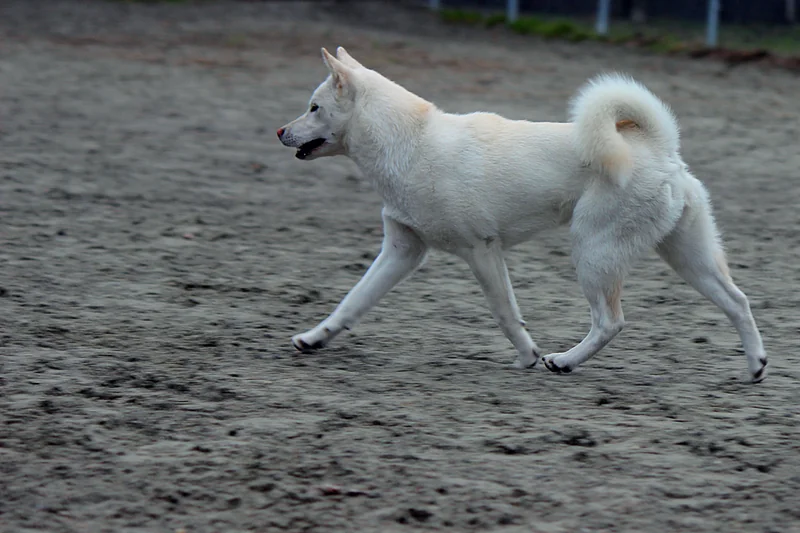 Featured photokishu-ken.jpg
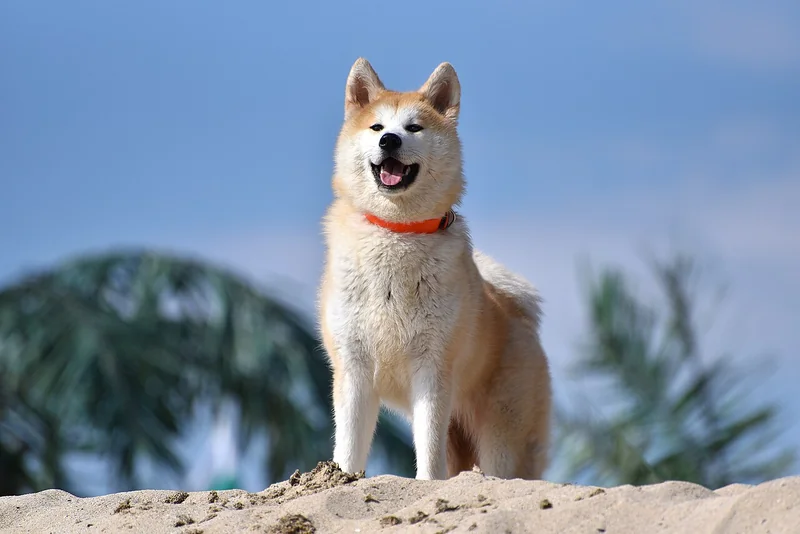
The Kishu Ken is a Japanese Kishū-region wild-boar Spitz — solid-colour Japanese natural monument since 1934. The Kishu Ken is one of the six native Japanese spitz breeds and is named for the Kishū region of central Honshu (modern Wakayama and southern Mie prefectures), where the breed has been kept by Japanese hunters for at least 1,000 years as a wild-boar and deer hunter.
Quick facts
- AKC group
- Working
- Origin country
- Japan (Kishū / Wakayama)
- Origin period
- Pre-modern (formalized 1934)
- Coat type
- Double
- Coat colors
- Pure White, Red, Sesame — solid colours only since 1934 (parti-colour was disqualified that year)
- Average lifespan
- 11-13 years
- Recognition
- FCI 1982 · UKC 2004 · Group 5 — Spitz and Primitive Types (Section 5: Asian Spitz and related breeds)
Origin
The Kishu Ken is one of the six native Japanese spitz breeds and is named for the Kishū region of central Honshu (modern Wakayama and southern Mie prefectures), where the breed has been kept by Japanese hunters for at least 1,000 years as a wild-boar and deer hunter. The dogs traditionally hunted in pairs, attacking the boar from both sides while the hunter approached. The breed was designated a Japanese natural monument by the Nihon Ken Hozonkai (NIPPO) in 1934, and at that point the Japanese kennel club banned all parti-coloured Kishu — leaving only solid white, red, and sesame as the recognized colours, since solid colours were preferred for visibility against the boar in the dense Kishū mountain forests. The FCI registered the breed in 1982 and the United Kennel Club in 2004; the AKC has the breed in its Foundation Stock Service.
Recognition
the United Kennel Club followed in 2004, and the Federation Cynologique Internationale published the international standard (FCI No. 318) in 1982. The FCI assigns the breed to Group 5 — Spitz and Primitive Types (Section 5: Asian Spitz and related breeds).
Standard
The FCI and UKC standards describe a medium-sized, well-proportioned, agile spitz-type dog with well-developed muscles and a sturdy build. The defining features are the small triangular pricked ears, the curled tail carried over the back, the slightly-pointed head and muzzle, and the urajiro (the pale ventral markings) — though the urajiro is most visible on the red and sesame variants. The thick double coat consists of a soft dense undercoat under a stiff, straight outer coat. Solid white, solid red, and solid sesame are the only acceptable colours. Males stand 49-55 cm at the withers, females 46-52 cm.
Sources & further reading (2)
- encyclopedia — accessed 2026-04-30
- fci-standard — accessed 2026-04-30
Frequently asked questions
What is the Kishu Ken's AKC group?
The American Kennel Club places the Kishu Ken in the Working Group. The Working Group gathers breeds developed for jobs other than herding or hunting — guarding, draft, sled work, and water rescue — including the Boxer, Rottweiler, Saint Bernard, and Newfoundland. The breed's foundation working role was as a Japanese Kishū-region wild-boar Spitz — solid-colour Japanese natural monument since 1934.
When was the Kishu Ken officially recognized?
The United Kennel Club followed in 2004; the Federation Cynologique Internationale published the international standard (FCI No. 318) in 1982.
What is the average lifespan of a Kishu Ken?
Kennel-club longevity surveys place the Kishu Ken's average lifespan in the 11-13 years range. The figure here represents the spread reported by the major parent-club studies and the Kennel Club (UK) purebred-dog health surveys.