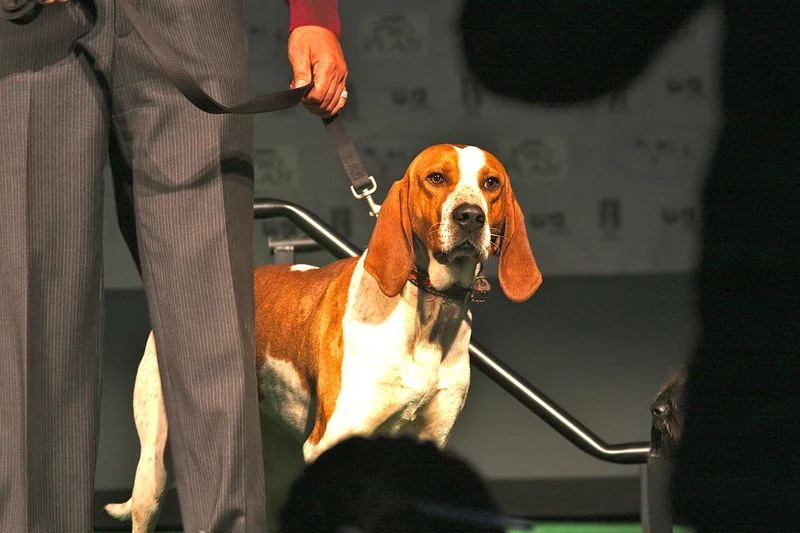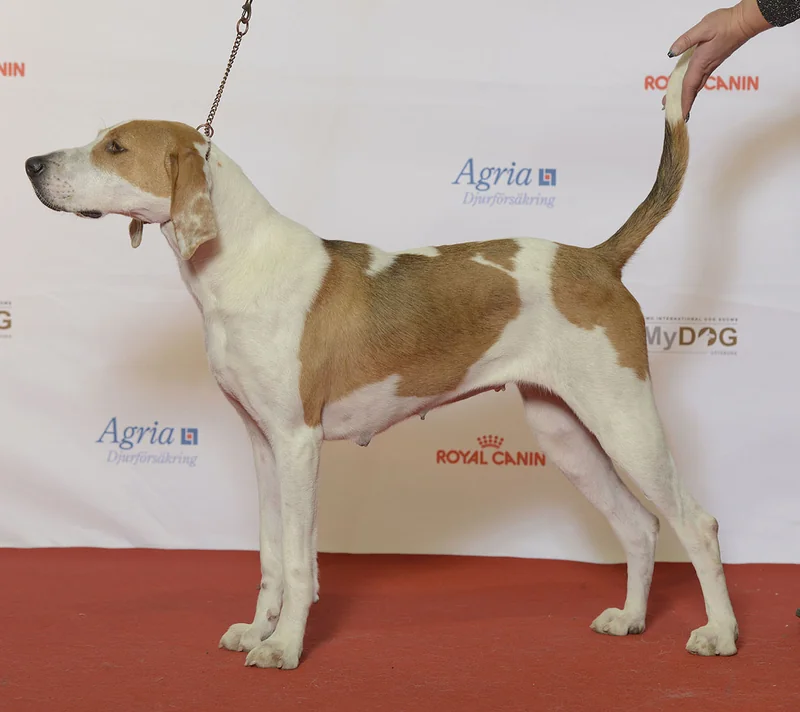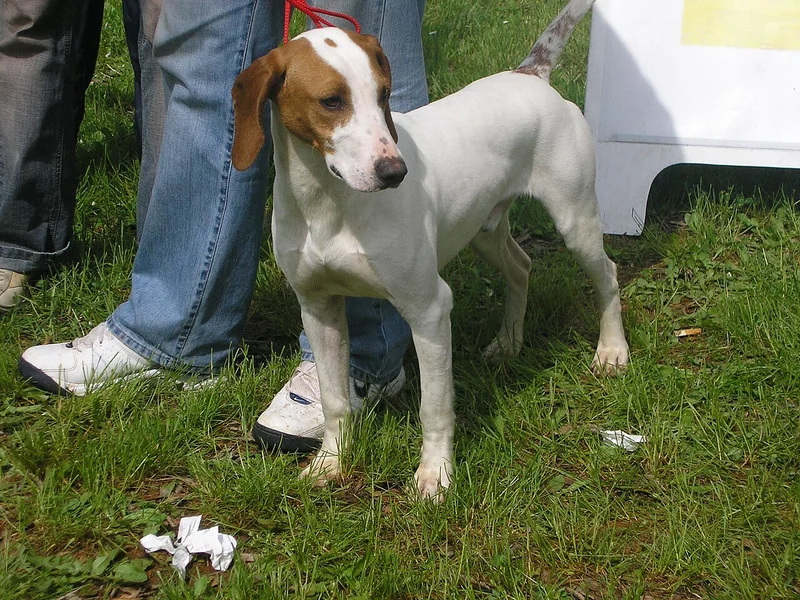
The Istrian Shorthaired Hound is a medium-sized Croatian scent hound native to the Istrian peninsula on the Adriatic coast, used for hunting hare and fox in rocky limestone terrain. It is one of the oldest Croatian dog breeds and is documented in 18th-century Adriatic hunting chronicles. The FCI registers it as No. 151 under Croatia's patronage. Males stand 46–56 cm.
Quick facts
- AKC group
- Hound
- Origin country
- Croatia
- Origin period
- Ancient, documented from 1719
- Coat type
- Short
- Coat colors
- Pure White, White with Orange Patches, White with Pale Yellow Patches
- Average lifespan
- 12-13 years
- Recognition
- FCI 1955 · Group 6 — Scenthounds and Related Breeds (Section 1.2: Medium-sized Hounds)
Origin
The Istrian Shorthaired Hound is one of the oldest dog breeds in the Balkans and the Adriatic region. A 1719 Venetian manuscript on hunting in Istria describes white hounds used for hare hunting in the rocky karst terrain of the peninsula. The breed developed in the karst landscape of the Istrian peninsula — a rugged, rocky limestone plateau shared by Croatia, Slovenia, and the Italian region of Friuli — where the terrain demands a physically tough, sure-footed hound capable of working over rough stone and in dense Mediterranean scrub. The breed is always white, a characteristic that makes it visible against the rocky grey landscape.
Recognition
The Kinološki Savez Jugoslavije (Yugoslav Kennel Club) registered the Istrian Shorthaired Hound in the mid-20th century. The FCI recognised the breed under standard No. 151 in 1955, classifying it in Group 6, Section 1.2 (Medium-sized Hounds) with Yugoslavia (subsequently Croatia after 1991) as patron country. The breed is not currently recognised by the AKC or UKC.
Standard
The FCI standard describes a medium-sized, lean, elegant hound with a long, narrow head, a long, straight muzzle, and medium-length, flat, pendulous ears. The short, dense, coarse coat is pure white or white with orange or pale yellow patches; the patches are most commonly on the head, ears, and base of the tail. Males stand 46–56 cm; females 44–54 cm. The breed is closely related to the Istrian Wirehaired Hound (FCI No. 152), which has a longer, rough coat but is otherwise identical in structure and colour.
Sources & further reading (3)
- fci-standard — accessed 2026-05-27
- encyclopedia — accessed 2026-05-27
- kennel-club-registry — accessed 2026-05-27
Frequently asked questions
What is the difference between the Istrian Shorthaired and Wirehaired Hounds?
The Istrian Shorthaired Hound (FCI No. 151) and the Istrian Wirehaired Hound (FCI No. 152) share the same origin, range, colour, and hunting function. The only difference is coat type: the shorthaired has a short, smooth, dense coat; the wirehaired has a longer, harsh, rough coat approximately 5–10 cm long with a beard and eyebrows. Both are native to the Istrian peninsula and are always white or white with orange/yellow patches. They are registered as separate FCI breeds.
Is the Istrian Shorthaired Hound AKC recognised?
The Istrian Shorthaired Hound is not recognised by the AKC or UKC. The FCI has recognised the breed since 1955 under standard No. 151, with Croatia as patron country (formerly Yugoslavia). The breed is maintained primarily in Croatia, Slovenia, and the Istrian region of Italy.
Why is the Istrian Hound always white?
The predominantly white coat of the Istrian Shorthaired Hound is believed to have been selectively maintained by hunters for a practical reason: the breed works in rocky, grey limestone karst terrain where a white dog is much more visible against the background than a dark-coated hound. The hunter can therefore follow the dog's movements across the rugged hillsides and locate it quickly when it gives voice on the scent.