Canis lupus familiaris
Finnish Hound
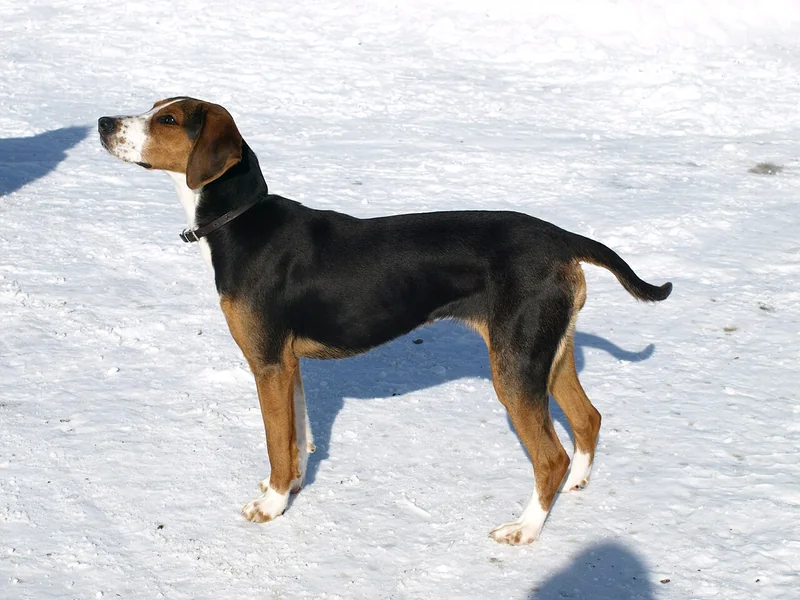 Featured photofinnish-hound.jpg
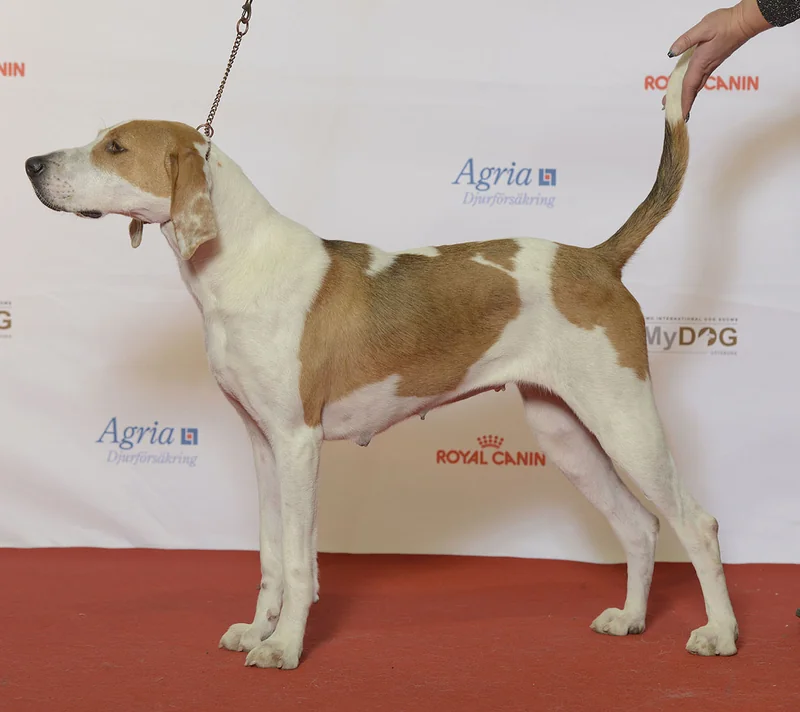
The Finnish Hound is a medium-large Finnish scenthound developed in the 19th century by breeding master Tammelander from Swiss, German, and Scandinavian hound crosses. It is the most registered breed in Finland and is used primarily for hunting hare and fox in pairs or alone in boreal forest and snow. The FCI registers it as No. 51 under Finland's patronage. Males stand 55–61 cm.
Quick facts
- AKC group
- Hound
- Origin country
- Finland
- Origin period
- 19th century
- Coat type
- Short
- Coat colors
- Tri-colour: Black Saddle, Tan Markings, White on Chest and Feet
- Average lifespan
- 12 years
- Recognition
- FCI 1954 · Group 6 — Scenthounds and Related Breeds (Section 1.2: Medium-sized Hounds)
Origin
Finland had no established native hound breed in the early 19th century. Tammelander, working from the 1850s to the 1880s, imported Swiss Luzerner Hounds and German Beagles alongside Scandinavian hound types and bred them to Finnish dogs that showed good scenting ability. The resulting type proved well suited to the Finnish boreal environment — physically hardy, with a resonant voice audible over distance in dense forest, and capable of following cold scent on hard-frozen ground. The breed's first formal show appearance was in 1870 in Helsinki.
Recognition
The Suomen Kennelliitto (Finnish Kennel Club), founded in 1889, adopted the breed's first written standard in 1902. The FCI recognised the Finnish Hound in 1954 under standard No. 51, assigning it to Group 6 — Scenthounds and Related Breeds (Section 1.2: Medium-sized Hounds) with Finland as patron country. The breed is not currently recognised by the AKC or UKC but is widely recognised across Scandinavia and northern Europe. It remains Finland's most registered breed by annual registrations.
Standard
The FCI standard describes a medium-large, strongly built, tri-coloured hound with a clean, moderately long head, broad skull, and pendulous, rounded ears. The tri-colour pattern — black saddle, rich tan on the head and legs, and white on the muzzle tip, chest, feet, and tail tip — is strictly required. The coat is short, straight, and close-lying with a soft undercoat providing cold-weather protection. Males stand 55–61 cm; females 52–58 cm. The build is rectangular (longer than tall) for endurance on long hunts.
Sources & further reading (3)
- fci-standard — accessed 2026-05-27
- encyclopedia — accessed 2026-05-27
- kennel-club-registry — accessed 2026-05-27
Frequently asked questions
Is the Finnish Hound the same as the Hamiltonstövare?
The Finnish Hound and the Hamiltonstövare are closely related but distinct breeds. Both are Scandinavian tri-colour scenthounds of similar size developed in the 19th century from Swiss, German, and Scandinavian hound crosses. The Hamiltonstövare was created in Sweden by Count Hamilton and is slightly larger and more refined in appearance; the Finnish Hound was developed in Finland and is the most registered breed in that country. They are registered as separate breeds by the FCI.
Is the Finnish Hound recognised by the AKC?
The Finnish Hound is not currently recognised by the AKC and is not in the AKC Foundation Stock Service at the time of writing. The FCI has recognised the breed since 1954 under standard No. 51 with Finland as patron country. The breed is recognised by the Scandinavian and several Northern European kennel clubs.
What quarry does the Finnish Hound hunt?
The Finnish Hound is used primarily for hunting hare and fox in Finland's boreal forests, most often in pairs of dogs rather than in large packs. The dogs drive the quarry ahead of them and announce the trail with a resonant, musical voice, allowing the hunter to position themselves ahead of the animal. The breed is also used for moose hunting in some areas.