Felis catus
Thai Longhair
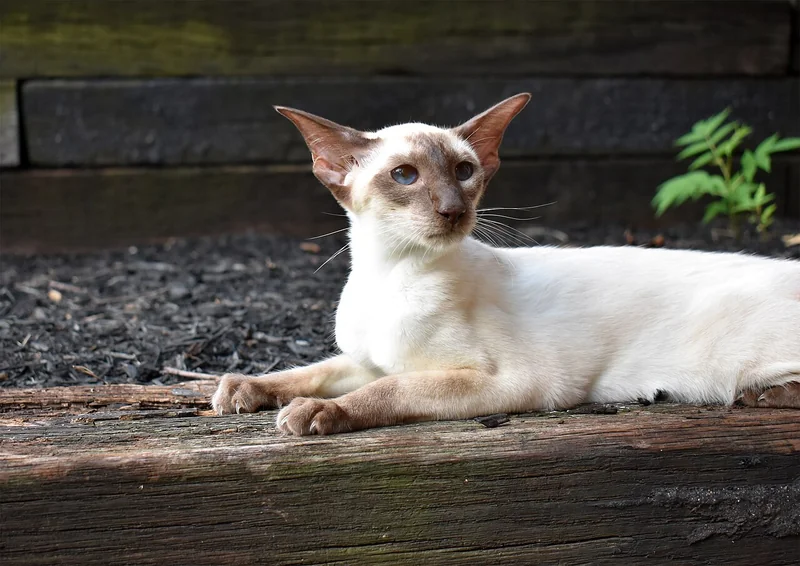 Featured photothai-longhair.jpg
The Thai Longhair is a TICA-recognized breed representing the long-coated form of the traditional Thai cat (Wichianmat type). It shares the rounded head, moderate conformation, and pointed coloring of the Thai but carries a semi-long, silky coat. TICA accepted the Thai Longhair as a distinct breed in 2015. The long coat is attributed to natural genetic variation within the traditional Thai breed population; long-coated kittens are documented in Thai historical records and among heritage cats in Thailand.
Quick facts
- Origin country
- Thailand
- Origin period
- Long-coated Thai cats documented historically; TICA recognition 2015
- Coat type
- Long
- Coat colors
- Seal point, Blue point, Chocolate point, Lilac point
- Size category
- Medium
- Average lifespan
- 12-17 years
- Recognition
- TICA 2015
Origin
Long-coated pointed cats carrying the Thai/traditional Siamese body type have been present in breeding populations for as long as the shorthaired Thai, since the long-hair gene is recessive and can be carried silently in shorthaired lines. Long-coated kittens born into Thai breeding programs in both Thailand and Western countries were documented by breeders through the late 20th century. TICA created the Thai Longhair breed category in 2015 to provide a formal registration pathway for these cats, distinguishing them from the Balinese (derived from the modern show Siamese) and maintaining the traditional rounded-head type.
Distinction from Balinese
The Thai Longhair and the Balinese both represent the long-coated form of the pointed Siamese-family cats, but they differ in body type. The Balinese (as recognized by CFA and TICA) was derived from the modern show Siamese, with an elongated head, large ears, and a tubular body. The Thai Longhair follows the traditional, moderate Thai type: a rounder head, fuller body, and less extreme conformation. Some enthusiasts use 'Traditional Balinese' as a term for this type, but TICA's separate Thai Longhair registration provides a distinct breed identity.
Appearance
The Thai Longhair standard mirrors the Thai (shorthaired) standard in all physical respects except coat length. The head is moderately rounded with a gentle dome, not the extreme elongated wedge of the modern Siamese. Eyes are large, almond-shaped, and vivid blue. The body is medium-sized, muscular, and moderately substantial. The coat is semi-long to long, silky, and lies flat without dense undercoat. The tail is a full plume. The pointed pattern restricts warm color to the face, ears, legs, and tail; body color is pale cream to white depending on point color.
Sources & further reading (2)
- registry-breed-profile — accessed 2026-05-07
- encyclopedia — accessed 2026-05-07
Frequently asked questions
Is the Thai Longhair the same as the Balinese?
Both are long-coated pointed cats related to the Siamese, but they differ in body type. The Balinese was developed from the modern show Siamese and has the same elongated, wedge-headed conformation. The Thai Longhair follows the traditional, rounded-head Thai type. TICA recognizes them as separate breeds. Some breeders call the Thai Longhair the 'Traditional Balinese' to emphasize this heritage.
When did TICA recognize the Thai Longhair?
TICA recognized the Thai Longhair as a distinct breed in 2015, separate from the shorthaired Thai (recognized in 2007) and from the Balinese. This provided a formal registration category for long-coated traditional-type pointed cats that had been present in breeding populations for decades without a dedicated registry classification.
Does the Thai Longhair come in non-traditional point colors?
The Thai Longhair standard as accepted by TICA recognizes the traditional four point colors: seal, blue, chocolate, and lilac. Non-traditional colors such as red, cream, or lynx points would typically be registered as Balinese or in another registry-specific category rather than as Thai Longhair in the current standard.