Felis catus
Sokoke
 Featured photosokoke.jpg
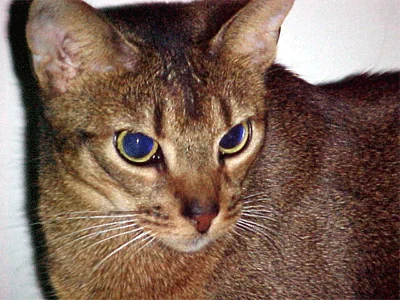
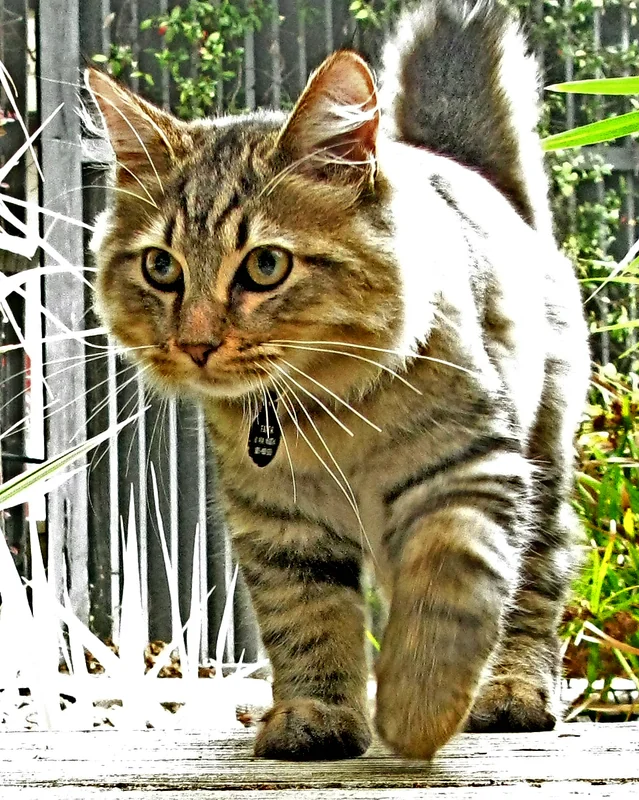
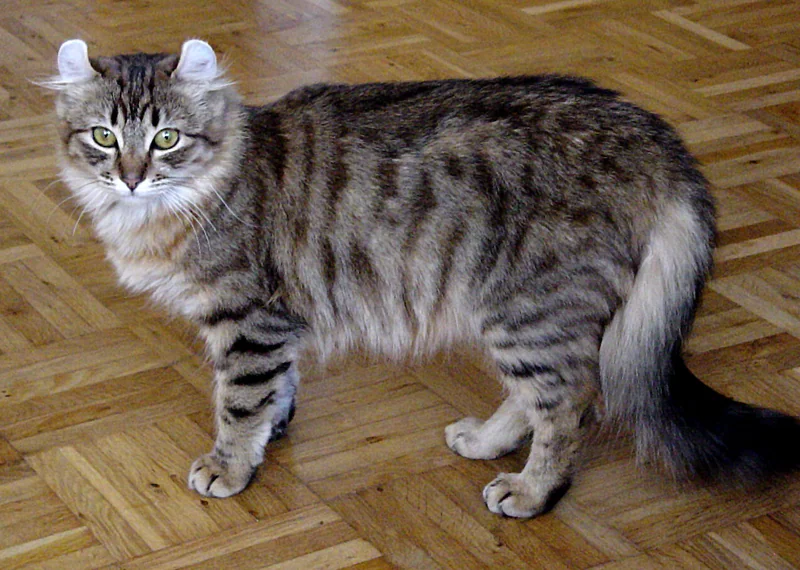
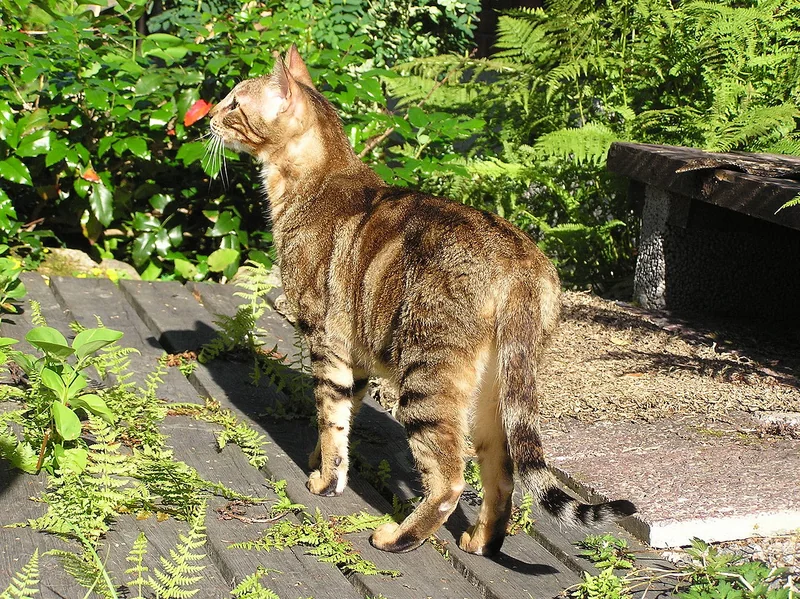
The Sokoke is a natural breed indigenous to the Arabuko-Sokoke Forest of coastal Kenya, where it is known to the local Giriama people as Khadzonzo (meaning 'looks like tree bark'). The breed was first documented in 1978 by Kenyan resident Jeni Slater, who noticed the unique blotched-tabby coat pattern in feral cats living near her property. FIFe recognized the Sokoke in 1993, and TICA granted championship status in 2004. CFA, GCCF have not published Sokoke standards. The standard describes a medium-sized, lean, athletic cat with a distinctive blotched-tabby coat.
Quick facts
- Origin country
- Kenya (Arabuko-Sokoke Forest)
- Origin period
- Natural Kenyan forest breed; documented by Jeni Slater 1978; FIFe recognition 1993; TICA championship 2004
- Coat type
- Short
- Coat colors
- Brown blotched (classic) tabby (the only recognized colour — distinctive blotched pattern on warm brown ground)
- Size category
- Medium
- Average lifespan
- 15-18 years
- Recognition
- TICA 2004 · FIFe 1993
Origin
The Sokoke is a natural breed indigenous to the Arabuko-Sokoke Forest of coastal Kenya, near the towns of Watamu and Malindi. The local Giriama people know the cats as Khadzonzo ('looks like tree bark') in reference to the blotched-tabby coat pattern that camouflages the cats among forest trees. The breed was first documented in 1978 by Jeni Slater, a Kenyan-British resident who adopted two kittens from the feral cats living near her property. Foundation cats were exported to Denmark in 1983 by Slater's friend Gloria Moeldrup, who established the European breeding line.
Recognition
The Fédération Internationale Féline recognized the Sokoke in 1993 — the first major international registry to do so. TICA accepted the breed in the late 1990s and granted championship status in 2004. CFA and GCCF have not published Sokoke standards. The breed is recognized in Kenya as a national heritage breed and the Arabuko-Sokoke Forest is designated as a protected biodiversity reserve, providing some protection for the wild Sokoke population.
Standard
The FIFe and TICA standards describe a medium-sized, lean, athletic cat with a moderate semi-foreign body type, long legs, and a long whippy tail. The head is small, modified-wedge with rounded contours and almond-shaped eyes. The defining characteristic is the coat: a short, fine, single-layered coat in brown blotched (classic) tabby pattern only. The blotched pattern is regarded as the breed's signature and is the only colour and pattern accepted under both FIFe and TICA standards.
Sources & further reading (3)
- fife-standard — accessed 2026-04-30
- encyclopedia — accessed 2026-04-30
- tica-standard — accessed 2026-04-30
Frequently asked questions
What does Khadzonzo mean?
Khadzonzo is the Giriama-language name for the Sokoke cat, used by the local people of the Arabuko-Sokoke Forest in coastal Kenya. The word means 'looks like tree bark' — referring to the distinctive blotched-tabby coat pattern that camouflages the cats among forest trees. The Khadzonzo name is recognized by FIFe and TICA as the breed's traditional designation.
When was the Sokoke recognized?
FIFe recognized the Sokoke in 1993. TICA granted championship status in 2004. CFA and GCCF have not published Sokoke standards. The breed is recognized in Kenya as a national heritage breed.
Is the Sokoke a hybrid breed?
No. The Sokoke is a fully domestic natural breed indigenous to coastal Kenya. Despite the wild appearance and forest origin, genetic studies have confirmed the Sokoke as a domestic Felis catus population without recent wild-cat hybridization. The blotched-tabby pattern is a domestic cat coat pattern that became fixed in the isolated Arabuko-Sokoke forest population.