Felis catus
Selkirk Rex Longhair
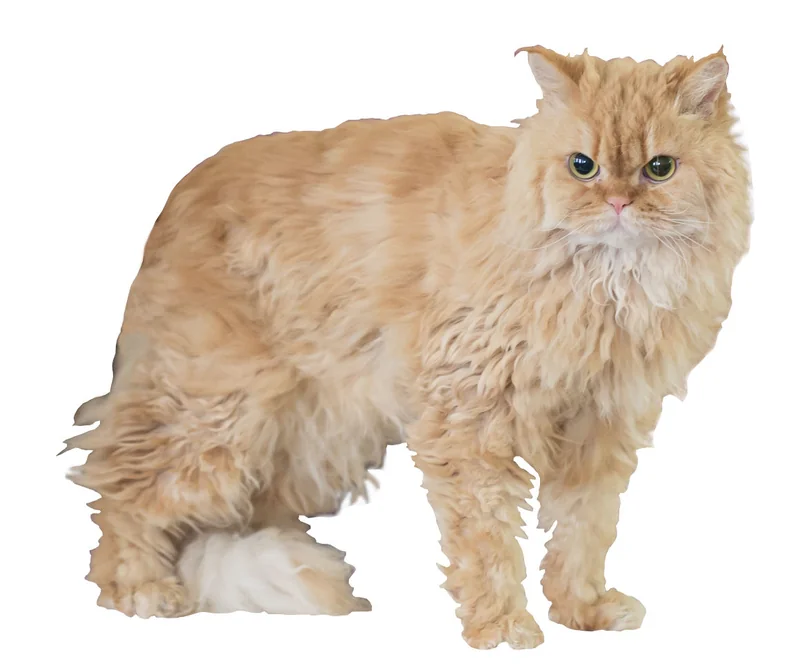 Featured photoselkirk-rex-longhair.jpg
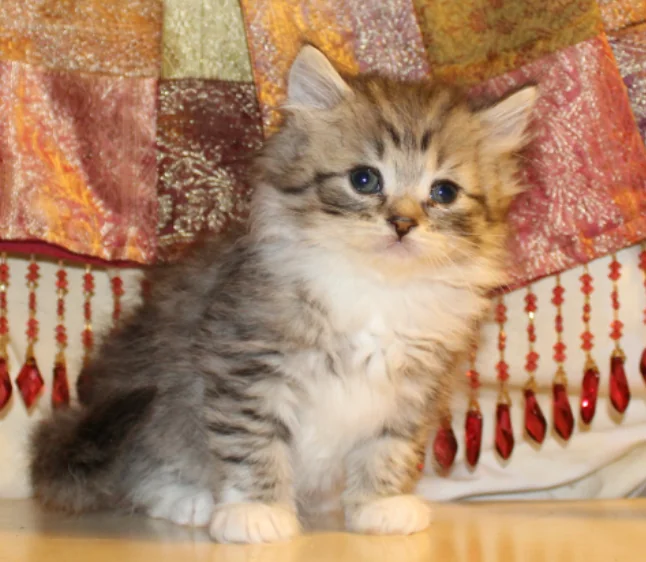
The Selkirk Rex Longhair is the long-coated form of the Selkirk Rex, sharing the same natural curly-coat mutation that originated in Montana, USA in 1987. CFA and TICA recognize both the shorthaired and longhaired forms within the Selkirk Rex breed standard in separate show divisions. The longhaired Selkirk Rex has a full, plush, loosely curled coat that is especially striking; the curls form looser spirals than in the shorthaired form due to the longer hair length.
Quick facts
- Origin country
- United States
- Origin period
- Founded 1987; TICA recognition 1992; CFA recognition 2000
- Coat type
- Long
- Coat colors
- All colors and patterns accepted
- Size category
- Large
- Average lifespan
- 13-15 years
- Recognition
- CFA 2000 · TICA 1992
Origin
The Selkirk Rex traces its origin to a single founding cat: Miss DePesto, a curly-coated kitten born at a Montana shelter in 1987. Persian breeder Jeri Newman adopted her and determined through test breedings that the curl mutation was dominant, producing curly-coated kittens in every litter where at least one parent carries it. Persian, British Shorthair, Exotic Shorthair, and American Shorthair cats were used as outcrosses in early breeding programs, contributing both short and long coat genes. TICA recognized the breed in 1992; CFA in 2000. The breed is named after the Selkirk Mountains in Montana.
The Rex Mutation
The Selkirk Rex mutation is genetically distinct from the Cornish Rex, Devon Rex, German Rex, and LaPerm mutations; it affects a different gene (KRT71) and produces a different type of curl. Unlike the Cornish Rex (which lacks guard hairs) and Devon Rex (which has very short whiskers that often break), the Selkirk Rex has all three coat types and normal whiskers; only the curl differs. The mutation is dominant, so one copy produces a curly coat; two copies (homozygous) may produce a tighter, denser curl than the heterozygous form, though both are recognized in the standard.
Longhaired Appearance
The Selkirk Rex Longhair has a full, plush, loosely curled coat that forms looser spirals or waves than the shorthaired form due to the greater hair length. The curl pattern may vary by region of the body: the belly, neck ruff, and tail often show the most pronounced curls. The coat feels soft and plush rather than harsh. The overall appearance is of a round, chunky cat (reflecting Persian/British Shorthair ancestry) with a coat of lush, loose curls. All colors and patterns are accepted. The standard calls for a large, cobby body; round head; full cheeks; and large, round eyes.
Sources & further reading (2)
- registry-breed-profile — accessed 2026-05-07
- encyclopedia — accessed 2026-05-07
Frequently asked questions
Is the Selkirk Rex related to the Cornish Rex or Devon Rex?
The Selkirk Rex carries a genetically distinct mutation from the Cornish Rex and Devon Rex. All three breeds have curly coats, but the mutations affect different genes and produce different coat structures. The Selkirk Rex has all three hair types (guard, awn, and down) with curly; the Cornish Rex lacks guard hairs; the Devon Rex has a different modification. The three breeds cannot pass their curl mutations to each other through crossing.
Can you breed two Selkirk Rex together?
Yes. Unlike the Manx bobtail gene (which causes lethality in homozygous form), the Selkirk Rex curl gene is not known to cause health problems in homozygous cats. Breeding two Selkirk Rex cats together is practiced by some breeders and can produce a higher proportion of curly-coated offspring. CFA and TICA standards recognize homozygous Selkirk Rex.
When did CFA recognize the Selkirk Rex?
CFA accepted the Selkirk Rex into its new breed and color classes and granted full championship recognition in 2000, eight years after TICA's 1992 recognition. The breed was developed in the late 1980s and early 1990s primarily with TICA registration before CFA evaluation.