Felis catus
Russian White
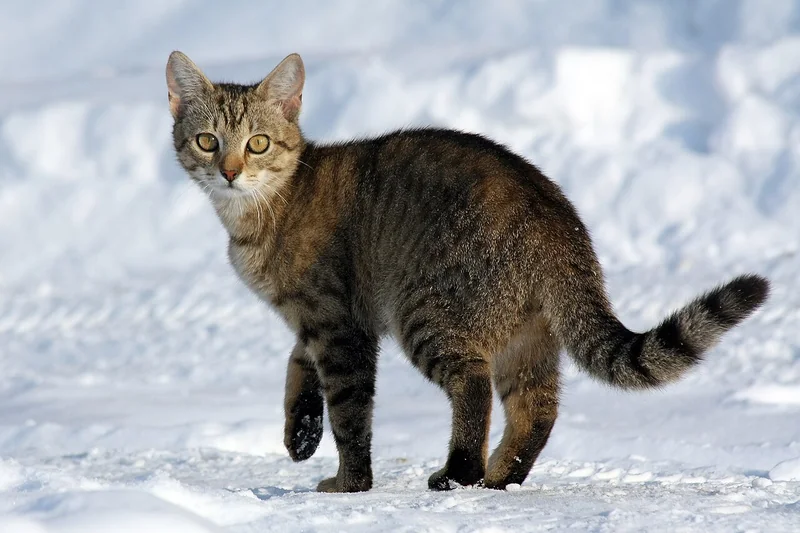 Featured photorussian-white.jpg
The Russian White is a white-coated breed sharing the Russian Blue body type and elegance, developed in Australia by Mavis Jones beginning in 1971 through Russian Blue x white domestic Siberian crosses. The Australian Cat Federation (ACF) recognized the Russian White in 1975. CFA, TICA, GCCF, and FIFe do not maintain separate Russian White registers; the breed is recognized as a colour variant of the Russian Blue in some registries and as a separate breed in Australian and New Zealand registries. The standard describes a fine-boned, elegant cat with a pure white coat and vivid green eyes.
Quick facts
- Origin country
- Australia / Russia
- Origin period
- 1971 Australian outcross programme by Mavis Jones (Russian Blue x white domestic); ACF recognition 1975
- Coat type
- Short
- Coat colors
- Solid White (the only recognized colour — pure white throughout)
- Size category
- Medium
- Average lifespan
- 15-20 years
- Recognition
- —
Origin
In 1971 Australian breeder Mavis Jones began developing the Russian White by crossing a Russian Blue female with a white domestic shorthair of Siberian origin. The goal was a Russian Blue-type cat with a pure white coat and the same vivid green eyes. Subsequent generations bred true for the white coat. Jones also developed the related Russian Black and Russian Tabby breeds through similar outcross programmes.
Recognition
The Australian Cat Federation (ACF) recognized the Russian White in 1975. The Cat Control Council of Victoria and other Australian and New Zealand registries followed. CFA, TICA, GCCF, and FIFe do not maintain separate Russian White registers. Some registries recognize the breed as a colour variant of the Russian Blue rather than as a separate breed. The Russian White is shown primarily in Australia and New Zealand through ACF affiliates.
Standard
The ACF standard describes a Russian White as conforming to the Russian Blue standard in all respects except coat colour. The body is fine-boned, long, and graceful with a long neck, flat skull, and a wedge-shaped head. The eyes are vivid green — as vivid and intense as the Russian Blue's. The coat is short, dense, and double — the white outer coat has the same silver-tipped guard hair texture as the Russian Blue's blue coat, producing a silvery sheen even on the white. The only recognized colour is pure white throughout.
Sources & further reading (3)
- encyclopedia — accessed 2026-04-30
- encyclopedia — accessed 2026-04-30
- registry-standard — accessed 2026-04-30
Frequently asked questions
How does the Russian White differ from the Russian Blue?
The Russian White and Russian Blue share the same body type, head shape, coat texture, and vivid green eye colour. They differ only in coat colour: pure white versus blue (blue-grey). The Russian White was developed in Australia from 1971 through Russian Blue x white Siberian crosses. Some registries treat the two as separate breeds; others treat the Russian White as a colour variant of the Russian Blue.
When was the Russian White recognized?
The Australian Cat Federation (ACF) recognized the Russian White in 1975. CFA, TICA, GCCF, and FIFe do not maintain separate Russian White registers. The breed is shown primarily in Australia and New Zealand through ACF affiliates.
Are there other Russian colour breeds?
Yes. Mavis Jones also developed the Russian Black and Russian Tabby in parallel with the Russian White, all through outcross programmes from 1971. These three breeds plus the original Russian Blue are recognized in Australian and New Zealand registries; outside Australia they are typically grouped under the Russian Blue name with colour variants.