Felis catus
Oriental Shorthair
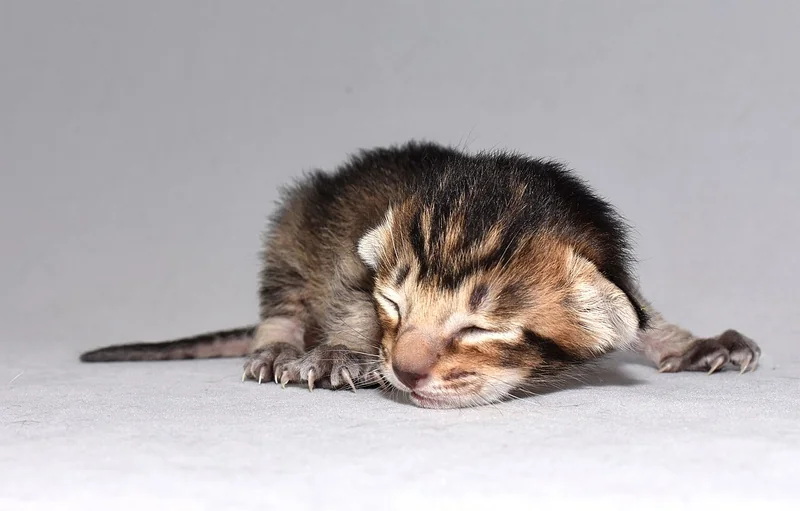 Featured photooriental-shorthair.jpg
The Oriental Shorthair is a breed sharing the Siamese body type but carrying a full range of non-pointed coat colours and patterns. The breed was developed in the United Kingdom from the 1950s through Siamese outcrosses to domestic cats of various colours. CFA granted championship status in 1977; TICA at its 1979 founding; FIFe in 1982; and GCCF in 1997. The standard describes a long, lean, tubular cat with large ears and a wedge-shaped head identical to the Siamese.
Quick facts
- Origin country
- United Kingdom
- Origin period
- 1950s–1960s (Siamese outcrossing programme); CFA championship 1977
- Coat type
- Short
- Coat colors
- Over 300 colour and pattern combinations recognized by CFA: solid, shaded, smoke, tabby, bicolour, and particolour
- Size category
- Medium
- Average lifespan
- 12-15 years
- Recognition
- CFA 1977 · TICA 1979 · GCCF 1997 · FIFe 1982
Origin
British breeders in the 1950s and 1960s used Siamese cats in systematic outcross programmes with domestic cats of various non-pointed colours to produce cats of Siamese type without point restriction. The resulting cats were initially called Foreign Shorthairs in the United Kingdom; colour varieties were developed into named breeds including the Havana Brown and the Foreign White. CFA unified the non-pointed Siamese-type cats into a single breed — the Oriental Shorthair — at its 1977 championship recognition.
Recognition
CFA granted championship status to the Oriental Shorthair in 1977. The International Cat Association recognized the breed at its 1979 founding. The Fédération Internationale Féline published its standard in 1982. The Governing Council of the Cat Fancy recognized the Oriental Shorthair in 1997. CFA recognizes over 300 colour and pattern combinations for the Oriental Shorthair — the largest colour range of any CFA championship breed.
Standard
The CFA standard describes an Oriental Shorthair as conforming to the Siamese standard in all respects except colour. The body is long, tubular, and well-muscled with a very long neck and long thin legs. The head is a long tapering wedge with large flaring ears continuing the line of the wedge. The eyes are almond-shaped and slanted. The coat is short, fine, and close-lying. Unlike the Siamese — where eye colour is restricted to vivid blue — the Oriental Shorthair's eye colour is vivid green for most colours and odd-eyed or blue for whites.
Sources & further reading (3)
- registry-breed-profile — accessed 2026-04-30
- encyclopedia — accessed 2026-04-30
- fife-standard — accessed 2026-04-30
Frequently asked questions
How many colours does CFA recognize for the Oriental Shorthair?
CFA recognizes over 300 colour and pattern combinations for the Oriental Shorthair — the largest colour recognition of any CFA championship breed. The breed encompasses every non-pointed solid, shaded, smoke, tabby, bicolour, and particolour combination in the Siamese body type. This includes colours excluded from the Siamese standard, such as white, tabby, and bicolour.
When was the Oriental Shorthair recognized?
CFA granted championship status in 1977. TICA recognized the breed at its 1979 founding. FIFe published its standard in 1982. GCCF recognized the breed in 1997.
How does the Oriental Shorthair differ from the Siamese?
The Oriental Shorthair shares the Siamese body type and head shape but carries non-pointed coat colours and green (rather than blue) eyes. Siamese cats are restricted to point colours — pale body with darker mask, ears, legs, and tail. Oriental Shorthairs are recognized in over 300 colour and pattern combinations without the point restriction. Both breeds share the same Siamese conformation standard.