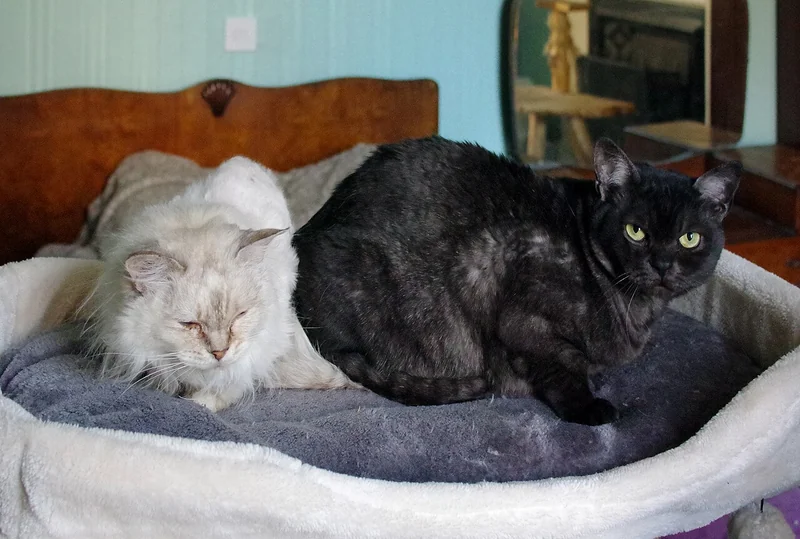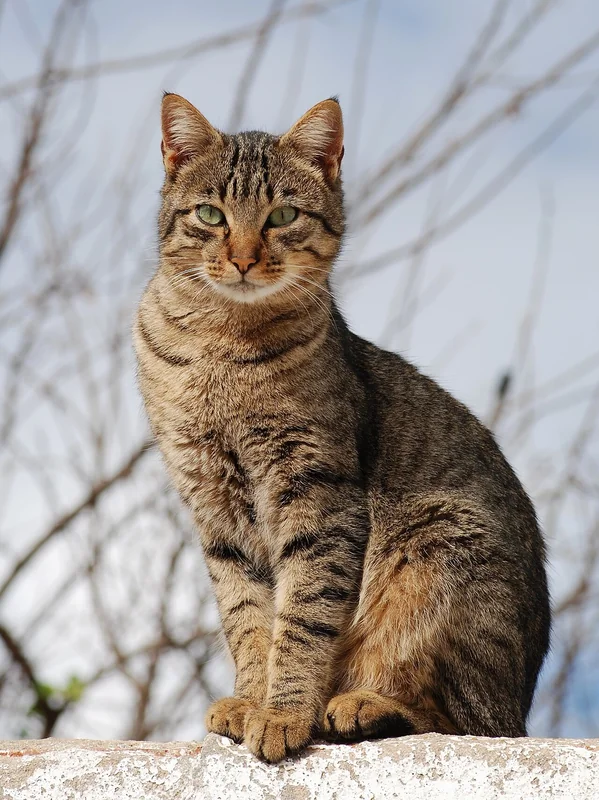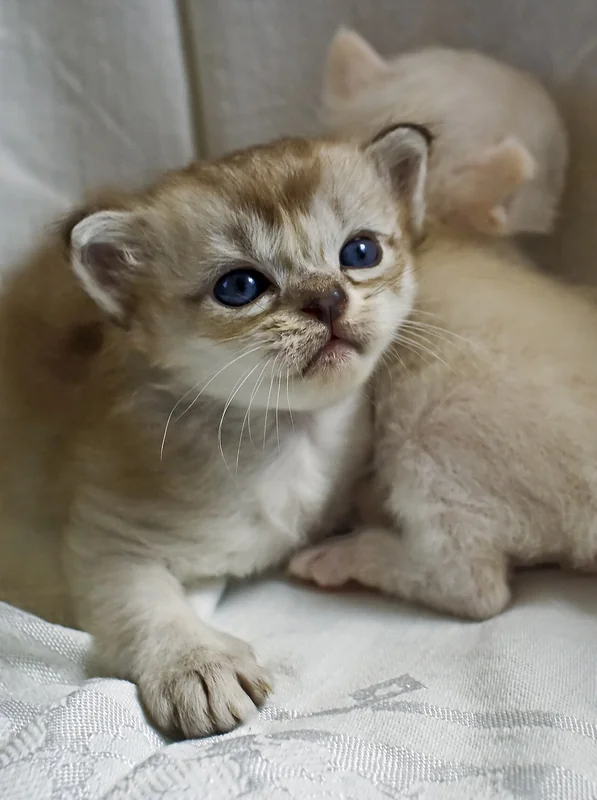
The Burmilla is a silver-tipped shorthair breed originating from a 1981 accidental cross between Baroness Miranda von Kirchberg's lilac Burmese, Faberge, and a chinchilla Persian named Sanquist. The resulting silver-tipped Burmese-type kittens became the foundation of the breed. GCCF recognized the Burmilla as part of the Asian Group in 1989. FIFe granted championship status in 2002, and CFA in 2014. The standard describes a medium-sized, semi-foreign cat with the Burmese body type and a distinctive silver-shaded or silver-tipped coat.
Quick facts
- Origin country
- United Kingdom
- Origin period
- 1981 accidental Burmese x Persian cross by Baroness von Kirchberg; CFA championship 2014, GCCF recognition 1989, FIFe recognition 2002
- Coat type
- Short
- Coat colors
- Silver Shaded (8/8 of hair length), Silver Tipped (1/8 of hair length), Each in black, blue, brown, chocolate, lilac, red, cream, and tortoiseshell tipping colours
- Size category
- Medium
- Average lifespan
- 10-15 years
- Recognition
- CFA 2014 · GCCF 1989 · FIFe 2002
Origin
In 1981 a lilac Burmese female named Faberge owned by Baroness Miranda von Kirchberg accidentally mated with a chinchilla Persian male named Sanquist. The resulting four kittens were silver-tipped Burmese-type cats — combining the Burmese body conformation with the Persian's silver-tipped coat. Baroness von Kirchberg developed the breed deliberately from these foundation kittens, naming it Burmilla as a portmanteau of Burmese and Chinchilla. The Burmilla forms the silver-tipped variety of the broader GCCF Asian Group.
Recognition
The Governing Council of the Cat Fancy recognized the Burmilla as part of the Asian Group in 1989. The Fédération Internationale Féline granted championship status in 2002 — the first major continental European registry to do so. The Cat Fanciers' Association granted championship status in 2014, the most recent CFA championship recognition for a Burmese-derived breed.
Standard
The CFA and FIFe standards describe a medium-sized, well-muscled, semi-foreign cat with the Burmese body type — round chest, straight back, slender legs. The head is a modified wedge with rounded contours, a strong chin, and almond-shaped green or yellow-green eyes outlined as if in eyeliner. The coat is short, fine, and close-lying with a silver-tipped or silver-shaded pattern: tipping colour appears on the upper one-eighth (tipped) or upper one-half (shaded) of each guard hair. Tipping colours include black, blue, brown, chocolate, lilac, red, cream, and tortoiseshell.
Sources & further reading (3)
- registry-breed-profile — accessed 2026-04-30
- encyclopedia — accessed 2026-04-30
- gccf-registry — accessed 2026-04-30
Frequently asked questions
How was the Burmilla created?
The Burmilla originated from a 1981 accidental cross between a lilac Burmese named Faberge and a chinchilla Persian named Sanquist, both belonging to Baroness Miranda von Kirchberg's family. The resulting silver-tipped Burmese-type kittens became the foundation of the breed. The name Burmilla is a portmanteau of Burmese and Chinchilla.
When was the Burmilla recognized internationally?
GCCF recognized the Burmilla as part of the Asian Group in 1989. FIFe granted championship status in 2002. CFA granted championship status in 2014. TICA does not maintain a separate Burmilla register; cats are registered as Asian Group variants under TICA.
What is the difference between Burmilla and Asian Group?
The Burmilla is the silver-tipped variety of the broader GCCF Asian Group. The Asian Group includes four shorthair varieties: Burmilla (silver-tipped), Asian Self (solid colours), Asian Smoke (smoke pattern), and Asian Tabby (tabby patterns). All share the Burmese body type and the 1981 von Kirchberg foundation cross. CFA and FIFe recognize only the Burmilla among these varieties.