Felis catus
Ojos Azules
 Featured photoojos-azules.jpg
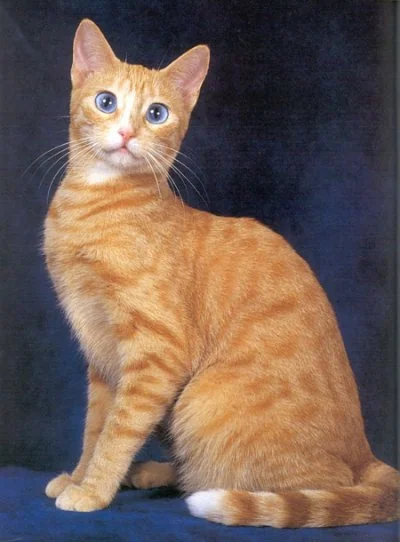
The Ojos Azules (Spanish for 'blue eyes') is a domestic breed defined by a natural dominant mutation that produces deep blue eyes independent of coat colour or pattern. The mutation was first documented in a feral cat colony in New Mexico in 1984. Ojos Azules cats may have any coat colour, including solid black or tortoiseshell, with deep blue eyes — a combination not produced by any other recognized cat breed. TICA accepts the breed for experimental registration. The breed remains very rare due to lethal homozygote concerns.
Quick facts
- Origin country
- United States
- Origin period
- 1984 New Mexico foundation (Cornflower); TICA experimental registration
- Coat type
- Short
- Coat colors
- All coat colours and patterns recognized — the breed is defined by eye colour rather than coat colour
- Size category
- Medium
- Average lifespan
- 10-12 years
- Recognition
- —
Origin
In 1984 American breeder Cornflower acquired a tortoiseshell female cat with deep blue eyes from a feral cat colony in New Mexico. The cat's blue eyes were unusual because she was not white-coated, not pointed, and not albino — the three normal causes of blue eyes in domestic cats. Cornflower established a deliberate breeding programme. Genetic studies confirmed the mutation is autosomal dominant — a single copy produces blue eyes in any coat colour. However, breeding two Ojos Azules cats produces lethal homozygotes.
Recognition
TICA accepts the Ojos Azules for experimental registration. CFA, GCCF, and FIFe have not published Ojos Azules standards. The breed remains very rare worldwide. The lethal homozygote constraint requires all Ojos Azules cats to be heterozygous; outcrosses to non-Ojos Azules cats are required for every breeding pair, limiting population growth.
Standard
The TICA experimental standard describes a medium-sized, well-muscled, semi-foreign cat. The defining characteristic is the eye colour: deep blue, intense, and present regardless of coat colour. Eye colour is judged primarily; coat colour and pattern are unrestricted — solid colours, tabby, tortoiseshell, calico, and bicolour are all accepted. Some Ojos Azules cats display a small white spot at the chest or paws (sometimes regarded as a marker of the gene). The breed has no body-type restriction beyond moderate-foreign conformation.
Sources & further reading (3)
- tica-standard — accessed 2026-04-30
- encyclopedia — accessed 2026-04-30
- encyclopedia — accessed 2026-04-30
Frequently asked questions
What makes the Ojos Azules eye colour unique?
Most blue-eyed cats are either white (W gene), pointed (Siamese cs gene), or albino (cs/cs). The Ojos Azules carries a separate dominant mutation (designated Oja) that produces deep blue eyes regardless of coat colour. An Ojos Azules can be solid black, tortoiseshell, or any other colour and still have blue eyes — a combination not produced by any other recognized gene.
When was the Ojos Azules recognized?
TICA accepts the Ojos Azules for experimental registration. CFA, GCCF, and FIFe have not published Ojos Azules standards. The breed has not advanced to championship due to the lethal homozygote constraint and limited foundation stock.
Why is the Ojos Azules so rare?
The Ojos Azules dominant gene is homozygous-lethal: cats inheriting two copies of the gene do not survive to birth. All Ojos Azules cats must be heterozygous, and breeding two Ojos Azules together produces approximately 25% lethal embryos. This constraint, combined with the breed's small founding population, has limited growth and kept the breed extremely rare worldwide.