Felis catus
Korean Bobtail
 Featured photokorean-bobtail.jpg
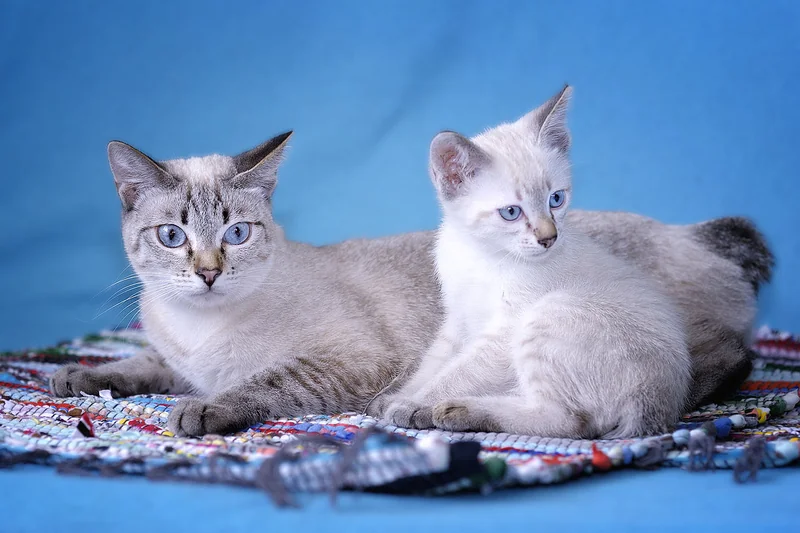
The Korean Bobtail (Korean: Donggyeong-i, 'eastern capital cat') is a natural Korean breed with a short kinked tail. The breed is referenced in 17th-18th-century Korean royal court records under the Joseon dynasty (Sukjong era), making it among the longest-documented Asian cat breeds. The breed is regarded as a Korean cultural heritage breed. The Korea Cat Society and other regional Korean cat clubs have led modern preservation efforts. CFA, TICA, GCCF, and FIFe have not published Korean Bobtail standards. The standard describes a medium-sized cat with a short kinked tail.
Quick facts
- Origin country
- Korea
- Origin period
- Natural Korean working-cat breed; documented in 17th-18th-century Korean royal court records (Sukjong-era references)
- Coat type
- Short
- Coat colors
- All colours and patterns recognized; the white coat (associated with Donggyeong-i historical references) is regarded as the heritage colour
- Size category
- Medium
- Average lifespan
- 12-15 years
- Recognition
- —
Origin
The Korean Bobtail (Korean: Donggyeong-i) is a natural breed indigenous to the Korean peninsula, where it has lived for centuries as a regional working cat. The breed is referenced in Korean royal court records from the Joseon dynasty (Sukjong era, 1674-1720) and is documented in 18th-century Korean encyclopedic texts. The Donggyeong-i name refers to the historic 'eastern capital' (Gyeongju, the capital of the Silla Kingdom). The breed is regarded as a Korean cultural heritage breed.
Recognition
Modern documentation of the Korean Bobtail as a distinct breed began in the 2000s through the Korea Cat Society and academic research at South Korean universities. CFA, TICA, GCCF, and FIFe have not published Korean Bobtail standards. The breed is recognized as a Korean cultural heritage breed and is the subject of preservation efforts in South Korea.
Standard
Korean breed-club standards describe a medium-sized, well-muscled cat with a moderate body type and a short, kinked tail of three to seven vertebrae forming a unique pom-pom or kinked shape per individual. The head is moderately rounded with full cheeks. The coat is short, fine, and close-lying. All colours and patterns are accepted; the white coat is regarded as the historical heritage colour referenced in 17th-century Korean court documents about the Donggyeong-i.
Sources & further reading (3)
- encyclopedia — accessed 2026-04-30
- encyclopedia — accessed 2026-04-30
- encyclopedia — accessed 2026-04-30
Frequently asked questions
What does Donggyeong-i mean?
Donggyeong-i is the Korean name for the Korean Bobtail. Donggyeong means 'eastern capital', referring historically to the city of Gyeongju, which was the capital of the Silla Kingdom (57 BCE-935 CE). The suffix '-i' is a diminutive. The full name translates roughly as 'cat of the eastern capital'.
Is the Korean Bobtail recognized internationally?
No. CFA, TICA, GCCF, and FIFe have not published Korean Bobtail standards as of the mid-2020s. The breed is recognized as a Korean cultural heritage breed and is the subject of formal preservation efforts in South Korea.
How does the Korean Bobtail differ from the Japanese Bobtail?
Both breeds carry naturally short, kinked tails of similar appearance. The Korean Bobtail bobtail mutation is regarded as distinct from the Japanese Bobtail mutation, though formal genetic comparison has not been published in international literature. The two breeds also have different documented histories: the Korean Bobtail is referenced in 17th-century Korean royal court records, while the Japanese Bobtail is documented in Japanese art since the 10th century.