Felis catus
Kohana
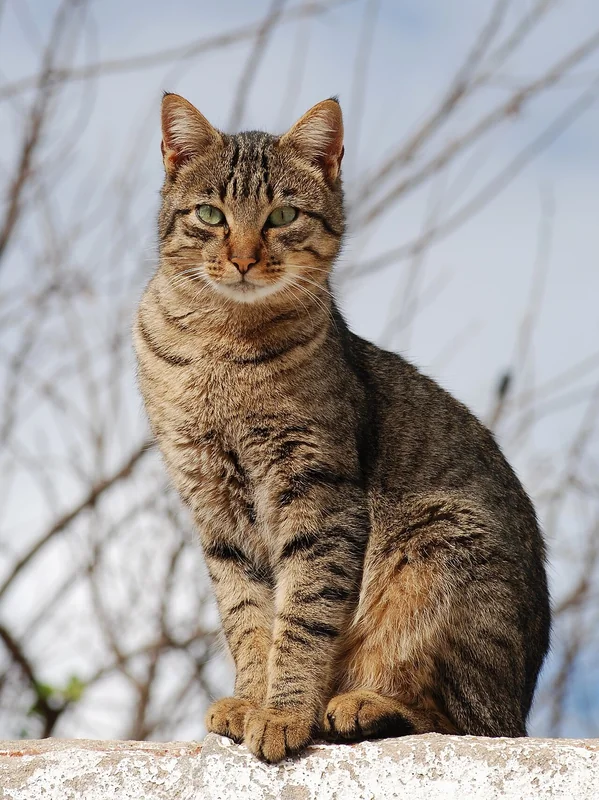 Featured photokohana.jpg
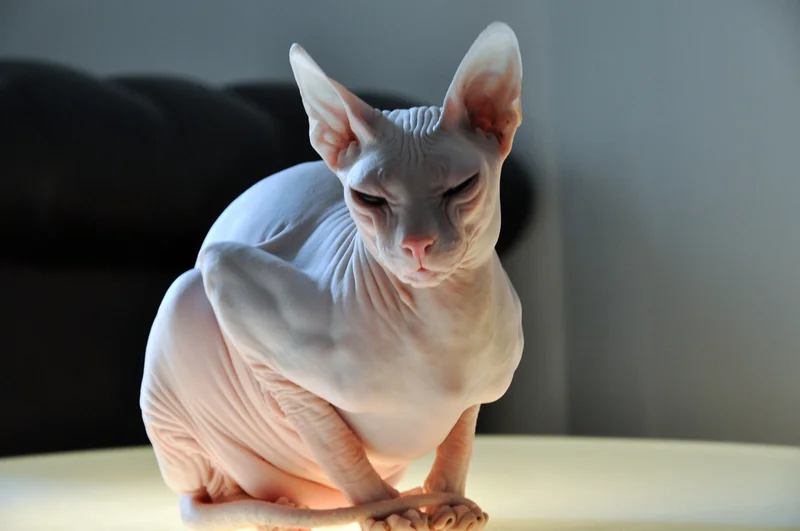
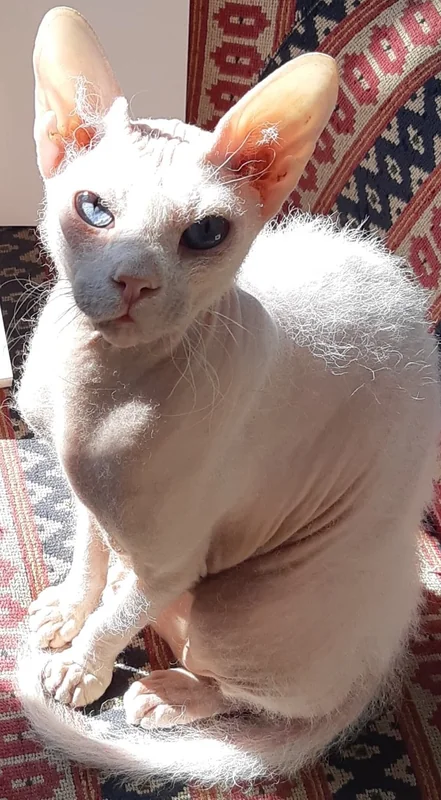
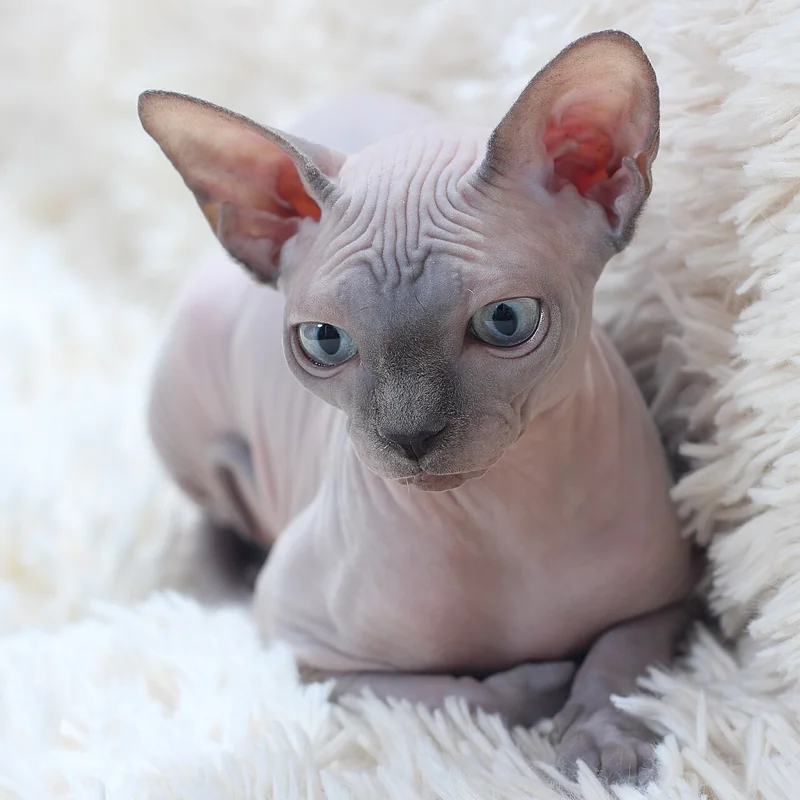
The Kohana (also Kohana Rex) is an extremely rare hairless cat breed that originated in Hawaii and carries a different hairless mutation from the Sphynx. While the Sphynx has vestigial hair follicles and a fine peach-fuzz texture, the Kohana appears to lack functional hair follicles entirely, resulting in completely smooth, hairless, rubber-like skin. First documented in Hawaii in 2002, the Kohana remains one of the rarest cat breeds in the world with only a handful of known individuals.
Quick facts
- Origin country
- United States (Hawaii)
- Origin period
- First documented 2002, Hawaii; TICA experimental registration
- Coat type
- Hairless
- Coat colors
- All skin colors; no hair at all; smooth rubber-like texture
- Size category
- Medium
- Average lifespan
- 10-14 years
- Recognition
- TICA 2007
Origin
The Kohana was first identified in Hawaii in 2002 when a hairless kitten appeared that differed from Sphynx kittens in its skin texture. Hawaiian breeder Britta Knottenbelt developed a breeding program to establish the type. Unlike the Sphynx, which has fine peach-fuzz from vestigial hair follicles, the Kohana was reported to lack functional hair follicles entirely, producing completely smooth, elastic, rubber-like skin. TICA accepted the Kohana into its experimental breed registry, and the founding breeding program continued in Hawaii and was later taken on by other breeders in the mainland United States.
Genetics and Distinction from Sphynx
The Kohana's hairlessness appears to be caused by a mutation distinct from the Sphynx's KRT71 gene variant. The Sphynx hairless mutation produces a defective hair shaft that breaks and does not grow visible hair, but the follicles exist and produce the characteristic fine down texture. The Kohana, according to breeder reports and early investigation, may lack functional hair follicles altogether, resulting in completely smooth, follicle-free skin. This would make the Kohana biologically distinct from the Sphynx despite the similar hairless appearance. Full genetic characterization had not been published in peer-reviewed literature as of 2026, and the breed's genetic basis remains under study.
Rarity and Status
The Kohana is one of the rarest cat breeds in the world. The number of living Kohana cats is estimated at fewer than 100 worldwide; some sources suggest fewer than 50. The small population makes the breed vulnerable to inbreeding; careful breeding program management is required to maintain genetic diversity. TICA accepted the breed into its experimental registry, but the breed had not advanced to full championship status as of 2026. The extreme rarity means that few cat fanciers have encountered a Kohana in person.
Sources & further reading (2)
- encyclopedia — accessed 2026-05-07
- registry-breed-profile — accessed 2026-05-07
Frequently asked questions
How is the Kohana different from the Sphynx?
The Sphynx has vestigial hair follicles that produce a fine, barely perceptible peach-fuzz texture on the skin. The Kohana is reported to lack functional hair follicles entirely, producing completely smooth, rubber-like skin with no down at all. Both appear hairless to casual observation, but the skin textures are reportedly different. The genetic mutations responsible are believed to be distinct.
Why is the Kohana so rare?
The Kohana's rarity results from its recent origin (first documented 2002), its small founding population, and the challenges of breeding hairless cats with limited genetic diversity. Additionally, the breed has not received widespread mainstream recognition or promotion, limiting interest from breeders outside Hawaii and the small community of enthusiasts who discovered the mutation.
Is the Kohana recognized by major registries?
TICA accepted the Kohana into its experimental new breed program. CFA, GCCF, and FIFe do not maintain Kohana registrations. The breed has not achieved full championship status with any major international registry as of 2026.