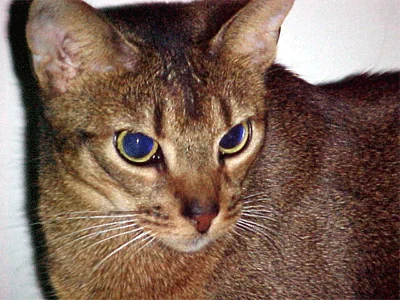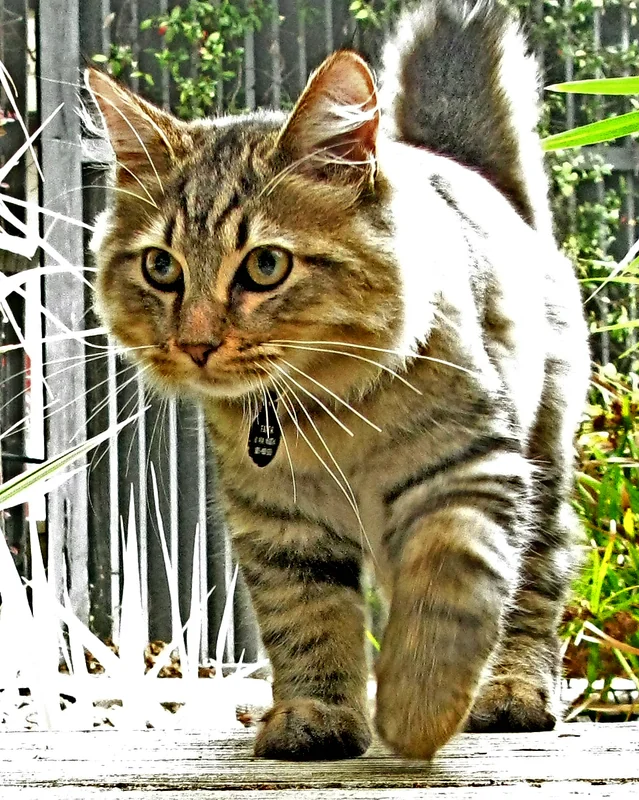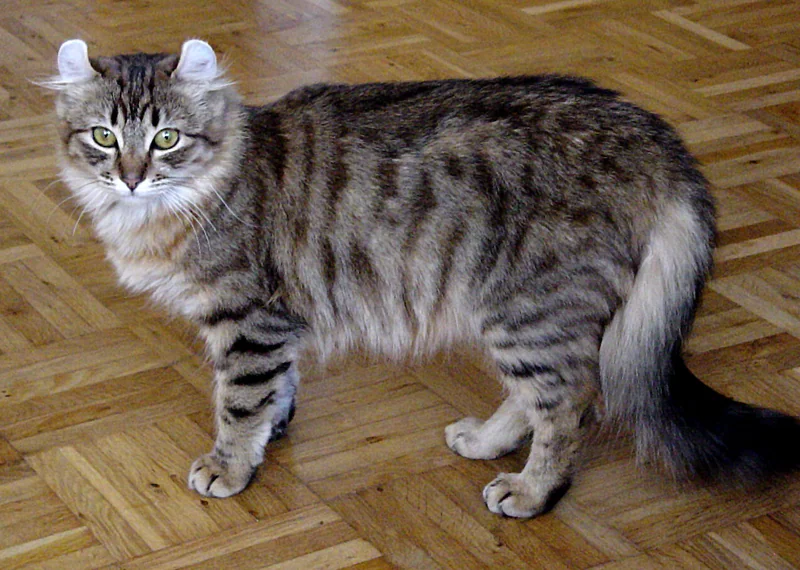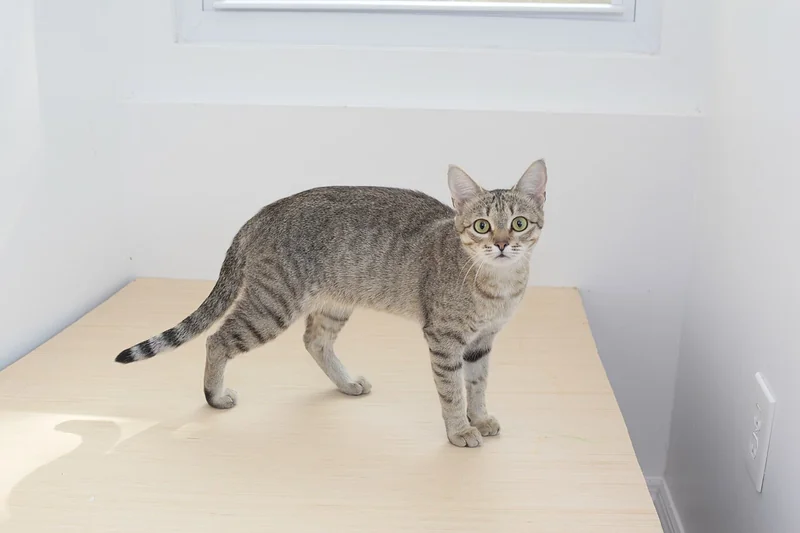
The Kanaani (also called the Canaan Cat) is a domestic spotted breed developed by Israeli-German breeder Doris Pollatschek-Kotter beginning in 2000. The breeding programme combined Bengals, Egyptian Maus, and feral cats from Lebanon and Israel to produce a domestic cat resembling the African Wildcat (Felis lybica) — the wild ancestor of the domestic cat. The breed name 'Kanaani' references Canaan, the historical name for the region. FIFe accepted the Kanaani for novice status in 2009. The standard describes a long, lean, athletic cat with a heavily spotted coat.
Quick facts
- Origin country
- Israel / Germany
- Origin period
- Created by Doris Pollatschek-Kotter from 2000 using Bengals, Egyptian Maus, and Lebanese feral cats; FIFe novice 2009
- Coat type
- Short
- Coat colors
- Brown Spotted (the most common), Black Spotted, Cinnamon Spotted, Each in standard or with light ground
- Size category
- Medium
- Average lifespan
- 12-15 years
- Recognition
- —
Origin
Doris Pollatschek-Kotter, an Israeli-German breeder, began developing the Kanaani in 2000 by combining Bengal cats (F4 or beyond — fully domestic), Egyptian Maus, and feral cats sourced from Lebanon and Israel. The goal was a domestic cat resembling the African Wildcat (Felis lybica) — the wild ancestor of the domestic cat — through selective breeding of natural and pedigreed spotted breeds, without recent wild-cat hybridization. The breed name 'Kanaani' references Canaan, the historical name for the region encompassing modern Israel, Lebanon, and Palestine.
Recognition
The Fédération Internationale Féline accepted the Kanaani for novice status in 2009 — the first major international registry to recognize the breed. CFA, TICA, and GCCF have not published Kanaani standards. The breed remains rare, primarily affiliated with German and Israeli breed clubs and shown through FIFe-affiliated bodies in continental Europe.
Standard
The FIFe standard describes a medium to large, long, lean, athletic cat with substantial muscle and high-set hindquarters. The head is medium-sized with a moderate wedge, almond-shaped eyes, and large pointed ears with possible tufts. The coat is short, fine, and close-lying with a heavily spotted tabby pattern: random round, oval, or arrow-shaped spots in dark contrast against a warm ground colour. Three base colours are recognized: brown spotted (most common), black spotted, and cinnamon spotted. The breed is intended to evoke the African Wildcat in domestic form.
Sources & further reading (3)
- fife-standard — accessed 2026-04-30
- encyclopedia — accessed 2026-04-30
- encyclopedia — accessed 2026-04-30
Frequently asked questions
Where does the Kanaani come from?
The Kanaani was developed by Israeli-German breeder Doris Pollatschek-Kotter beginning in 2000 by combining Bengals (F4 or beyond), Egyptian Maus, and feral cats sourced from Lebanon and Israel. The breed name references Canaan, the historical name for the region encompassing modern Israel, Lebanon, and Palestine.
When was the Kanaani recognized?
FIFe accepted the Kanaani for novice status in 2009. CFA, TICA, and GCCF have not published Kanaani standards. The breed remains rare, primarily affiliated with German and Israeli breed clubs.
Is the Kanaani a wild-cat hybrid?
No. The Kanaani is a fully domestic breed developed from Bengal (F4+, fully domestic), Egyptian Mau, and feral domestic cat foundation stock. The breed contains no recent wild-cat genetics. The intended resemblance is to the African Wildcat (Felis lybica) — the wild ancestor of all domestic cats — achieved through selective breeding of domestic spotted patterns.