Felis catus
European Shorthair
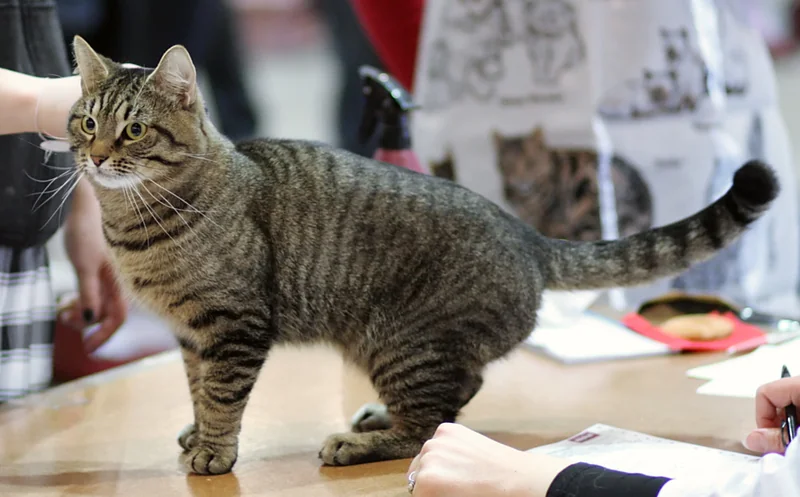 Featured photoeuropean-shorthair.jpg
The European Shorthair is the formalized show variety of the working domestic cat of continental Europe — the European counterpart to the British Shorthair and American Shorthair. Although European working domestic cats have lived alongside humans for centuries, the breed was formalized by FIFe at its 1949 founding under the name Celtic Shorthair and renamed European Shorthair in 1982; full championship status under the new standard followed in 1986. CFA, TICA, and GCCF do not maintain separate European Shorthair championship registers.
Quick facts
- Origin country
- Europe (continental — Sweden, Finland, France)
- Origin period
- Working farm cat across Europe; FIFe championship 1986
- Coat type
- Short
- Coat colors
- All colours and patterns recognized except colourpoint, chocolate, lilac, cinnamon, fawn, and acromelanic patterns
- Size category
- Medium
- Average lifespan
- 15-20 years
- Recognition
- FIFe 1986
Origin
The European Shorthair is the formalized show variety of the working domestic cat of continental Europe. Domestic shorthaired cats have lived across Europe since Roman times. FIFe registered a 'Celtic Shorthair' breed at its 1949 founding, but the early standard largely overlapped with the British Shorthair and the breed was rarely shown separately. In 1982 FIFe separated the two breeds with distinct standards and renamed the continental variety European Shorthair. Swedish and Finnish breed clubs led modern development; the breed remains most popular in Northern Europe.
Recognition
FIFe granted championship status to the European Shorthair under its current standard in 1986, after separating it from the British Shorthair in 1982. The breed is recognized across all FIFe-affiliated bodies in Europe. CFA, TICA, and GCCF do not maintain separate European Shorthair championship registers; in those registries, continental European working-cat type is shown under the British Shorthair or American Shorthair classes.
Standard
The FIFe standard describes a medium to large, well-built, muscular cat with a deep chest and strong, well-developed body. The head is rounded with a moderate forehead and full cheeks; the muzzle is well-defined but not snubbed. The ears are medium-sized with rounded tips. The coat is short, dense, and lustrous. All colours and patterns are recognized except those that signal recent outcrosses to oriental or pointed breeds: colourpoint, chocolate, lilac, cinnamon, fawn, and acromelanic patterns are excluded.
Sources & further reading (3)
- fife-standard — accessed 2026-04-30
- encyclopedia — accessed 2026-04-30
- registry-standard — accessed 2026-04-30
Frequently asked questions
How does the European Shorthair differ from the British Shorthair?
The European Shorthair has a less extreme rounded head and lighter bone structure than the British Shorthair, and a less plush coat. The FIFe standard for the European Shorthair specifies a more moderate, athletic type that reflects the breed's working-cat origins. The two breeds were separated by FIFe in 1982; before that they had been shown together as Celtic Shorthair.
When was the European Shorthair recognized?
FIFe registered the breed under the name Celtic Shorthair at its 1949 founding. In 1982 FIFe separated the European Shorthair from the British Shorthair with a distinct standard, and full championship status under the new standard was granted in 1986. CFA, TICA, and GCCF do not maintain separate European Shorthair championship registers.
What colours are excluded from the European Shorthair standard?
FIFe excludes chocolate, lilac, cinnamon, fawn, colourpoint, and acromelanic patterns from the European Shorthair standard. These colours signal recent outcrosses to Oriental or pointed breeds; the European Shorthair standard reflects the breed's natural working-cat lineage and excludes them to maintain breed identity.