Felis catus
Asian Tabby
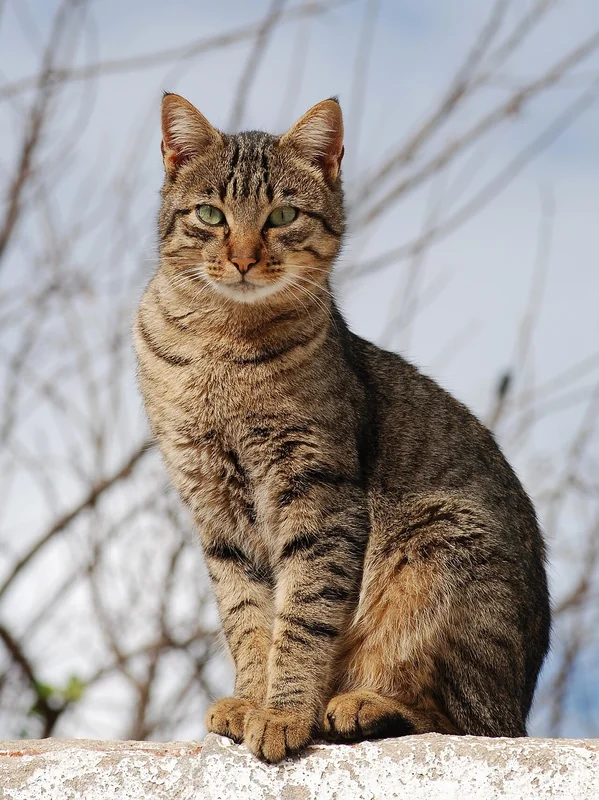 Featured photoasian-tabby.jpg
The Asian Tabby is a GCCF-recognized coat-pattern variety within the Asian breed group, describing Burmese-type cats in classic (blotched), mackerel, or spotted tabby patterns. It emerged from the same 1981 Burmilla foundation crossing of Burmese and Chinchilla Persian and is registered separately from the Asian Shorthair Self and the Burmilla within GCCF's Asian group structure. The Asian Tabby shares the Burmese type's medium-sized, muscular, rounded conformation.
Quick facts
- Origin country
- United Kingdom
- Origin period
- Developed from Burmilla program 1981; GCCF Asian group variety recognition 1990s
- Coat type
- Short
- Coat colors
- Classic (blotched) tabby, Mackerel tabby, Spotted tabby, All in standard Burmese-range base colors
- Size category
- Medium
- Average lifespan
- 12-16 years
- Recognition
- GCCF 1995
Origin
The Asian Tabby descends from the same UK Burmilla program founded in 1981. Among the kittens produced from Burmese-Chinchilla and Burmilla-to-Burmilla crosses, tabby-patterned individuals appeared that carried the tabby pattern gene (agouti locus) rather than the self or tipped patterns. GCCF classified these under the Asian Tabby designation within its Asian breed group. The three tabby patterns recognized are classic (large whorling blotches), mackerel (narrow parallel stripes), and spotted (distinct spots or rosettes).
GCCF Asian Group
The GCCF Asian group is a collection of related varieties sharing the same Burmese-type conformation: Asian Self (solid), Asian Tabby (tabby patterns), Asian Smoke (smoke), Asian Ticked (ticked tabby), Burmilla (chinchilla/shaded tipped), and Tiffanie (semi-longhair). All emerged from the 1981 Burmilla foundation and are maintained as a coherent breed group despite having different coat appearances. The Asian Tabby occupies the tabby-patterned slot within this classification, distinguishing cats with distinct tabby striping or spotting from the other Asian group varieties.
Appearance
The Asian Tabby is a medium-sized, well-muscled cat of Burmese type: a slightly rounded, blunt-wedge head; medium-large, wide-set ears; large, slightly rounded eyes in warm yellow to chartreuse; and a firm, rectangular body. The coat is short, close-lying, and satin-like in texture. The tabby markings are well-defined: in classic tabbies, large swirling blotches and butterfly marks; in mackerel tabbies, fine parallel stripes; in spotted tabbies, distinct round spots. Ground color and marking color span the full range of Burmese-type colors (brown, blue, chocolate, lilac, red, cream, and tortoiseshell combinations).
Sources & further reading (2)
- gccf-registry — accessed 2026-05-07
- encyclopedia — accessed 2026-05-07
Frequently asked questions
What is the difference between an Asian Tabby and a Burmese tabby?
A Burmese-registered cat must meet the Burmese breed standard in the accepted Burmese colors (sable/brown, blue, champagne/chocolate, platinum/lilac). The Asian Tabby is registered within GCCF's Asian group, which accepts a wider color range and specifically the tabby pattern that is not part of the traditional Burmese standard. The two groups share the same body type but have separate GCCF registrations.
Which tabby patterns are recognized for Asian Tabbies?
GCCF recognizes three tabby patterns in the Asian Tabby: classic (blotched), mackerel (striped), and spotted. The ticked tabby pattern (uniform ticking without distinct stripes or spots) is separately classified as the Asian Ticked (a distinct variety within the Asian group). All four patterns may occur in the same color range.
How does the Asian Tabby differ from the ordinary tabby shorthair?
The Asian Tabby has a specific pedigree conformation requirement: the Burmese-type body. Random-bred tabby shorthairs are not registerable as Asian Tabbies. All Asian Tabby cats must descend from registered Asian group or Burmilla breeding lines that meet the GCCF conformation standard.