Cygnus olor
Mute Swan (Cygnus olor)
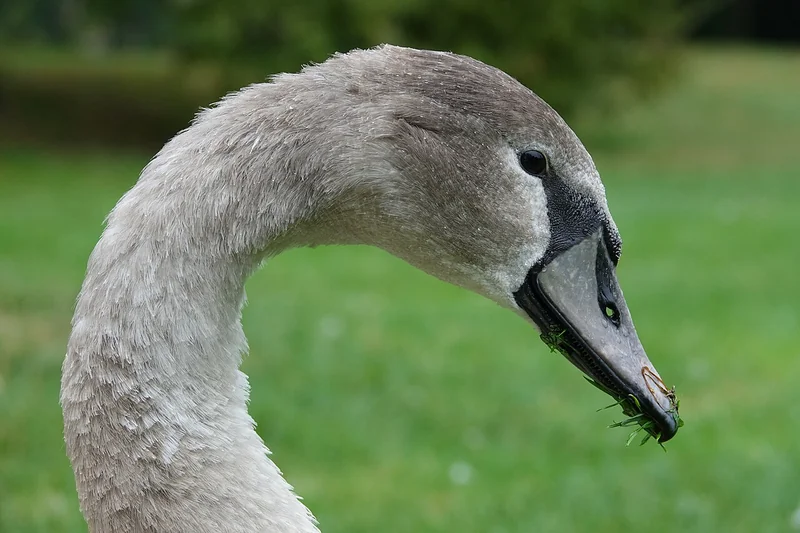 Featured photomute-swan.jpg
Cygnus olor, the mute swan, is a large swan native to Europe and central Asia. Adults are 1.25 to 1.7 m long with a wingspan of 2.0 to 2.4 m and weigh 6.6 to 15 kg. The plumage is uniformly pure white with a bright orange bill and a distinctive black knob at the bill base. The IUCN lists the species as Least Concern. Mute swans have been introduced widely beyond the native range and are established in North America, Australia, New Zealand, southern Africa, and parts of Japan.
Quick facts
- Habitat
- Lakes, rivers, ornamental waters in parks, coastal estuaries, and shallow wetlands. The species adapted readily to human-modified habitats and is the textbook 'park swan' across Europe.
- Range
- Native to Europe (excluding the far northern Scandinavia), the British Isles, and across central and western Asia to Mongolia. Introduced and established in North America (notably the northeastern United States and the Great Lakes), Australia, New Zealand, and parts of Japan.
- Size
- 125–170 cm body · 200–240 cm wingspan · 6.6–15 kg
- Plumage
- Adults are uniformly pure white with a bright orange bill, a distinctive black knob at the bill base (the 'frontal knob'), black legs, and dark eyes. Males have a substantially larger frontal knob than females, particularly during the breeding season — the easiest field separation between the sexes. Juveniles are dirty grey-brown for their first year and slowly whiten over the second.
- Song
- Despite the English name, mute swans are not silent. Adults give various hisses, snorts, and grunts, particularly during territorial defence. The species is much quieter than the trumpeter or tundra swans, hence the 'mute' name. The wingbeats produce a loud rhythmic whooshing sound in flight.
- Migration
- Largely sedentary across the native and introduced range. Some northern European populations make short-distance autumn movements; long-distance migration is absent.
- Conservation
- Least Concern (LC)
Overview
Cygnus olor is one of three Cygnus swans regularly occurring in northwest Europe. The species is one of the most familiar large waterbirds across Europe and is the subject of extensive folklore (Hans Christian Andersen's 'Ugly Duckling') and royal heraldry (the British monarch holds traditional ownership of all unmarked mute swans on the Thames).
Introduction history
Mute swans have been introduced widely beyond the native range. North American populations descend mainly from twentieth-century releases by ornamental-water collectors; populations are now established across the northeastern United States and the Great Lakes. Some authorities consider the species invasive in introduced ranges — mute swans aggressively displace native waterfowl and damage submerged aquatic vegetation. Several US states have implemented control programmes.
Frontal knob
The black knob at the bill base ('frontal knob') is one of the most distinctive features of the mute swan. The knob is composed of compressed keratin and is substantially larger in males than females during the breeding season — a sexually-selected ornament that signals male age and condition. Captive males with experimentally enlarged knobs have higher mating success.
Sources & further reading (2)
- iucn-red-list — accessed 2026-04-30
- encyclopedia — accessed 2026-04-30
Frequently asked questions
Are mute swans really mute?
No — but they are much quieter than other Cygnus swans. Mute swans give various hisses, snorts, and grunts, particularly during territorial defence; they lack the bugling or whooping calls of the trumpeter and tundra swans. The 'mute' English name reflects this comparative quietness rather than total silence. The species' wingbeats produce a loud rhythmic whooshing sound in flight, which is one of the most familiar mute-swan acoustic signatures.
Why are mute swans considered invasive in North America?
Mute swans were introduced to North America during the early twentieth century. The introduced populations have grown dramatically and are now established across the northeastern United States and the Great Lakes. Mute swans aggressively displace native waterfowl and damage submerged aquatic vegetation through heavy grazing. Several US states have implemented control programmes; the species is considered invasive across most of the introduced range.
Why does the male mute swan have a larger frontal knob?
The black knob at the bill base is substantially larger in males than females, particularly during the breeding season. The knob is a sexually-selected ornament that signals male age and condition — older males have larger knobs, and males with larger knobs have higher mating success. Captive experiments enlarging the knob increase mating success measurably. The trait is one of the textbook examples of bill-ornamentation sexual selection in waterfowl.