Charadrius vociferus
Killdeer (Charadrius vociferus)
 Featured photokilldeer.jpg
Charadrius vociferus, the killdeer, is a medium-sized plover of the family Charadriidae, distributed across most of North and Central America. Adults are 23 to 28 cm long with a wingspan of 46 to 48 cm and weigh 72 to 121 g. The plumage shows a brown back, white underparts, two distinctive black breast bands (most plovers have one), and a bright orange rump visible in flight. The IUCN lists the species as Least Concern. The killdeer is among the few plovers commonly seen far from water — the species nests in gravel parking lots, driveways, and farm fields.
Quick facts
- Habitat
- Open habitats with sparse vegetation — gravel beaches, sandflats, agricultural fields, mowed lawns, athletic fields, and unimproved gravel parking lots. The species is famously tolerant of human-modified open habitat.
- Range
- Most of North America from southern Canada south through the United States, Mexico, and Central America to northern South America. The species winters across the southern United States, Mexico, and northern South America.
- Size
- 23–28 cm body · 46–48 cm wingspan · 72–121 g
- Plumage
- Adults show a sandy-brown back and head with a white forehead, white throat, and white underparts marked by two distinctive black breast bands (the upper one a complete collar, the lower a partial band). The eye is dark with a white supercilium; the bright orange-rufous rump and tail base are conspicuous in flight. Juveniles show only one breast band initially, gaining the second through their first autumn moult.
- Song
- A loud, far-carrying 'kill-DEE, kill-DEE' or 'kill-DEER' — the source of the species' English name. The species is famously vocal in alarm and territorial display.
- Migration
- Partial migrant. Northern populations move south for winter; populations in the southern half of the United States are largely resident. Some short-distance autumn flock movements occur even within the resident range.
- Conservation
- Least Concern (LC)
Overview
Charadrius vociferus is one of about thirty Charadrius plovers worldwide and the largest North American Charadrius. The species' Latin epithet 'vociferus' captures the loud and persistent calling for which the species is famous; in suburban farmland the killdeer's repeated 'kill-DEE' calls are one of the most familiar mid-summer sounds. The double black breast band is unique among North American plovers and is the easiest field identification.
Distribution
The breeding range covers most of North and Central America. Killdeer are unusually tolerant of human-modified open habitat — gravel parking lots, athletic fields, agricultural margins, suburban driveways, and even rooftop gravel surfaces serve as nesting sites. The flexibility makes the species one of the most-encountered shorebirds across the United States, including far inland.
Distraction display
When a predator approaches a nest or chicks, adult killdeer perform a famous 'broken-wing' distraction display — limping along the ground with one wing dragged out and feigning injury, drawing the predator away from the actual nest location. The display is one of the textbook examples of nest-site distraction in birds and works against most natural predators. Documented predators distracted by the display include foxes, raccoons, cats, and humans.
Sources & further reading (2)
- iucn-red-list — accessed 2026-04-29
- encyclopedia — accessed 2026-04-29
Frequently asked questions
Why do killdeer pretend to have broken wings?
When a predator approaches a nest or chicks, adult killdeer perform a 'broken-wing' distraction display — limping along the ground with one wing dragged out, calling loudly, and feigning injury. The behaviour draws the predator away from the actual nest location, with the parent flying off normally once the predator is at safe distance. The display is one of the textbook examples of nest-site distraction in birds and is documented against many natural predators including foxes, raccoons, and humans.
Why do killdeer nest in gravel parking lots?
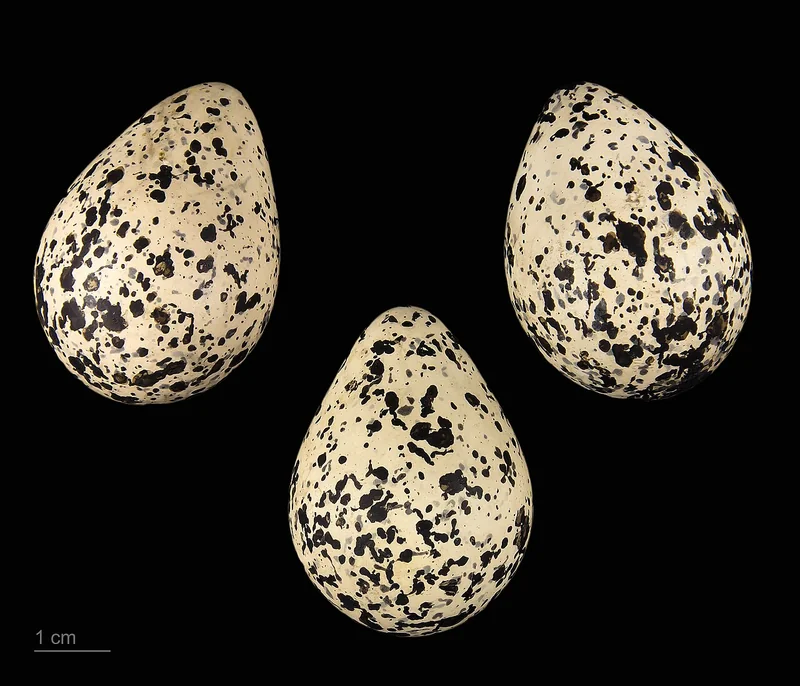
Killdeer nest on bare or sparsely vegetated open ground — naturally on gravel beaches, sandbars, and dry stream beds. Gravel parking lots, agricultural margins, and even rooftop gravel surfaces present essentially the same micro-habitat from the killdeer's perspective: open, well-drained, and offering camouflage for the eggs against a mottled stone-and-bark background. The behaviour is not incidental human-tolerance; it is the species' actual preferred nesting substrate.
Why does it have two breast bands instead of one?
Most Charadrius plovers — including the closely related semipalmated and Wilson's plovers — show a single black breast band. The killdeer's distinctive double band is unique among North American plovers and is the easiest field identification of the species. The functional or evolutionary significance of the second band is not well established; possibly it is a sexually selected plumage signal, possibly simply a phylogenetic legacy.