Spheniscus mendiculus
Galápagos Penguin (Spheniscus mendiculus)
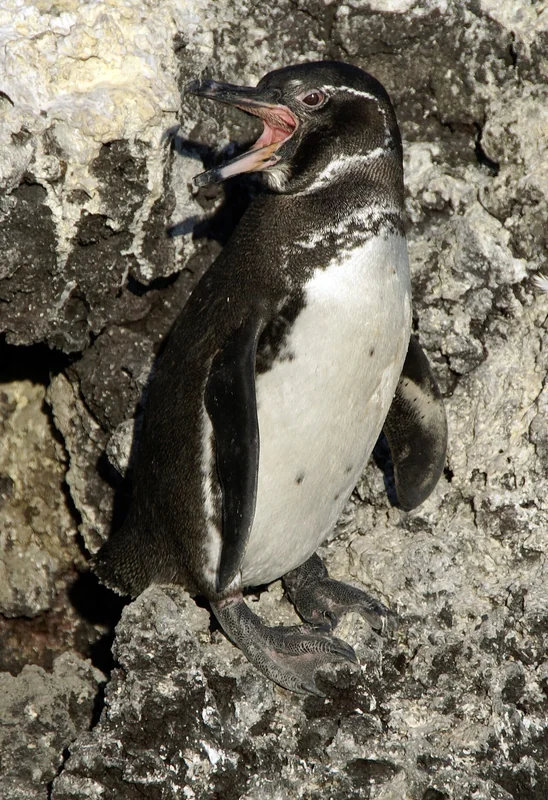 Featured photogalapagos-penguin.jpg
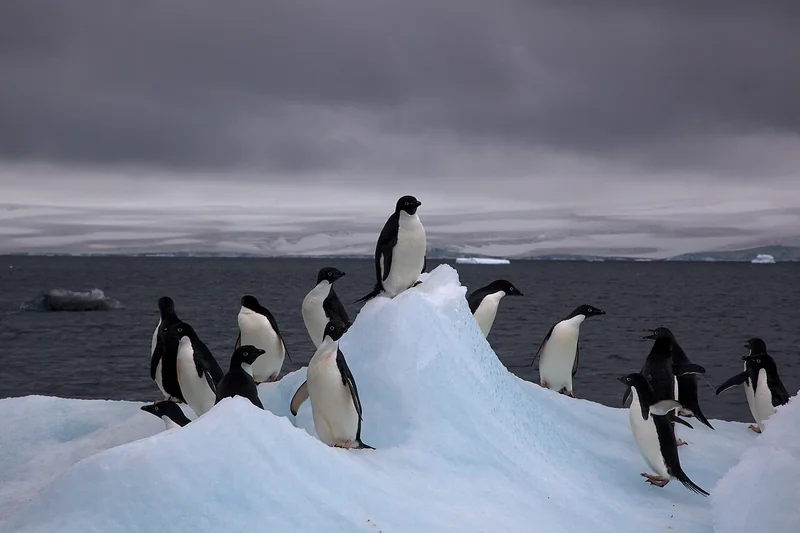
Spheniscus mendiculus, the Galápagos penguin, is a small penguin endemic to the Galápagos Islands and the only penguin species found north of the equator. Adults are 49 to 53 cm tall and weigh 1.7 to 2.6 kg. The plumage is the typical Spheniscus pattern — black-and-white with a thin white band running from each eye and curving down to meet on the throat. The IUCN lists the species as Endangered, reflecting a small total population and high vulnerability to El Niño climate events.
Quick facts
- Habitat
- Cool-water coastal habitats around the Galápagos Islands of Ecuador. The species depends on the Cromwell Current and adjacent Humboldt Current upwellings for cold productive water that supports schooling fish prey.
- Range
- Endemic to the Galápagos Islands of Ecuador. The largest populations are on the western islands of Isabela and Fernandina, where the cold-water upwelling is strongest. Total population is estimated at fewer than 1,200 breeding pairs.
- Size
- 49–53 cm body · 35–38 cm wingspan · 1.7–2.6 kg
- Plumage
- Adults show a glossy black back, head, and tail; pure white underparts; and a thin white facial band running from each eye, curving back, and meeting under the throat. A second narrower black band crosses the upper breast. Both sexes look alike. The smallest of the four Spheniscus penguins (with the African, Magellanic, and Humboldt penguins as close relatives), the Galápagos penguin is sometimes mistaken for a juvenile of one of the larger species.
- Song
- Adults give donkey-like braying calls during pair-bonding and territorial display — similar to other Spheniscus penguins. The calls are loud and carry across the colony.
- Migration
- Sedentary on the breeding islands. The species does not undertake regular migration; movement is limited to local foraging trips of 10-30 km from the breeding colony.
- Conservation
- Endangered (EN)
Overview
Spheniscus mendiculus is the only penguin species that breeds north of the equator and is the smallest of the four Spheniscus penguins. The species' presence in equatorial waters is supported entirely by the cold-water Cromwell Current upwelling around the western Galápagos Islands; the species could not survive in tropical waters without this upwelling. The breeding distribution is one of the most geographically restricted of any seabird.
Conservation status
The IUCN lists the species as Endangered, reflecting a small total population (fewer than 1,200 breeding pairs) and high sensitivity to El Niño Southern Oscillation events. Strong El Niño events disrupt the cold-water upwelling and reduce fish availability, causing widespread breeding failure and adult mortality; the 1982-83 and 1997-98 events each reduced the population by approximately 65 per cent. Recovery between El Niño events is slow because of the species' small population size and slow reproductive rate.
El Niño sensitivity
El Niño events drive warm-water intrusions that suppress the Galápagos upwelling, reducing fish availability and causing severe population crashes in this species. The 1982-83 El Niño reduced the Galápagos penguin population by approximately 65 per cent; the 1997-98 event caused similar mortality. Climate models projecting more frequent and intense El Niño events under continued warming are a major conservation concern. The species' small geographic range and population size make it one of the most climate-vulnerable seabirds in the world.
Sources & further reading (2)
- iucn-red-list — accessed 2026-04-30
- encyclopedia — accessed 2026-04-30
Frequently asked questions
How can a penguin live on the equator?
Galápagos penguins survive on the equator only because of the cold-water Cromwell Current and adjacent Humboldt Current upwellings around the western Galápagos. The cold productive water supports the schooling-fish prey the penguins need; air temperatures around the breeding islands are tempered by the cool sea. The species could not survive in true tropical waters without this regional cold-water upwelling, and El Niño events that disrupt the upwelling cause severe population crashes.
Why is the species so vulnerable to El Niño?
El Niño events drive warm-water intrusions that suppress the Galápagos cold-water upwelling. The reduction in fish availability causes widespread breeding failure and adult mortality. The 1982-83 El Niño reduced the Galápagos penguin population by approximately 65 per cent; the 1997-98 event caused similar mortality. Climate models projecting more frequent intense El Niño events under continued warming are a major conservation concern for this small-population species.
How small is the Galápagos penguin population?
Estimated at fewer than 1,200 breeding pairs and roughly 2,000-3,000 mature individuals total — one of the smallest seabird populations in the world. The population fluctuates substantially between years driven by El Niño cycles. The Galápagos National Park monitors the population annually; even small percentage changes in breeding success matter for population persistence at this scale.