Erithacus rubecula
European Robin (Erithacus rubecula)
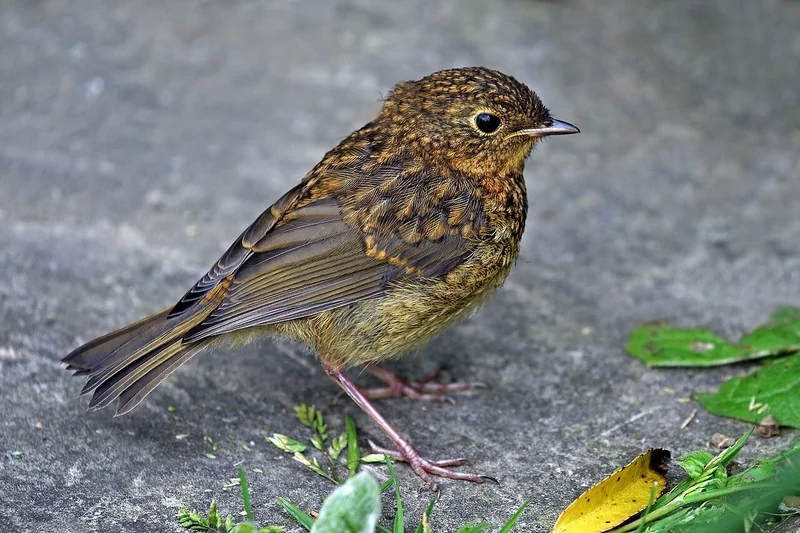 Featured photoeuropean-robin.jpg
Erithacus rubecula, the European robin, is a small Old World flycatcher in the family Muscicapidae, distributed across Europe, parts of western Asia, and North Africa. Adults are 12.5 to 14 cm long with a wingspan of 20 to 22 cm and weigh 16 to 22 g. Both sexes show a distinctive orange-red face and breast set against a brown back and pale belly. The IUCN lists the species as Least Concern; the species is a strongly territorial year-round resident across most of its range.
Quick facts
- Habitat
- Woodland understorey, hedgerows, parks, and gardens. The species follows large mammals (originally wild boar, now humans and garden spades) to forage on disturbed soil.
- Range
- Most of Europe from Ireland and Iberia east to western Siberia and south to North Africa. The species has been introduced unsuccessfully to several locations including Australia and New Zealand.
- Size
- 12.5–14 cm body · 20–22 cm wingspan · 16–22 g
- Plumage
- Both sexes are alike: olive-brown above, with a bright orange-red face and breast bordered by a soft grey band along the sides of the neck and chest, and a pale buff to white belly. Juveniles are heavily spotted brown without the orange — the spotted pattern is the ancestral chat-thrush condition that adults outgrow.
- Song
- A clear, melodious, fluty warble with frequent pauses, delivered year-round by both sexes. The call is a sharp, repeated 'tic'.
- Migration
- Short-distance partial migrant. Northern populations move south for winter; populations across Britain, Ireland, and southern Europe are resident.
- Conservation
- Least Concern (LC)
Overview
Erithacus rubecula belongs to the family Muscicapidae, the Old World flycatchers and chats — distinct from the unrelated American robin (Turdus migratorius), a true thrush in the family Turdidae. The shared English name dates from English colonists transferring the familiar name to the larger New World thrush on the basis of a superficially similar red breast. The species is the unofficial national bird of the United Kingdom.
Distribution and behaviour
European robins occur across most of Europe, parts of western Asia, and the Mediterranean basin. The species is strongly territorial year-round — both sexes hold separate winter territories, unusual among small songbirds — and the song is heard in every month of the year. Robins have a famous association with garden spades and freshly turned soil; the behaviour evolved with wild boar, which once provided the disturbed-soil microhabitat that humans now supply.
Cultural history
The species' association with Christmas in British and Irish iconography traces to the red-coated Victorian postmen who delivered Christmas cards through the snow. The cards themselves came to feature robins, and the species became a permanent fixture of British Christmas imagery. The robin remains the unofficial national bird of the United Kingdom following an informal poll in 1960 and a confirming poll in 2015.
Sources & further reading (2)
- iucn-red-list — accessed 2026-04-29
- encyclopedia — accessed 2026-04-29
Frequently asked questions
Is the European robin related to the American robin?
No. The two share only a superficially similar red-breast appearance. The European robin (Erithacus rubecula) is a small Old World flycatcher in the family Muscicapidae. The American robin (Turdus migratorius) is a large true thrush in the family Turdidae. Early English-speaking colonists in North America applied the familiar name to the larger unrelated species.
Why is the European robin a Christmas bird?
The association traces to Victorian Britain. Postmen of the era wore red coats and were nicknamed 'robins'; Christmas card design eventually incorporated the bird itself, and the bright orange-red breast against winter snow made the imagery durable. The robin is also among the few European songbirds that sings through the winter, contributing to the December association.
Why are robins so confident around gardeners?
European robins evolved to follow large soil-disturbing mammals — primarily wild boar — to glean invertebrates exposed by rooting. Across most of the modern European range, wild boar are scarce or absent, and humans turning soil with spades supply the same microhabitat. The bird is not tame in the strict sense; it is exploiting an ancient foraging association that now happens to include people.