Pyrrhula pyrrhula
Eurasian Bullfinch (Pyrrhula pyrrhula)
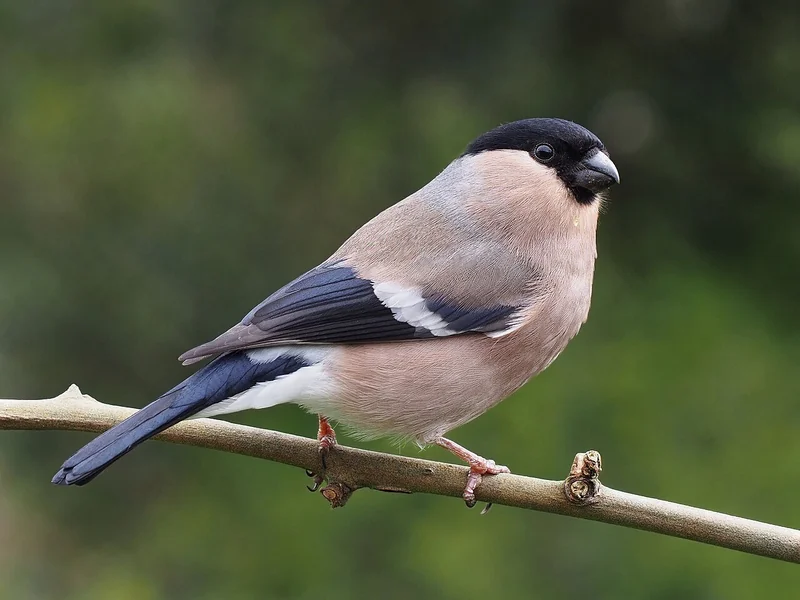 Featured photoeurasian-bullfinch.jpg
Pyrrhula pyrrhula, the Eurasian bullfinch, is a medium-sized Fringillidae finch of Europe and temperate Asia. Adults are 14.5 to 16.5 cm long with a wingspan of 22 to 26 cm and weigh 21 to 27 g. Adult males show a brilliant rose-red breast and face with a glossy black crown; females are warm pinkish-brown with the same black crown. The IUCN lists the species as Least Concern. The bullfinch is generally quiet, retiring, and most often glimpsed as a flash of white rump disappearing into a hedge.
Quick facts
- Habitat
- Mixed and deciduous woodland edges, scrub, hedgerows, gardens, and orchards. The species favours dense low cover and is rarely seen far from it.
- Range
- Across most of Europe from Iberia and the British Isles east to Japan and northern China, south to the Mediterranean. Several subspecies are recognized, with Asian populations slightly larger than the western European nominate.
- Size
- 14.5–16.5 cm body · 22–26 cm wingspan · 21–27 g
- Plumage
- Adult males show a glowing rose-red breast and face, glossy black crown and chin, blue-grey back, white rump, and black wings with a single white wing bar. Females show the same general pattern but the breast is replaced by a soft pinkish-brown to grey-brown. Both sexes flash a bold white rump in flight.
- Song
- A soft, low-pitched piping whistle delivered from a perch — quiet enough that the species is often heard as a single melancholy note rather than as a song. The call is a soft, mournful 'pew' or 'deuh'.
- Migration
- Largely sedentary across the western European range. Northern and eastern populations make short-distance autumn movements south; long-distance migration is absent.
- Conservation
- Least Concern (LC)
Overview
Pyrrhula pyrrhula is the type species of the genus Pyrrhula, a small genus of Eurasian and East Asian bullfinches. The species is named after the Greek pyrrhos, 'flame-coloured', referring to the male's glowing breast. Several subspecies span the range from the British Isles through to Japan, with measurable variation in size, bill shape, and song.
Distribution
The native range covers Europe, the British Isles, North Africa marginally, and across temperate Asia to Japan. The species is largely sedentary across most of the range. British populations declined sharply through the late twentieth century — likely tied to changes in farmland management reducing winter seed availability — but have stabilized since.
Bud predation
The Eurasian bullfinch is one of the few European birds documented as a significant pest of cultivated fruit trees. In late winter and early spring, when other foods are scarce, bullfinches systematically strip the unopened flower buds from apple, pear, plum, and cherry trees. The damage was historically severe enough that the species was the subject of formal control programmes in British orchards through the mid-twentieth century. Damage has declined alongside the species' general population decline.
Sources & further reading (2)
- iucn-red-list — accessed 2026-04-29
- encyclopedia — accessed 2026-04-29
Frequently asked questions
Why is the male's breast such a vivid red?
The male's rose-red breast is produced by carotenoid pigments derived from diet — primarily from fruit and seeds during the autumn moult. Brighter males show better foraging history and condition. Females routinely choose males with the most saturated breast colour, and the trait functions in mate choice. The bullfinch's red is unusually intense even by carotenoid-coloured-finch standards.
Why are bullfinches so quiet?
The species' call is unusually soft and low-pitched for a finch — a quiet piping whistle that often passes unnoticed even by experienced observers. The retiring habits, dense-cover preferences, and quiet voice all together mean bullfinches are present in many gardens unobserved. The white rump flashing in flight is often the only field clue that a pair has been visiting all winter.
Why are bullfinches considered pests in orchards?
In late winter and early spring, when other foods are scarce, bullfinches systematically strip flower buds from apple, pear, plum, and cherry trees. The damage to a commercial orchard can be severe — bullfinch flocks have historically removed enough buds to substantially reduce the annual fruit crop. The species was formally controlled in British orchards through much of the twentieth century but the practice has declined alongside the bullfinch's own population decline.