Cuculus canorus
Common Cuckoo (Cuculus canorus)
 Featured photocommon-cuckoo.jpg
Cuculus canorus, the common cuckoo, is a medium-sized cuckoo of the family Cuculidae, distributed across Europe, Asia, and parts of Africa. Adults are 32 to 34 cm long with a wingspan of 55 to 65 cm and weigh 100 to 130 g. The plumage is grey above and barred white below, falcon-like in shape with a long tail and pointed wings. The IUCN lists the species as Least Concern. Common cuckoos are obligate brood parasites — females lay eggs in the nests of other songbirds, and the cuckoo chick evicts the host's own offspring after hatching.
Quick facts
- Habitat
- Open and partly wooded country across Europe and Asia — woodland edges, meadows, marshes, and reedbeds. Cuckoos require habitat with abundant host songbird species (reed warblers, meadow pipits, dunnocks).
- Range
- Most of Europe, Asia from the Atlantic east to Japan, and parts of North Africa. Winters across sub-Saharan Africa. The species is one of the most widely distributed Old World cuckoos.
- Size
- 32–34 cm body · 55–65 cm wingspan · 100–130 g
- Plumage
- Adult males show slate-grey upperparts, head, and breast; pure white underparts heavily barred with horizontal black bars; and yellow legs and bill base. Adult females occur in two morphs: a grey morph similar to males but with a hint of buff on the breast, and a rufous-brown morph with similar barring. The falcon-like silhouette in flight has been documented to deceive smaller songbirds, possibly aiding host-nest access.
- Song
- Males give the famous two-note 'cuck-oo' (the source of the species' English and many other languages' names), repeated in slow series from a perch. Females give a bubbling 'water-cuckoo' call that is much less familiar than the male's song.
- Migration
- Long-distance migrant. European and Asian breeders winter across sub-Saharan Africa. The migration is well-documented through geolocator tracking and shows substantial individual variation in route choice.
- Conservation
- Least Concern (LC)
Overview
Cuculus canorus is the type species of the genus Cuculus and the source of the English word 'cuckoo' — both for the bird and for clocks featuring a cuckoo-call sound mechanism. The species' two-note territorial call is one of the most familiar bird sounds in European cultural memory and has been transcribed into many languages' words for the bird (cuckoo, coucou, Kuckuck, гогол).
Brood parasitism
Common cuckoos are obligate brood parasites — females lay their eggs in the nests of other songbird species (typically reed warbler, dunnock, meadow pipit, or pied wagtail) and never raise their own offspring. The cuckoo egg hatches slightly faster than the host's own eggs; the newly hatched cuckoo chick instinctively evicts the host's own eggs and chicks from the nest by pushing them over the rim with a hollow on its back. The cuckoo chick is then raised by the host parents alone, often growing to several times the host's own body size by fledging.
Egg mimicry
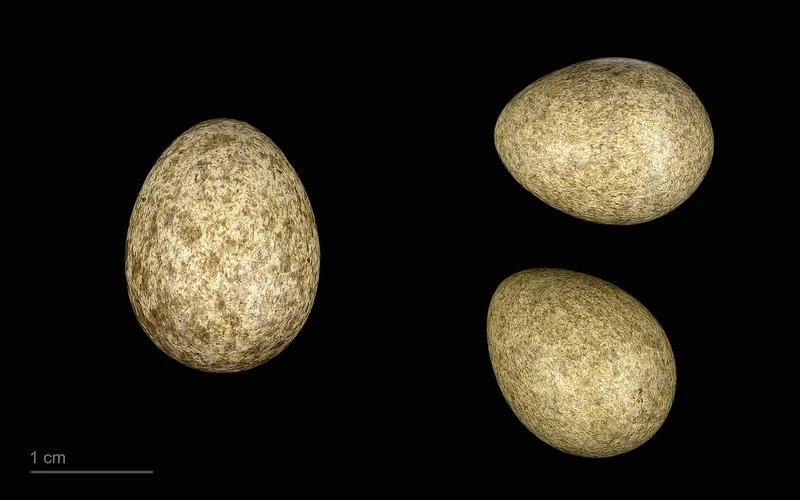
Female cuckoos specialize on a single host species — the host preference is genetically inherited from mother to daughter — and lay eggs that mimic the colour and pattern of that host's eggs. Different cuckoo female lineages have evolved egg patterns that match reed warbler, dunnock, meadow pipit, and other host eggs respectively. The mimicry is one of the textbook examples of co-evolutionary arms races: hosts that can detect cuckoo eggs eject them, selecting for cuckoo eggs that more closely match the host. Host species rejection rates and cuckoo mimicry quality vary across host species.
Sources & further reading (2)
- iucn-red-list — accessed 2026-04-30
- encyclopedia — accessed 2026-04-30
Frequently asked questions
Why does a cuckoo chick evict the host's own eggs?
The newly hatched cuckoo chick has an instinctive ejection behaviour — within a day or two of hatching, the still-blind chick pushes any other eggs or hatchlings out of the nest by manoeuvring them onto a hollow on its back and heaving them over the rim. The behaviour eliminates competition for parental food and ensures the cuckoo chick gets all the host's care. The behaviour is genetically programmed; cuckoo chicks raised in isolation perform the same ejection movements on encounters with eggs.
How do cuckoo eggs match the host's eggs so well?
Female cuckoos specialize on a single host species, with the host preference inherited genetically from mother to daughter. Over generations, host species reject mismatched cuckoo eggs while accepting matched ones — selecting cuckoo egg patterns to evolve closer to the host's. Different cuckoo female lineages have evolved egg patterns that match reed warbler, dunnock, meadow pipit, and other host eggs respectively. The mimicry is one of the textbook examples of co-evolutionary arms races.
Why are cuckoos shaped like falcons?
The grey upperparts, barred underparts, and pointed wing silhouette of the common cuckoo strongly resemble the European sparrowhawk. Field experiments have shown that small songbirds respond to perched cuckoos with hawk-like alarm signals and may be temporarily slow to defend the nest. The hawk-mimicry has been proposed as adaptive — a brief delay in host defence may be enough for the female cuckoo to access the host nest and lay the parasitic egg.