Melopsittacus undulatus
Budgerigar (Melopsittacus undulatus)
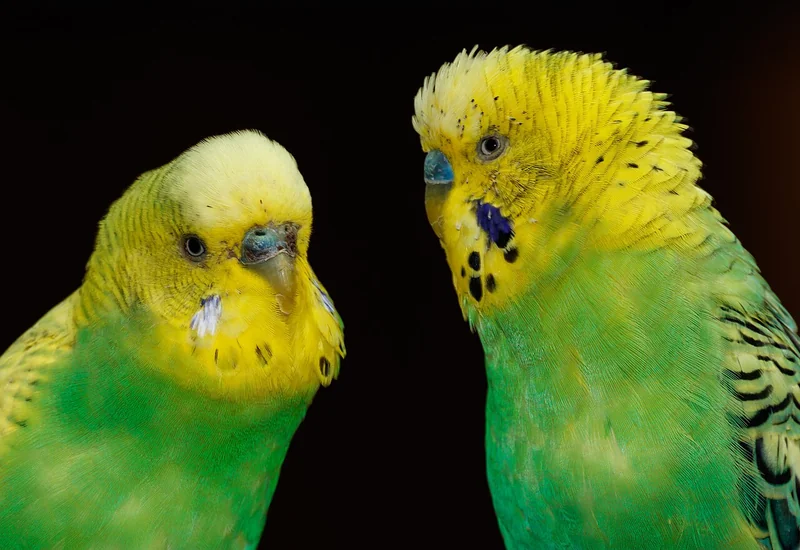 Featured photobudgerigar.jpg
Melopsittacus undulatus, the budgerigar, is a small parakeet of the family Psittaculidae, native to the arid interior of Australia. Adults are 18 cm long with a wingspan of 30 cm and weigh 30 to 40 g. The wild plumage is bright green-and-yellow with fine black barring on the head, nape, back, and wings. The IUCN lists the species as Least Concern. Wild budgerigars are highly nomadic and form large flocks of thousands of birds that range across the inland Australian arid zone tracking seasonal water and seed availability.
Quick facts
- Habitat
- Inland Australian arid and semi-arid country — mulga and acacia scrubland, spinifex grassland, and watercourses with surrounding eucalypts. The species depends on the boom-and-bust cycle of inland Australian rainfall and seed availability.
- Range
- Endemic to Australia. The species is widespread across the Australian inland from the eastern Great Dividing Range west to the western coast and from the tropical north to the southern Murray-Darling basin.
- Size
- 18 cm body · 30 cm wingspan · 30–40 g
- Plumage
- Wild adults show bright leaf-green underparts and rump, a yellow head and face, and fine black barring across the crown, nape, back, and wings. Adult males show a blue cere (the fleshy area at the bill base), females a brown cere — one of the few reliable sex differences in any small parakeet. Juveniles show duller plumage with reduced barring on the forehead. The wild green-and-yellow is the only colour in wild populations; the many colour varieties seen in captivity (blue, white, yellow) result from captive selection over the past century and a half.
- Song
- A pleasant chattering warble of clicks, chirps, and quiet whistles delivered by foraging flocks. Wild budgerigars are highly social and vocal, with constant flock-contact chatter audible at substantial distances when large flocks pass overhead.
- Migration
- Highly nomadic rather than migratory. Wild flocks track the seasonal availability of seeds and water across the inland Australian arid zone, with movements covering hundreds of kilometres unpredictably. The species' boom-and-bust population dynamics correspond to inland rainfall patterns.
- Conservation
- Least Concern (LC)
Overview
Melopsittacus undulatus is the only species in the genus Melopsittacus and is one of the most familiar parakeets worldwide through its long history in aviculture. Wild populations are entirely Australian; the species has been kept in European and global captivity since the mid-nineteenth century, and most modern captive populations are descended from selectively bred lineages with substantial colour-variant diversity that does not occur in the wild.
Wild flocks
Wild budgerigar flocks across inland Australia can number in the thousands or tens of thousands of birds. The flocks are highly mobile and track the seasonal availability of seeds and water across vast arid landscapes. The species' inland nomadism is one of the most extreme cases of nomadic behaviour in any bird group — flocks may travel hundreds of kilometres in a few days when local seed crops fail. Population dynamics correspond closely to inland Australian rainfall patterns; major rainfall events drive boom periods of breeding and population expansion.
Captive history
Budgerigars have been kept in European captivity since at least the 1840s, when the British naturalist John Gould brought specimens back from Australia. By the late nineteenth century the species had become one of the most popular pet birds in Europe and the Americas, and selective breeding produced the wide range of colour varieties (blue, white, yellow, lutino) that exist in captive stock today. None of these colour variants occur in the wild — wild budgerigars are uniformly green-and-yellow.
Sources & further reading (2)
- iucn-red-list — accessed 2026-04-30
- encyclopedia — accessed 2026-04-30
Frequently asked questions
Are wild budgerigars colourful like captive ones?
No. Wild budgerigars are uniformly bright green-and-yellow with fine black barring — a single colour pattern across all wild populations. The many colour varieties seen in captivity (blue, white, yellow, albino, pied) all result from captive selective breeding over the past 150 years. None of these colour variants occur in the wild Australian populations; wild budgerigar plumage is consistent across the entire native range.
How big do wild budgerigar flocks get?
Wild flocks across inland Australia can number in the thousands or tens of thousands of birds. The species is highly nomadic and tracks the seasonal availability of seeds and water across vast arid landscapes. Major boom years following heavy inland rainfall can produce flocks visible from satellite imagery — the species is one of the most numerous wild parakeets in the world during boom years and one of the more difficult to count during bust years when populations crash.
How do you tell male and female wild budgerigars apart?
Adult wild budgerigars show a clear cere-colour difference: males have a blue cere (the fleshy area at the bill base), females a brown cere. The cere-colour difference is one of the few reliable sex differences in any small parakeet and is consistent across all wild populations and most captive colour varieties. The cere colour develops fully by the bird's first breeding season; juvenile cere colour is paler and less reliable for sexing.