Anser indicus
Bar-headed Goose (Anser indicus)
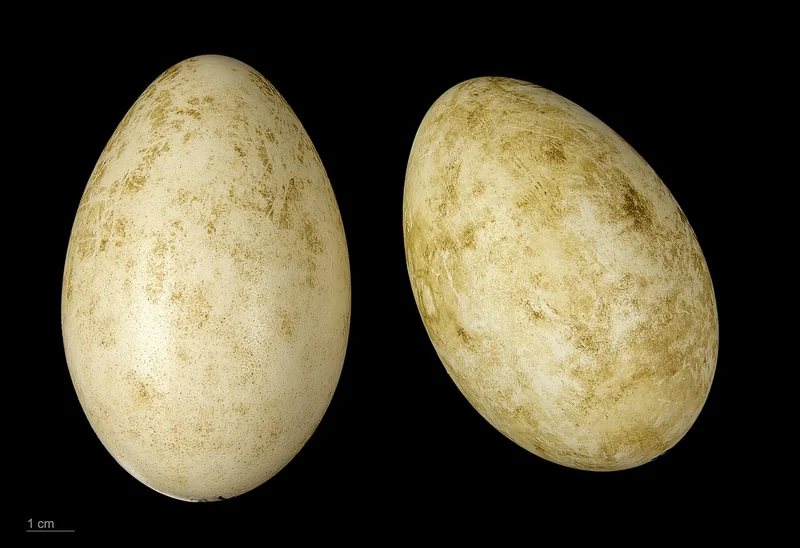 Featured photobar-headed-goose.jpg
Anser indicus, the bar-headed goose, is a large goose of the family Anatidae that breeds at high altitudes on the Tibetan Plateau and winters in South Asia. Adults are 71 to 76 cm long with a wingspan of 140 to 160 cm and weigh 1.87 to 3.2 kg. The species is famous for its trans-Himalayan migration, with individuals recorded flying over 7,000 m above sea level. The IUCN lists the species as Least Concern.
Quick facts
- Habitat
- Breeds on high-altitude lakes and wetlands of the Tibetan Plateau and adjacent mountain ranges at 4,000–5,000 m elevation. Winters on lowland wetlands, agricultural fields, and river floodplains of the Indian subcontinent — particularly in the Ganges and Brahmaputra plains. Also winters in Pakistan, Bangladesh, and Myanmar.
- Range
- Breeds on the Tibetan Plateau (Tibet, Qinghai), Ladakh, Mongolia, and adjacent mountain areas of Central Asia at high elevation. Winters in the Indian subcontinent, from Pakistan east to Bangladesh and south to Sri Lanka. Formerly bred in Afghanistan. The migration crosses the main Himalayan range.
- Size
- 71–76 cm body · 140–160 cm wingspan · 1870–3200 g
- Plumage
- Adults are pale grey overall with a white head bearing two distinctive black bars across the back of the crown — the feature giving the species its name. The neck is dark brown-grey, contrasting with the white head. The bill is orange-yellow and the legs are orange. In flight the pale grey-white plumage contrasts with dark flight feathers. Juveniles have a brownish head without the black bars.
- Song
- A honking 'ang-ang' or 'ung-ung' — lower and less nasal than most geese. Flocks call in flight and during conflict at roosting and feeding sites.
- Migration
- Highly migratory. The entire population crosses the Himalayas twice annually between Tibetan Plateau breeding grounds and South Asian wintering grounds, with individuals recorded at altitudes exceeding 7,000 m.
- Conservation
- Least Concern (LC)
Overview
Anser indicus is a member of the genus Anser — the grey geese — within the family Anatidae. It breeds primarily on the Tibetan Plateau, one of the highest and most extreme terrestrial breeding environments of any waterfowl. The species is best known for its extraordinary trans-Himalayan migration, which represents the most extreme altitude migration of any bird with well-documented records. Satellite-tracked individuals have been recorded at altitudes above 7,000 m over the main Himalayan ridgeline, crossing passes where the partial pressure of oxygen is approximately one-third of that at sea level.
High-altitude physiology
The bar-headed goose has a suite of physiological adaptations that allow it to fly at altitudes where most other birds and mammals would rapidly incapacitate. Key adaptations include: haemoglobin with a higher oxygen affinity than that of lowland birds — achieved by a single amino acid substitution (alpha-119 Pro → Ala) that increases the binding affinity of haemoglobin to oxygen at low partial pressures; a higher capillary density in the flight muscles than lowland anatids, improving oxygen delivery to working muscle; and larger lungs relative to body size. These adaptations allow the bar-headed goose to extract and utilise oxygen efficiently enough to sustain flapping flight for hours at altitudes where most birds would be unable to maintain altitude. GPS tracking has revealed that some individuals complete the Himalayan crossing in a single non-stop flight of under eight hours.
Migration route and stopover ecology
GPS satellite tracking studies have revealed that bar-headed geese do not simply fly over the Himalayas in a straight line — they navigate mountain passes and valleys to minimise altitude gain where possible, using the terrain to reduce the maximum altitude they must reach. Individual birds tracked on the southbound autumn migration were found to closely follow river valleys and pass through specific low-elevation corridors between high ridges. The birds favour flying at night and in the early morning when air temperature is lower and air density slightly higher. Stopovers on both sides of the Himalayas are used to rest and refuel. The wintering grounds in the Indian subcontinent include important Ramsar wetland sites in Assam, West Bengal, and Gujarat.
Sources & further reading (2)
- iucn-red-list — accessed 2026-05-07
- encyclopedia — accessed 2026-05-07
Frequently asked questions
How high do bar-headed geese actually fly over the Himalayas?
Satellite-tracked bar-headed geese have been recorded at altitudes of up to 7,290 m above sea level during their Himalayan crossing — well above the summit of most Himalayan peaks other than the highest. Radar data from weather stations has detected geese at similar altitudes. The birds can maintain powered flight at these altitudes due to specialised haemoglobin and cardiovascular adaptations, but they minimise the time spent at extreme altitude by navigating through passes and following river valleys.
What makes bar-headed goose haemoglobin special?
Bar-headed geese have a single amino acid substitution in their alpha-haemoglobin chains (alanine replacing proline at position 119) that increases the molecule's affinity for oxygen at low partial pressures. This means the haemoglobin loads oxygen more efficiently from the thin mountain air than standard anatid haemoglobin would. Combined with larger lungs and denser muscle capillaries, this allows the geese to sustain the high metabolic demand of flapping flight at altitudes where oxygen partial pressure is less than a third of sea-level values.
Where do bar-headed geese spend the winter?
Bar-headed geese winter primarily in the lowlands of the Indian subcontinent — the Brahmaputra valley in Assam, the Ganges floodplains of Bihar and West Bengal, the Indus plain in Pakistan, and wetlands in Gujarat and Rajasthan. They winter in large flocks on agricultural plains, grazing on grain and grass. Key wintering sites include Kaziranga National Park and Dibru-Saikhowa in Assam, Keoladeo Ghana (Bharatpur) in Rajasthan, and the Chilika Lake complex in Odisha.