Sterna paradisaea
Arctic Tern (Sterna paradisaea)
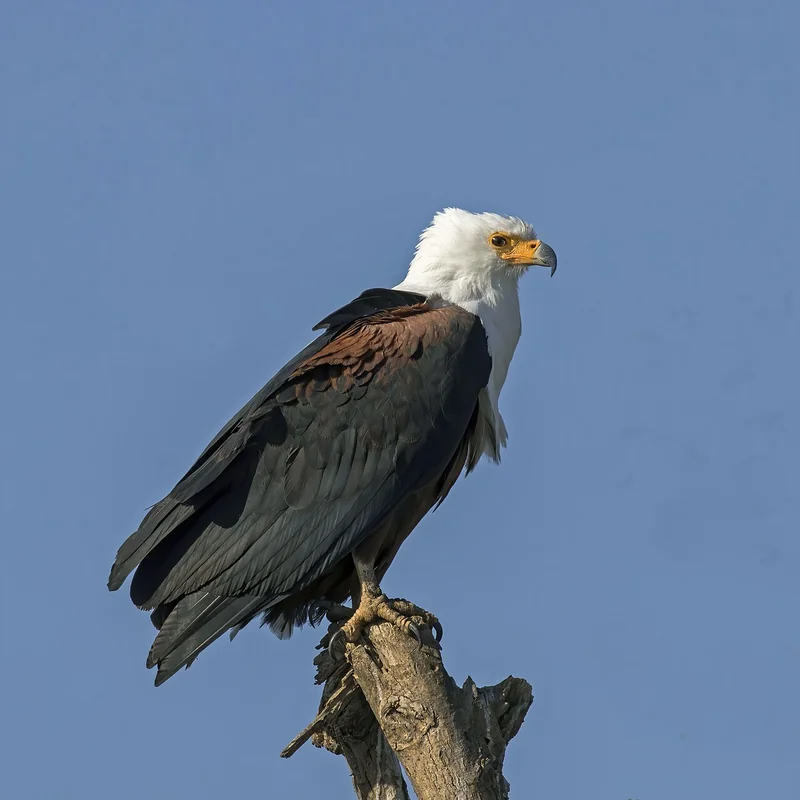
 Featured photoarctic-tern.jpg
Sterna paradisaea, the Arctic tern, is a medium-sized tern of the family Laridae, distributed across the Holarctic Arctic and subarctic. Adults are 33 to 39 cm long with a wingspan of 76 to 85 cm and weigh 86 to 127 g. The plumage is pale grey-and-white with a glossy black cap and a blood-red bill in breeding plumage. The IUCN lists the species as Least Concern. The Arctic tern undertakes the longest-distance annual migration of any animal — a pole-to-pole round trip of roughly 70,000 km, including extensive zig-zag detours.
Quick facts
- Habitat
- Arctic and subarctic coastal beaches, tundra ponds, and offshore islands during the breeding season; the open Southern Ocean during the non-breeding season. The species spends most of its non-breeding time at sea.
- Range
- Breeds across the high Arctic and subarctic of North America, Greenland, Iceland, Scandinavia, and Russian Arctic. Winters in Antarctic and sub-Antarctic waters of the Southern Ocean — pole-to-pole each year.
- Size
- 33–39 cm body · 76–85 cm wingspan · 86–127 g
- Plumage
- Breeding adults show pale grey upperparts, white underparts, a glossy black crown extending from the bill back through the nape, a brilliant blood-red bill (without the black tip of common tern), short red legs, and a deeply forked white tail. Non-breeding adults show a paler black-and-white head and a darker bill. The white tail-streamers are longer than common tern's, an additional field mark.
- Song
- A harsh 'kee-arrr' alarm call similar to common tern but slightly higher-pitched. The species is highly vocal at colonies and aggressive in nest defence — Arctic terns famously dive-bomb intruders (including humans) approaching the nest.
- Migration
- Champion long-distance migrant. The annual pole-to-pole round trip is roughly 70,000 km — the longest documented for any animal. Geolocator studies show individual birds may travel even farther because of zig-zag oceanic routes.
- Conservation
- Least Concern (LC)
Overview
Sterna paradisaea is one of about a dozen Sterna terns worldwide and is the most northerly-breeding tern. The Latin epithet 'paradisaea' means 'of paradise' — possibly a reference to the species' striking breeding plumage and its association with the Arctic 'midnight sun' breeding latitudes. The species' breeding range reaches the highest latitudes of any small seabird.
Champion long-distance migration
Arctic terns undertake the longest-distance annual migration of any animal. Geolocator tracking studies have documented annual round-trip distances of approximately 70,000 km — far longer than any other migration in the animal kingdom. The migration is pole-to-pole — birds breed at high northern latitudes during the Arctic summer and travel to the Southern Ocean for the southern summer, experiencing more daylight per year than any other animal as a result. The species' total lifetime migration distance for a 30-year-old bird may exceed two million kilometres — equivalent to three round trips to the Moon.
Distribution and behaviour
The breeding range covers the high Arctic and subarctic of North America, Greenland, Iceland, Scandinavia, and Russian Arctic. The species is highly territorial during the breeding season and famously aggressive in nest defence — Arctic terns dive-bomb intruders (including humans) approaching the nest, and the strikes can draw blood. Outside the breeding season, the species spends nearly all of its time at sea and rarely lands on shore.
Sources & further reading (2)
- iucn-red-list — accessed 2026-04-30
- encyclopedia — accessed 2026-04-30
Frequently asked questions
How far does an Arctic tern migrate each year?
Geolocator tracking studies have documented annual round-trip migrations of approximately 70,000 km — the longest documented for any animal. The migration is pole-to-pole: birds breed at high northern latitudes during the Arctic summer and travel to the Southern Ocean for the southern summer. A 30-year-old Arctic tern's lifetime migration distance may exceed two million kilometres — equivalent to three round trips to the Moon.
Why do Arctic terns experience so much daylight?
The Arctic tern's pole-to-pole annual migration follows the seasonal sun. The species breeds at high northern latitudes during the Arctic summer (when the sun is up nearly 24 hours per day at high latitudes) and travels to the Southern Ocean for the southern summer (when the polar regions experience continuous daylight there). The species therefore experiences more daylight per year than any other animal — possibly more daylight than any other organism on Earth.
How do Arctic terns differ from common terns?
The two species are very similar. Key field marks: Arctic tern has an entirely blood-red bill in breeding plumage (common tern has red with a black tip); Arctic tern has clean white-edged underwing primaries (common tern has darker grey-tipped); Arctic tern has shorter legs visible when perched; and Arctic tern's tail-streamers are longer than common tern's. Arctic terns also breed at much higher latitudes than common terns.