Virgin American Oak Cask
New American white oak (Quercus alba) casks — required for bourbon; increasingly used as a flavour-led finish in Scotch and world whisky.
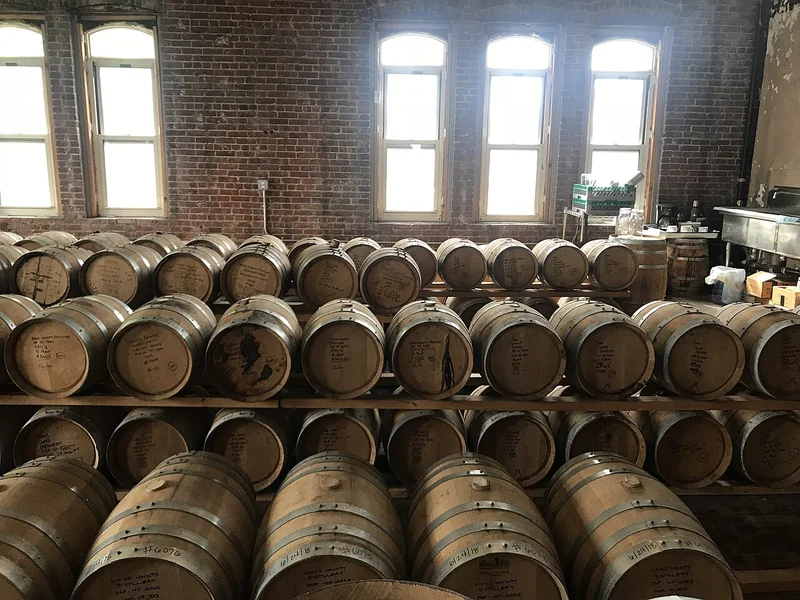
Virgin American oak casks are new (first-use) American white oak (Quercus alba) barrels. They are required by US federal law for bourbon maturation: 27 CFR Part 5 specifies new charred oak for bourbon and rye. Virgin American oak contributes the most intense oak-derived character — high vanillin from fresh oak lignin, pronounced lactones (creamy coconut notes), heavy toasted-wood sugars from the char, and astringent tannins from un-mellowed oak. Beyond bourbon's mandatory use, virgin American oak is increasingly used by Scotch and Irish distilleries (Glen Moray, Bushmills, Glenmorangie's Astar) as a flavour-led finish or full maturation, producing intensely vanillin-rich profiles.
Quick facts
- Type
- Cask Type
- Cask
- virgin American oak (Quercus alba)
Toast vs Char
Virgin American oak is typically toasted (heated to caramelise wood sugars and release lignin-derived vanillin) and/or charred (deeply burned to produce a layer of activated carbon). Toast levels run from light to heavy (typically described by colour or duration). Char levels are codified: Char 1 (lightest, ~15 seconds), Char 2, Char 3 (medium-heavy, ~35 seconds), Char 4 ('alligator char', deepest, ~55 seconds). Bourbon's mandatory new char is typically Level 3 or 4.
Sources & further reading (2)
- encyclopedia — accessed 2026-05-15
- encyclopedia — accessed 2026-05-15
Frequently asked questions
Why must bourbon use new oak?
US federal regulations (27 CFR 5) specify that bourbon must be aged in new charred oak containers. The requirement dates to the post-Prohibition reorganisation of the bourbon industry and has been credited to lobbying by the timber industry to ensure consistent oak demand. The new-oak rule is the defining technical constraint of bourbon and the primary source of its distinctive flavour.