Pot Still Distillation
Batch distillation in a copper pot still — the traditional method for malt and single pot still whisky.
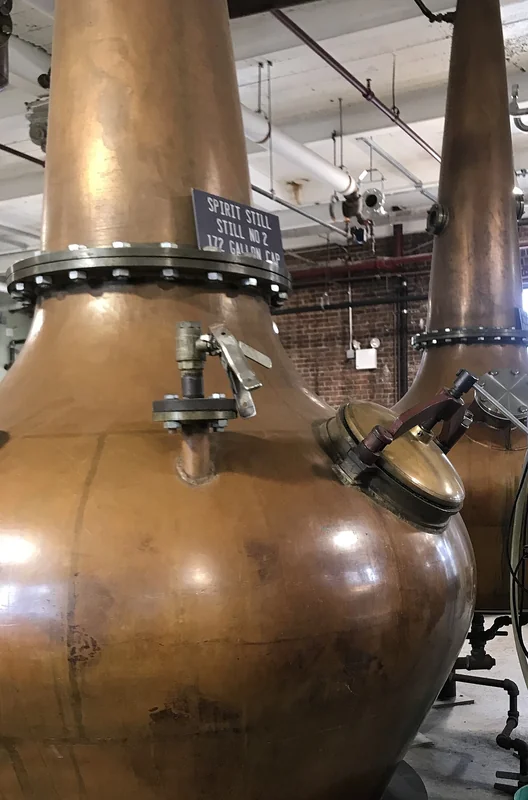
Pot still distillation is a batch process performed in copper alembic-style stills. A 'charge' of fermented wash is heated in the pot; alcohol vapours rise through the neck, are condensed in a worm tub or shell-and-tube condenser, and collected. The process is repeated in a second (spirit) still to concentrate the alcohol further. Scotch single malt is typically double distilled; Irish whiskey traditionally triple distilled; some Lowland Scotch and other styles triple distil for additional smoothness. Pot stills produce a heavier, more flavourful spirit than column stills because each batch carries more congeners through; the copper itself catalyses the removal of unwanted sulphur compounds during the run.
Quick facts
- Type
- Technique
Wash Still and Spirit Still
The first distillation in a wash still takes fermented beer (wash, approximately 8% ABV) and produces low wines of approximately 20–25% ABV. The low wines are then redistilled in a smaller spirit still, where the cut between heads (early high-volatile fractions), heart (the middle, retained as new make), and tails (late, low-volatile fractions) is made. The heart cut typically runs from 75% ABV at the start of collection down to about 65% at the cut. Heads and tails are usually returned to the next charge for re-distillation.
Copper's Catalytic Role
Copper plays a chemical role beyond container: it catalyses the breakdown of dimethyl trisulphide and other sulphur compounds that would otherwise produce unwanted meaty or vegetable off-flavours. Distillers control 'copper contact' by still geometry — taller necks, boil bulbs, and lyne arms that promote vapour-copper interaction produce lighter, fruitier spirit; shorter, more direct geometry retains more sulphur and produces heavier spirit.
Sources & further reading (1)
- encyclopedia — accessed 2026-05-15
Frequently asked questions
Why is copper used for pot stills?
Copper provides three benefits: high thermal conductivity for even heating, malleability for hand-fabrication of large stills, and crucially a catalytic effect on sulphur compounds in the vapour. Copper reacts with dimethyl trisulphide and similar molecules to remove them as solid sulphides, preventing them from carrying through to the spirit and producing off-flavours.
Why are malt distilleries usually double distilled?
Double distillation in pot stills is the historic Scottish practice and produces the characteristic body and complexity of malt whisky. The first (wash) distillation roughs out the alcohol from the fermented wash; the second (spirit) distillation refines and cuts the heart. Triple distillation removes additional congeners and produces a smoother, lighter spirit; it is traditional in Ireland and a small number of Scottish distilleries.