Malting
Germinating and kilning barley to produce malted grain — the foundation of whisky's starch-to-sugar conversion.
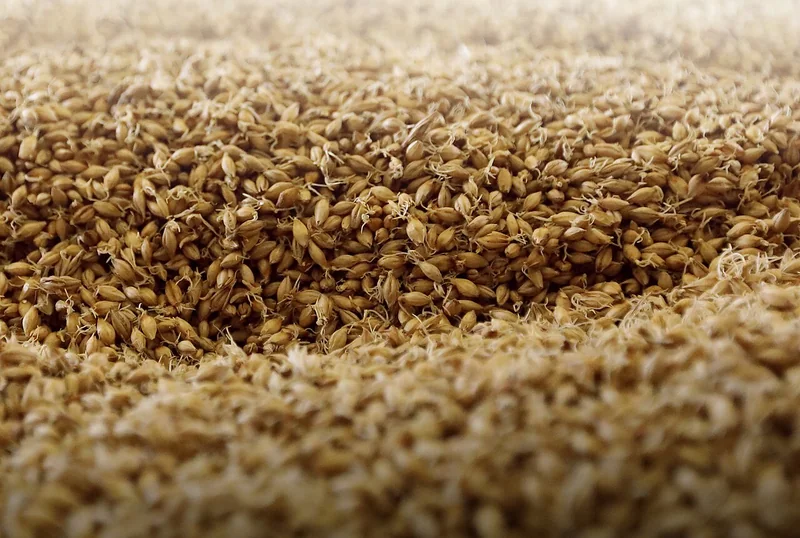
Malting is the controlled germination and kilning of barley grain to develop the enzymes (diastases) necessary to convert starches to fermentable sugars during mashing. The process has three stages: steeping (soaking the barley to initiate germination), germination (controlled growth over 4–6 days at temperature and humidity that activates enzymes without consuming starches), and kilning (drying the green malt at increasing temperatures to halt germination and stabilise the grain). Traditional malting takes place on floor maltings, where germinating barley is turned regularly by shovel or rake; modern industrial maltings use Saladin boxes or drum maltings. Floor malting survives at a small number of Scotch distilleries (Springbank, Bowmore, Highland Park, Laphroaig, Balvenie, Kilchoman, and a few others), with most distilleries purchasing malted barley from commercial maltsters.
Quick facts
- Type
- Technique
Steeping, Germination, Kilning
Steeping: barley is soaked in water for 24–48 hours to bring moisture content from ~12% to ~45%. Germination: the wetted barley is allowed to sprout for 4–6 days under controlled temperature and humidity. The rootlets ('chits') emerge and the grain develops malting enzymes (α-amylase, β-amylase, and diastase) that will later convert starches to sugars. Kilning: the green malt is dried at gradually increasing temperatures — typically 60°C rising to 80°C — to stabilise the enzymes and lower moisture to ~5%. Peat-smoked malt is kilned with peat fires during the first phase, depositing phenols on the grain.
Sources & further reading (2)
- encyclopedia — accessed 2026-05-15
- encyclopedia — accessed 2026-05-15
Frequently asked questions
Why germinate the barley?
Germination activates enzymes in the barley grain — α-amylase and β-amylase — that the subsequent mashing step uses to convert the grain's starches into fermentable sugars (maltose and glucose). Un-malted barley has insufficient enzyme activity for efficient starch conversion. The carefully controlled germination develops the enzymes without consuming too much of the starch reserves.