Laphroaig Distillery
Islay south-coast distillery founded 1815 — defined by medicinal phenol and one of the most distinctive Islay malts.
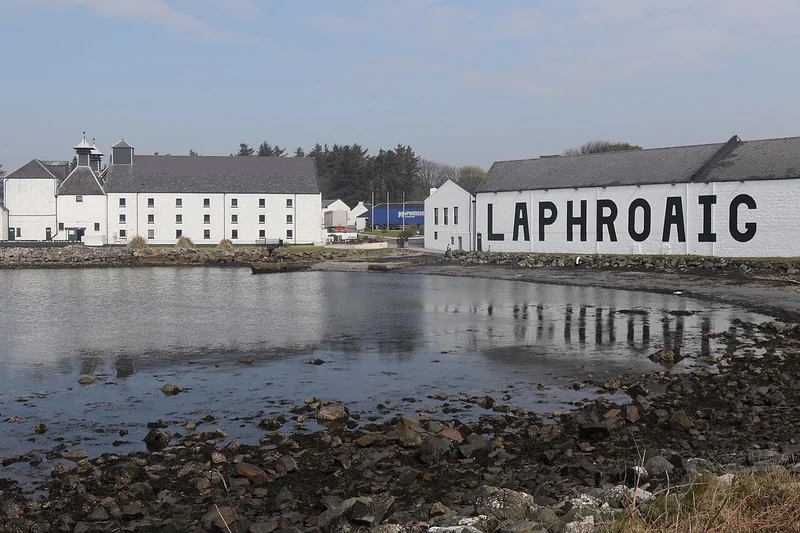
Laphroaig Distillery, founded in 1815 by Alexander and Donald Johnston on the south coast of Islay, produces a heavily peated single malt characterised by medicinal, iodine, and seaweed notes. The distillery name (pronounced 'la-froyg', from Scottish Gaelic 'lag bhròdhaig', the hollow of the broad bay) reflects its location in a small inlet on Islay's south coast. Laphroaig is one of the few remaining distilleries that still floor-malts a portion of its own barley over peat fires, producing a particularly heavy phenolic loading. The distillery is owned by Beam Suntory. It is the only Scotch whisky to hold a Royal Warrant from King Charles III.
Quick facts
- Type
- Distillery History
- Region
- Islay
- Era
- 1815–present
- Origin
- Port Ellen, Islay, Scotland
Floor Malting and Peat
Laphroaig is one of a small number of Scotch distilleries (with Bowmore, Springbank, Highland Park, Kilchoman, and Balvenie) that still operates traditional malting floors and produces a portion of its own malted barley in-house. The barley is steeped, spread on the malting floor for germination, then kilned over peat fires from a peat source close to the distillery. Local Islay peat contains decomposed coastal vegetation that contributes the distinctive medicinal phenol of Laphroaig spirit.
Friends of Laphroaig
The Friends of Laphroaig programme, launched in 1994, offers members a 'plot' of one square foot of land on Islay (deeded for the duration of membership). Members may visit the distillery and collect a 'rent' of a dram of Laphroaig. The programme has over a million members worldwide and is one of the longest-running brand-loyalty programmes in spirits.
Sources & further reading (1)
- encyclopedia — accessed 2026-05-15
Frequently asked questions
Why does Laphroaig taste medicinal?
Laphroaig's distinctive medicinal, iodine-like character comes from the phenolic compounds deposited on malted barley during kilning over local Islay peat. The peat source contains decomposed coastal vegetation; cresol and guaiacol compounds survive distillation and contribute the medicinal note. Laphroaig malt typically runs around 45 ppm phenols.