Ardbeg Distillery
Islay south-coast distillery founded 1815 — known for clean, intense peat phenol and a deep underground purifier.
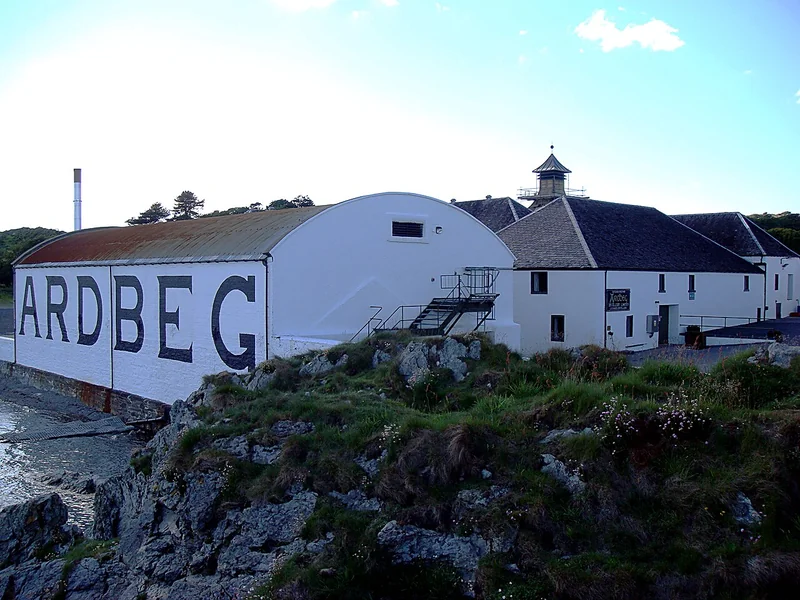
Ardbeg Distillery, founded in 1815 by John MacDougall on Islay's south coast, produces one of the most heavily peated whiskies in Scotland. Ardbeg malt typically runs 50–55 ppm peat phenols — among the highest of mainstream Islay malts. The distillery is owned by Moët Hennessy Louis Vuitton (LVMH) since 1997. Ardbeg's distinctive feature is a purifier on the spirit still that reflux-removes heavier compounds and contributes to the distillery's clean, expressive, less oily peat character compared to its Kildalton neighbours Laphroaig and Lagavulin. The distillery was closed several times in the 20th century before LVMH's acquisition and revival.
Quick facts
- Type
- Distillery History
- Region
- Islay
- Era
- 1815–present
- Origin
- Port Ellen, Islay, Scotland
The Spirit Still Purifier
Ardbeg's spirit still is fitted with a purifier — a small condenser that returns heavier vapours to the still for re-distillation. The effect is to produce a cleaner, more intensely aromatic spirit with strong peat phenol but less of the heavy oily character typical of Islay. The result is described as the 'peatiest, smokiest, most complex single malt of them all' in Ardbeg marketing — a claim debated against Octomore but supported by Ardbeg's distinctively expressive phenol profile.
Sources & further reading (1)
- encyclopedia — accessed 2026-05-15
Frequently asked questions
How peated is Ardbeg compared to other Islay malts?
Ardbeg malt typically runs 50–55 ppm phenols, comparable to Laphroaig (around 45 ppm) and higher than Lagavulin (around 35 ppm), Caol Ila (around 35 ppm), and Bowmore (around 25 ppm). Bruichladdich's Octomore line runs much higher (sometimes 200+ ppm) but is a separate experimental product line.